
Polson, Montana- Flathead Reservation
It’s the warmest day of late spring. I pull into town and stop to gaze at Flathead Lake, alkaline waters crystal clear and pooling in the lowest point of the glacial floodplain.
Her fish tail hugs Finley Point and Bull Island, holding the blooming pink cherry orchards in a pocket of softer air. At the narrows before Polson Bay, the water moves in wide currents, shimmering like whitefish scales.
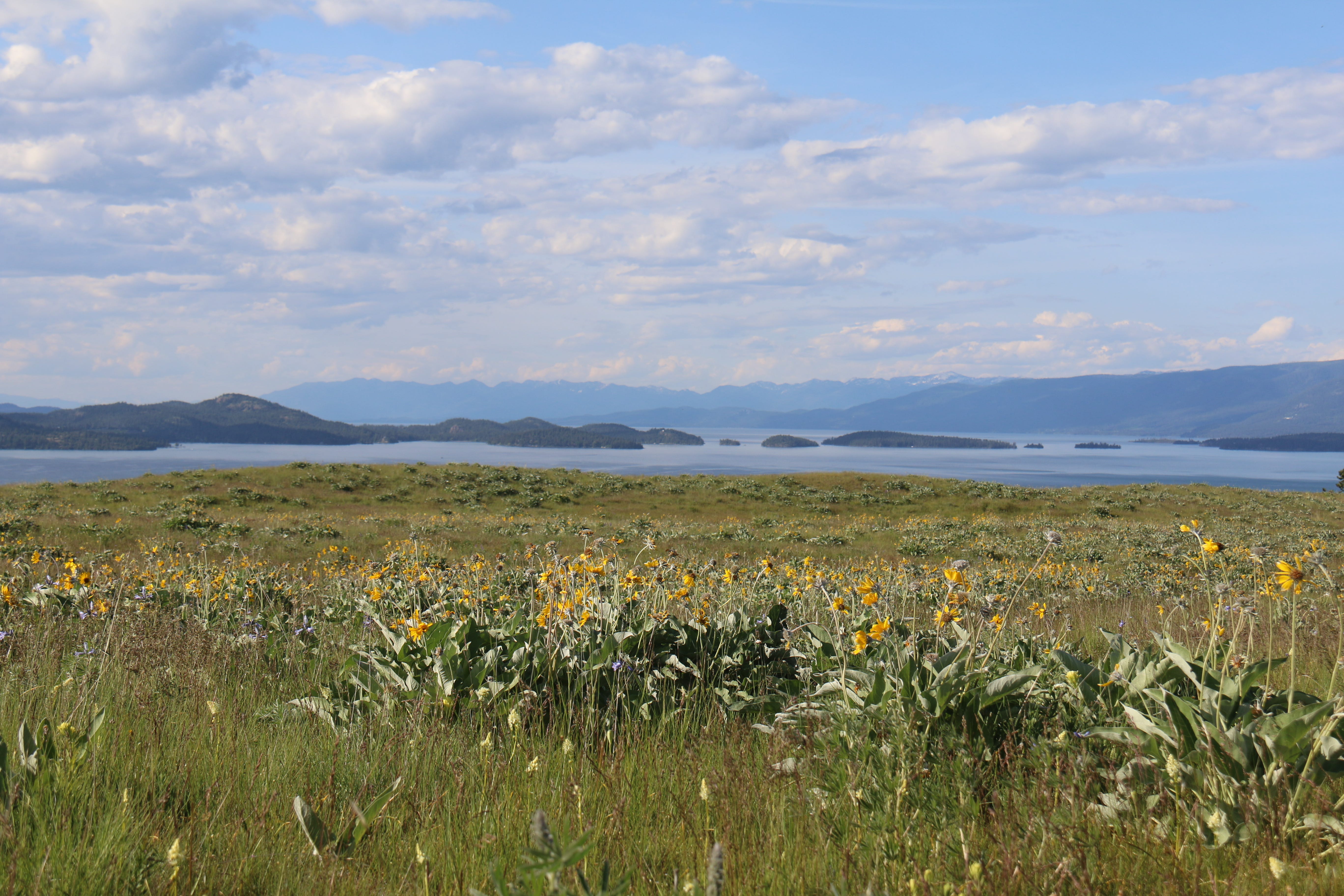
I finish a phone call, turn around to First Avenue and follow the street up a big hill. I roll slowly through downtown, past the hospital, up and up to the end of the road. My boyfriend is waiting for me at the gate.
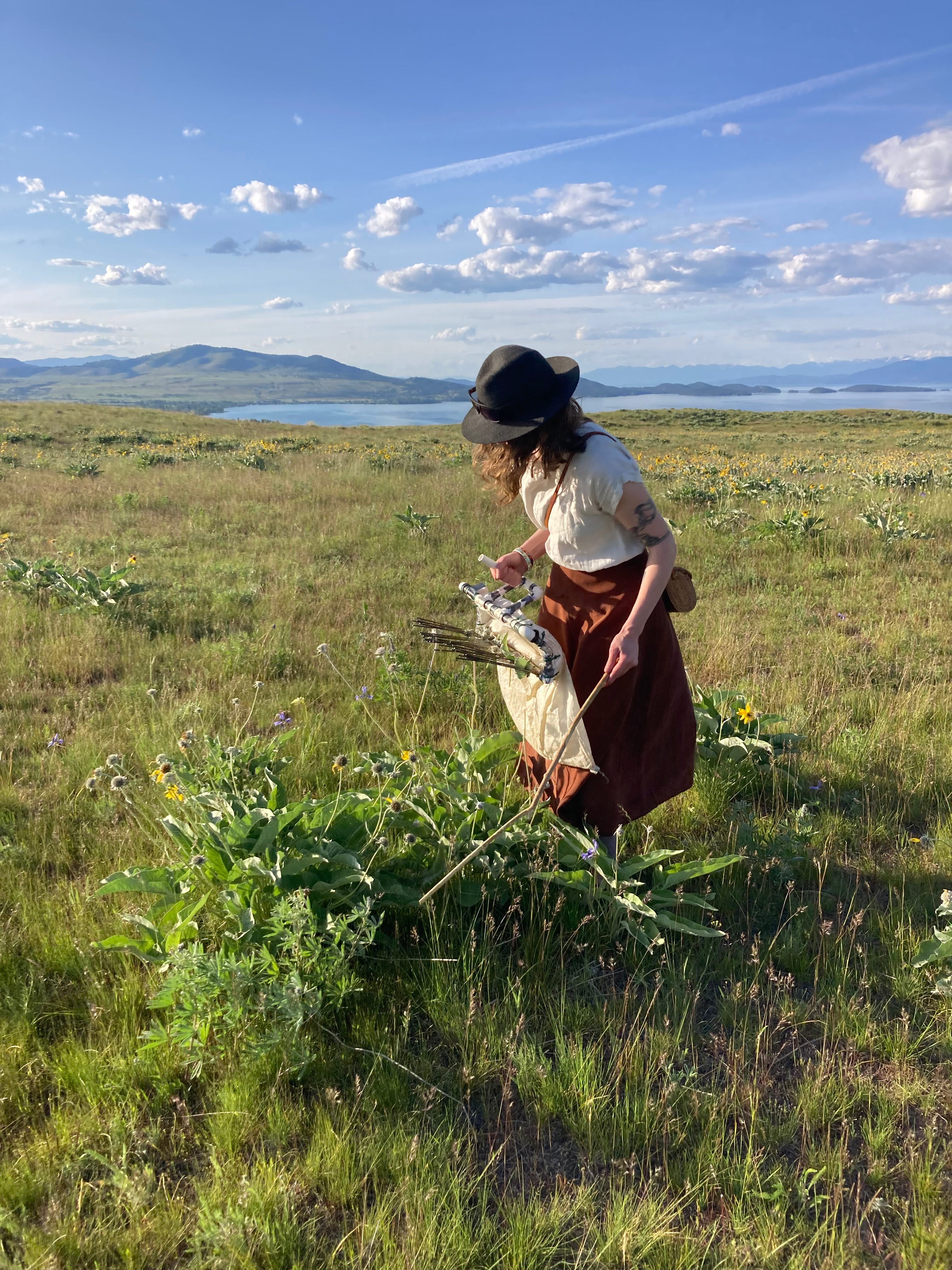
We’ve been apart for a few days now, his work season is in full swing. He’s out collecting wild seeds for restoration projects. This week he’s working on a special piece of private land, and he’s excited to show me.
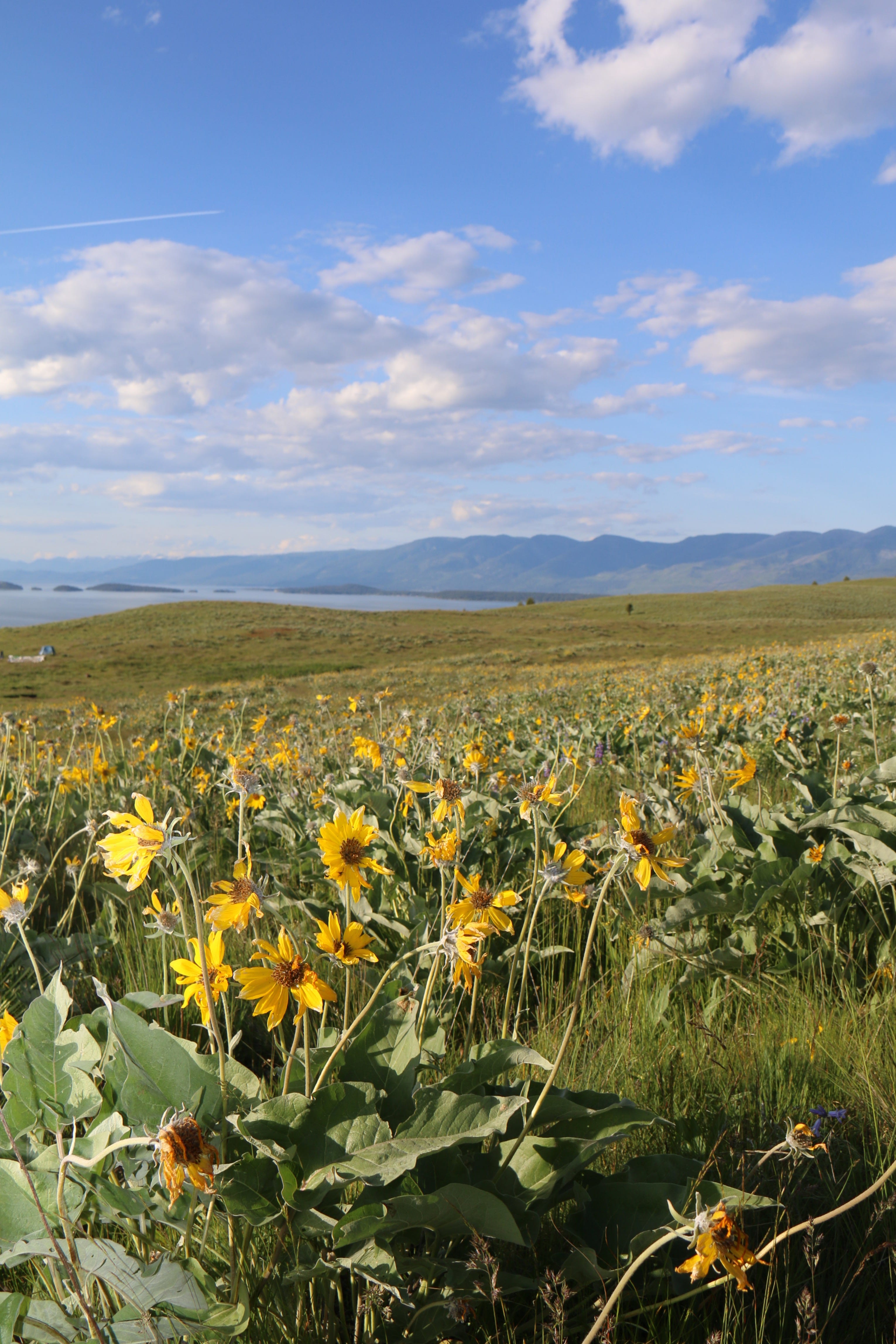
Have you ever felt the vibrance and potency of a dense field of wildflowers?
Your body buzzing like a bumble bee. Your senses immersed in colors so luminous and fractal it is as if the sun were crystal, broken into a thousand shards of clear light and scattered across the earth. Like a kaleidoscope.
A looking glass.
Have you ever held a handful of seeds, and felt that same potency?
The blooms roll in waves as the breeze moves off the lake.
Sometimes my guy comes home with a heady perfume of resin that will linger for days. A spicy carrot smell from working with a plant colloquially known as Big Medicine, or Lomatium dissectum.
Lately he has been coming home smelling like bread and sunflower.
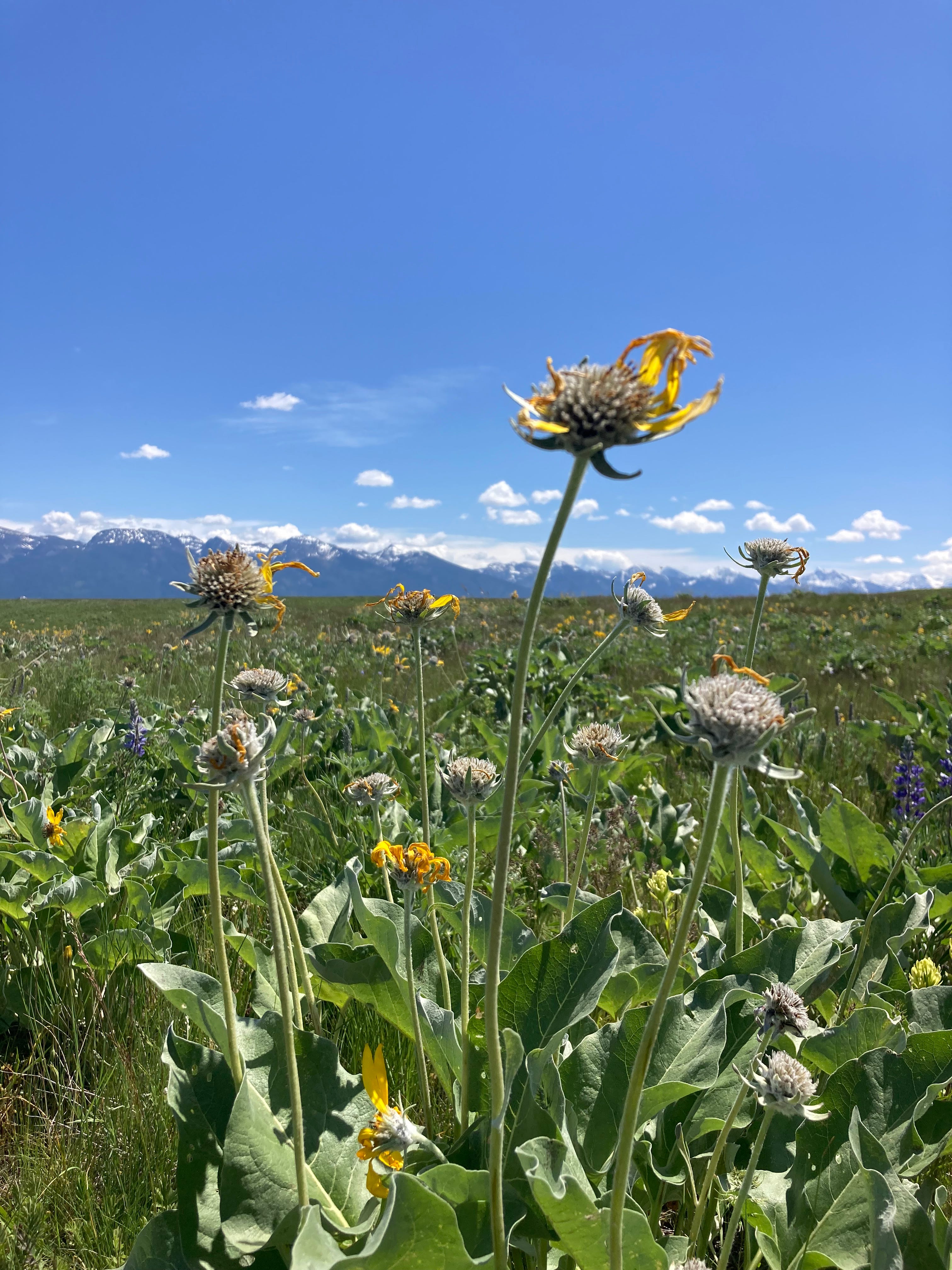
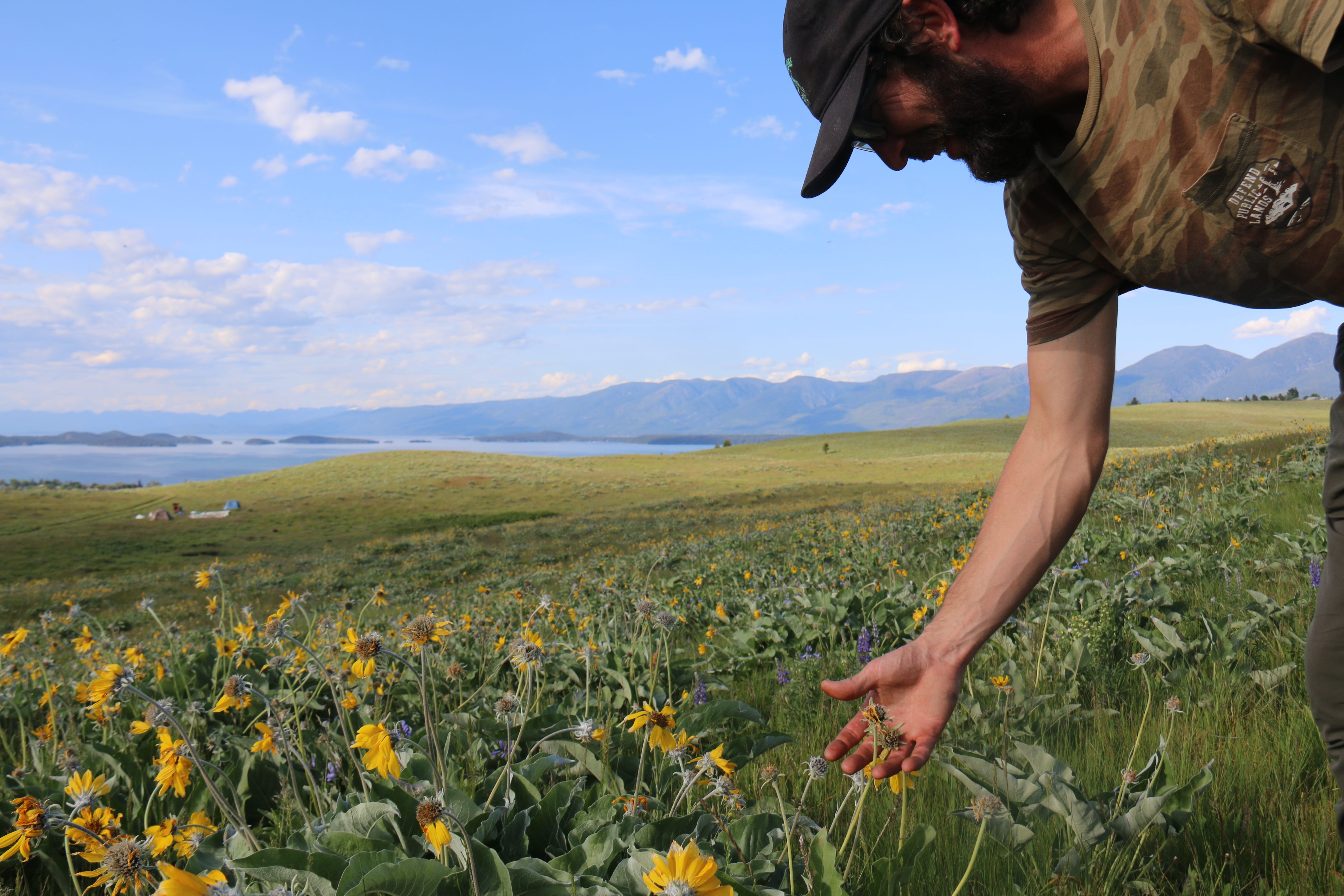
It is balsamroot season: Balsamorhiza sagittata. Balsamroot is an old food plant of this region, and a medicine plant too. Its resinous root has long been used in relation to the lungs, wounds, and infection, but its deep taproot and slow growth remind me that not every edible plant is asking to be harvested.
When I posted photos of the balsamroot seed harvest on Instagram, a woman who has built a catering business around wild foods and beautiful plates told me she wanted to dig one immediately.
I offered what I knew through a brief message: that the plant’s energy had just gone into flower, and that if someone were to harvest the root at all, it would be better done after dormancy, after the leaves had time to gather sunlight and send their sugars back underground.
But even then, I kept thinking: better for whom?
Better for the harvester, perhaps. Better for the medicine. But not necessarily better for the plant.
Better still, perhaps, would be to gather seed before ever thinking of digging root.
Balsamroot needs particular soil, particular conditions, particular mycorrhizal relationships. It does not transplant well.
My boyfriend pinches the small sunflower-like seed between his fingernails. The milky kernel slips from the dark oily husk.
At the center is the embryo: the living future of the plant. Held inside it is the possibility of flowers valuable to native pollinators. Seeds that feed birds and rodents. Spring forage high in protein for elk, pronghorn, cattle, and sheep when green growth is scarce on the landscape. A root that will enter the earth so deeply and stubbornly that the plant can survive wildfire, drought, grazing, and heat.
Our timing is impeccable. The seed heads are just ripe enough to hold the seed tightly, so they do not scatter as they are harvested. If stored correctly, they will continue to ripen after gathering.
My boyfriend is teaching me about the timing and the particularities of each plant.
Years ago, he learned from Finisia Medrano on the Hoop.
Finisia, also known as Coyote and a slew of other nicknames, was a wild-tender of the American West: a seed carrier, root eater, horsewoman, wanderer. She was what some would call a troublemaker, and what some would call a teacher.
She spent decades moving through the dry country on horseback and horse-drawn wagon, following what she called the Hoop — the seasonal round of roots, greens, berries, nuts, seeds, weather, water, and animal movement that people have walked for thousands and thousands of years.
Finisia’s knowledge came through relationship with Indigenous teachers and food traditions of the Great Basin and Plateau, including Nez Perce/Nimiipuu, Paiute, Shoshone, Modoc and Klamath teachers, among others.
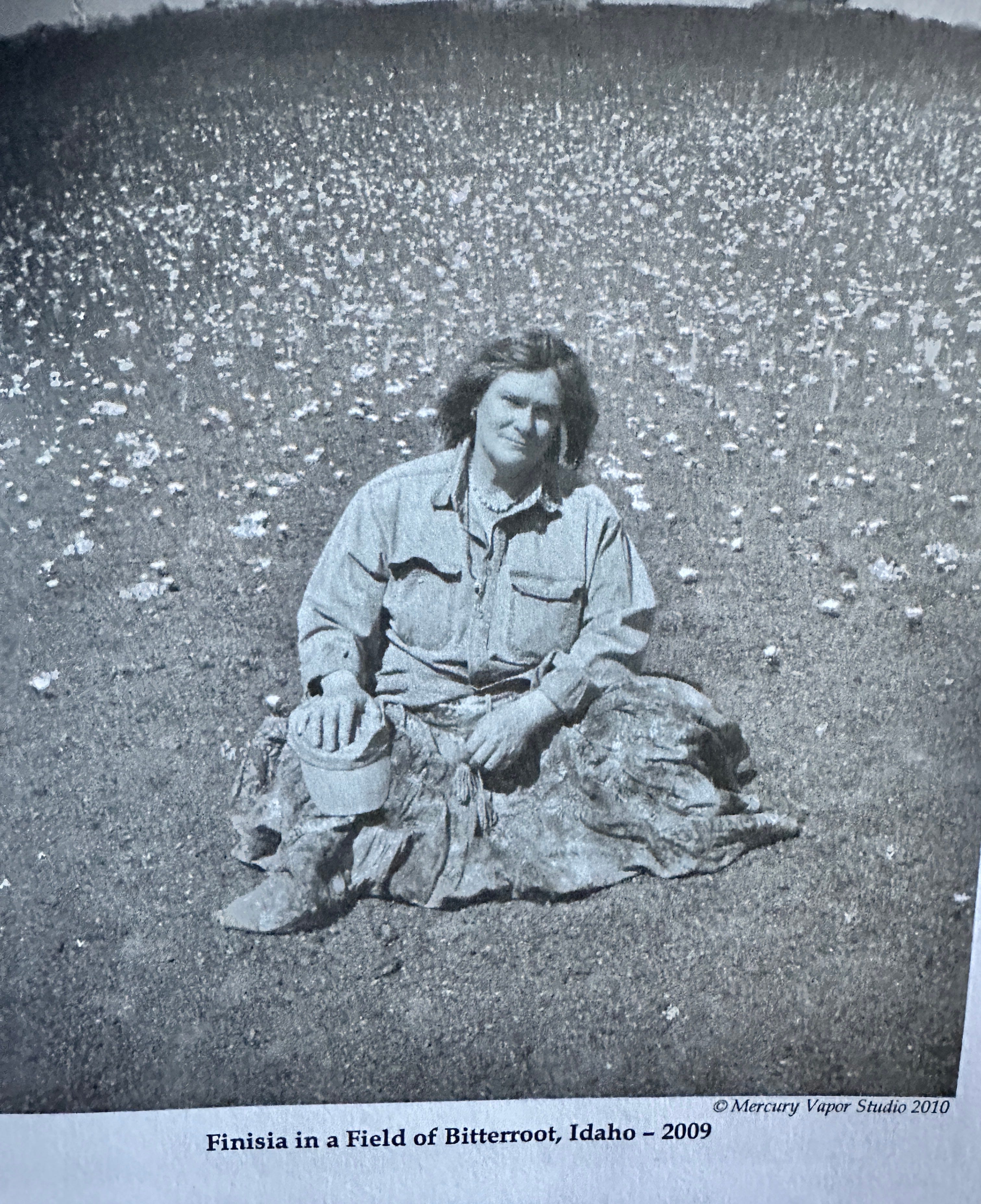
I do not write about her to romanticize her. Her character and her work are complicated, especially because so much of what modern wild-tending calls “rewilding” draws from Indigenous ecological knowledge, seasonal foodways, and first-food traditions that have been threatened, interrupted, and criminalized by colonization.
As she once said, “I’m not an Indian, I’m a mad Irish man living in an Indian’s nightmare.”
She paid a heavy price for her convictions: living on the fringes, enraged by ecological destruction, with a heart as fierce and as wide open as the prairie itself.
Finisia’s work was not theoretical. It crossed fences, property lines, and legal boundaries. She was jailed at least once, and people who knew her understood that conflict as part of the larger collision between wild-tending and a world that has made planting wild food, following seed, and living seasonally nearly impossible.
Today, her friend Michael Kennedy Ridge is facing a federal case connected to planting wild foods on Forest Service land. He has said publicly that he planted native food seed in giant letters spelling “EAT ME” on the rim of Hells Canyon. His next reported court date is July 7th. I am watching closely, because I believe this case could become an important one for wildtending, seed sovereignty, and the question of whether restoring native food plants can be treated as a crime.
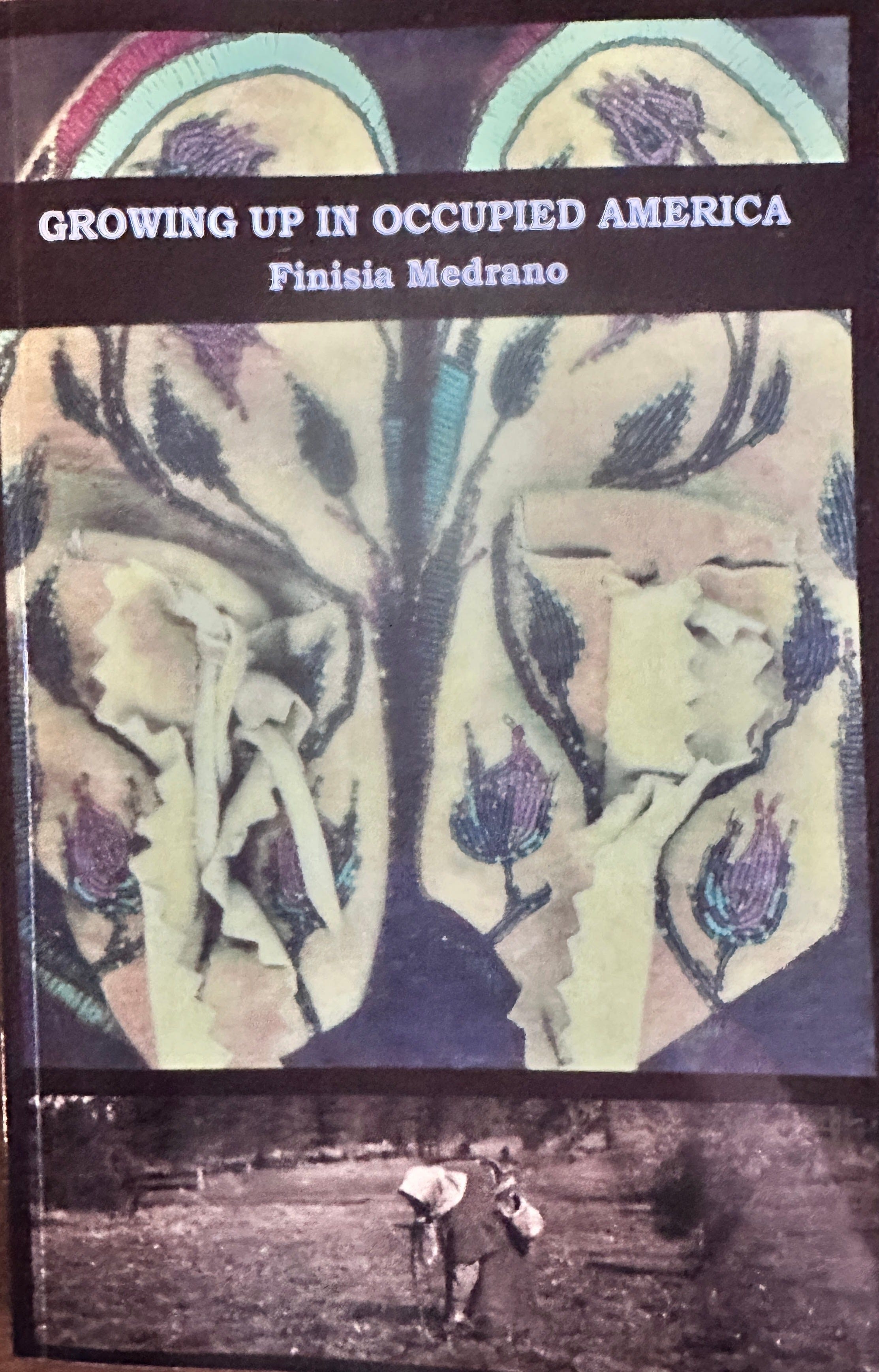
You can also read Finisia’s book, Growing Up in Occupied America and Other Writings, published in 2010. For me, it reads a little like Burroughs’ Naked Lunch: less like a conventional book than a bundle of manifestos, visions, field notes, arguments, and remembered teachings. It feels like entering a weather system in the Rockies: prophecy, rage, plant knowledge, grief, and instruction all moving at once.
Once you have been touched by the force of her work, you can’t quite look away.
What would it mean to live as though the wild garden still needs us?
Do we dig the root, or do we follow the seed?
Do we consume the wild garden, or do we help it continue?
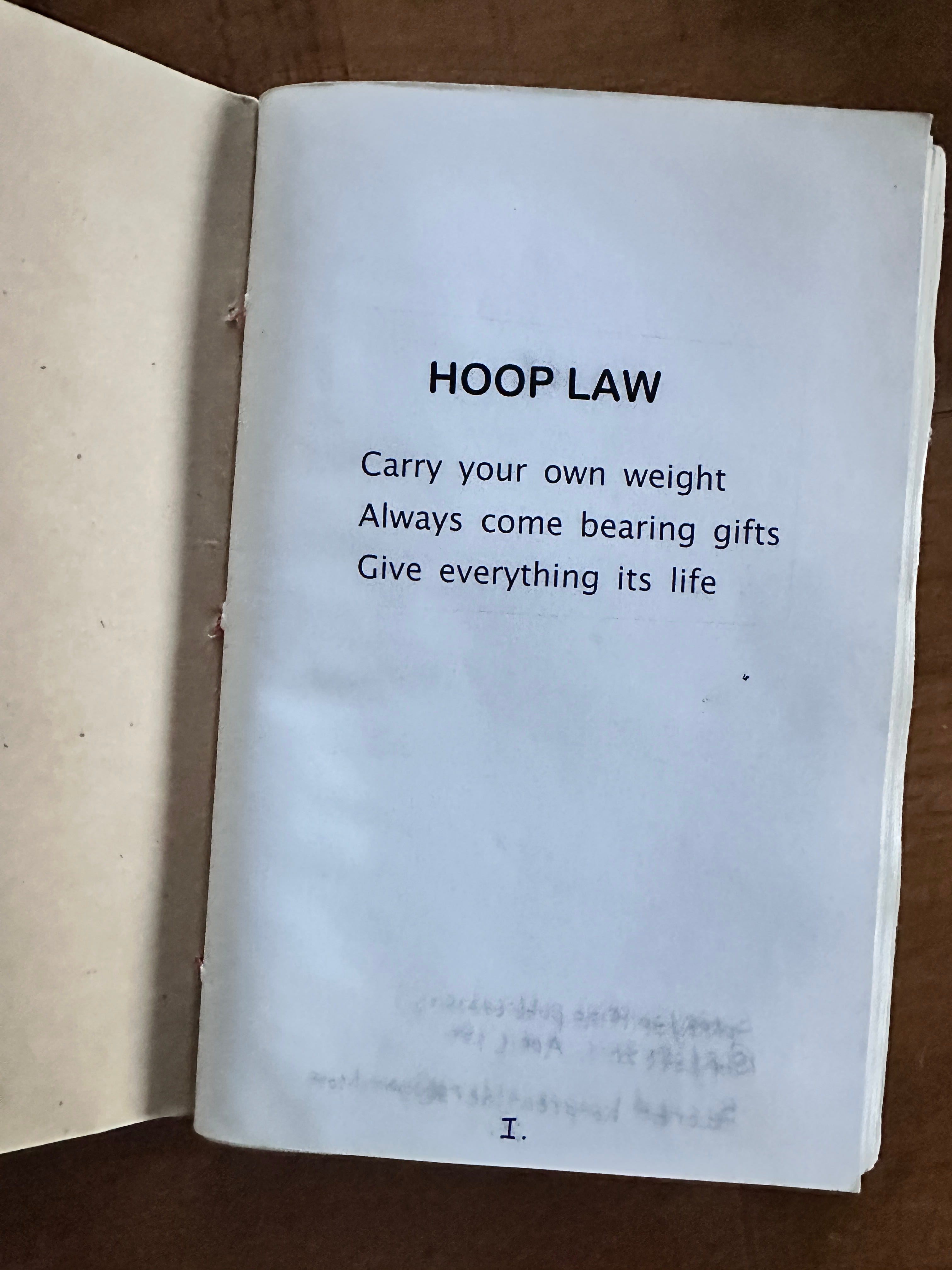
This is the looking glass.
In Through the Looking-Glass, Alice sees a garden and tries to reach it, but the paths refuse to behave. Every direct approach sends her somewhere else. To arrive, she has to learn the logic of the mirror-world.
A mirror reverses our world. To walk through it we enter a place where ordinary rules turn inside out, where logic bends, where the familiar becomes strange enough to reveal itself again.
That is what a field of wildflowers can do too, if you have the right lens.
On one side of the glass, the question is familiar: What is this plant good for? Can I eat it? Can I tincture it? Can I dye with it, smoke it, weave it, sell it, turn it into medicine, story, content, product, proof?
I understand this impulse. I have lived inside it too. So much of modern folklore and wildcraft culture begins with the human appetite for meaning: what the plant can do for us, what our ancestors used it for, what magic or medicine it might hold.
But step through the glass, and the question turns around.
What am I good for?
What does the plant need from me? What does this place require of my hands, my restraint, my memory, my labor? If I gather, how do I return? If I harvest, how do I tend? If I take from the wild garden, how do I become worthy of being there?
A few weeks after the balsamroot harvest, we moved out of our rental.
In the yard a tree had come down in a windstorm, opening a raw scar of disturbed ground. We were packing boxes, trying to lighten our load, touching each object and asking whether it belonged to the next life or the last one. Among the things we carried were envelopes and bags of wild seed.
With permission from our landlord, we walked to the scar and scattered what we could: arnica, balsamroot, wild rose, lomatium.
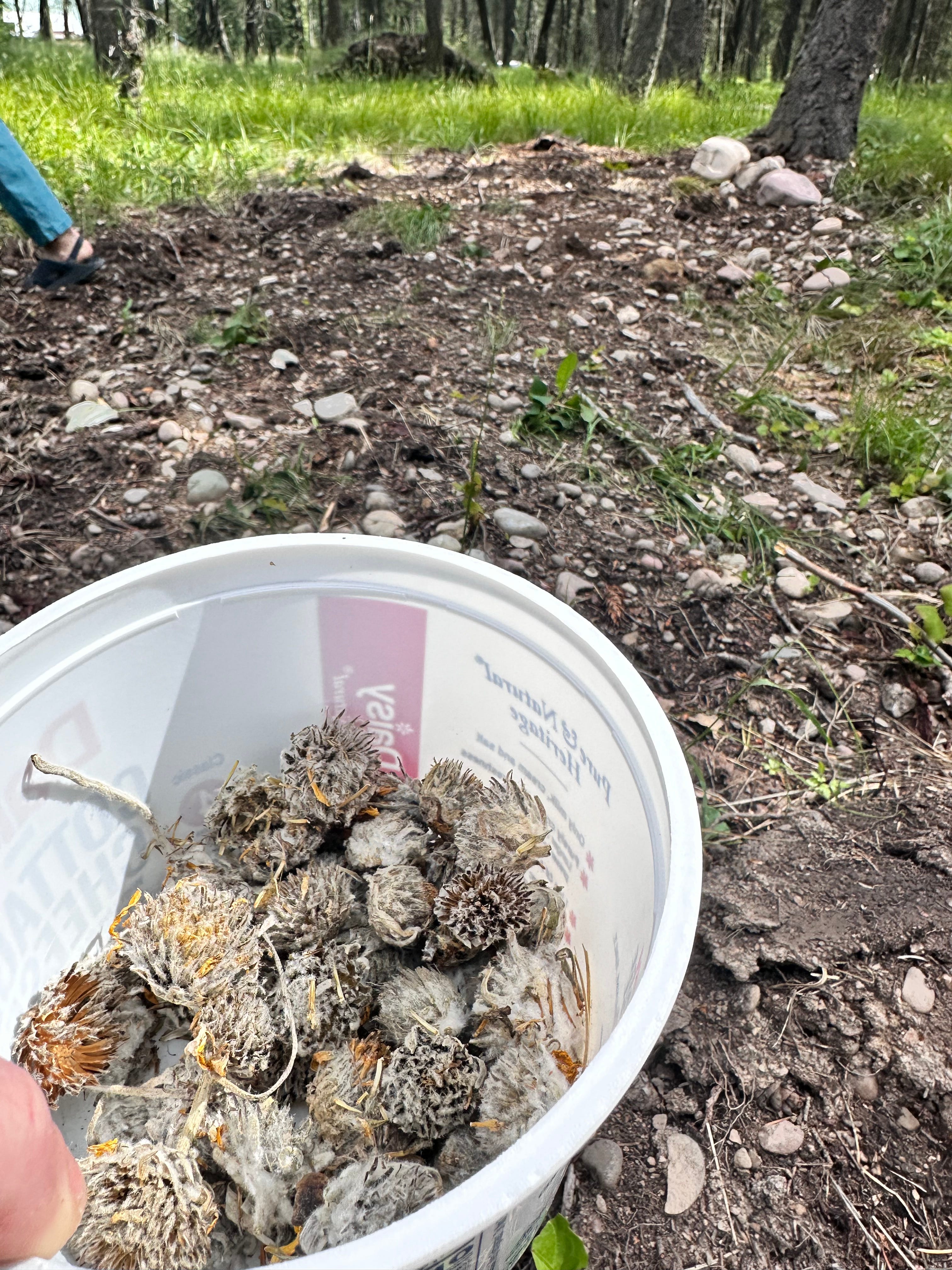
Maybe some will take and maybe none of it will. But standing there with those seeds in my hands, I felt intimate and prayerful. Just gratitude — the feeling of offering something back to a place I love deeply, with seeds gathered from the same living region. I am excited to return in the spring to see what is growing.
I do not think this knowledge belongs to the past. I think it waits beneath the habits of extraction, beneath the market, beneath the fantasy of untouched wilderness.
There is a richness to a heavy bag of wild seed that must live somewhere in ancestral memory: the feeling of running their smooth bodies through the hands, of sprinkling them over the landscape, of hoping they will grow beauty beyond our own wildest imagination.
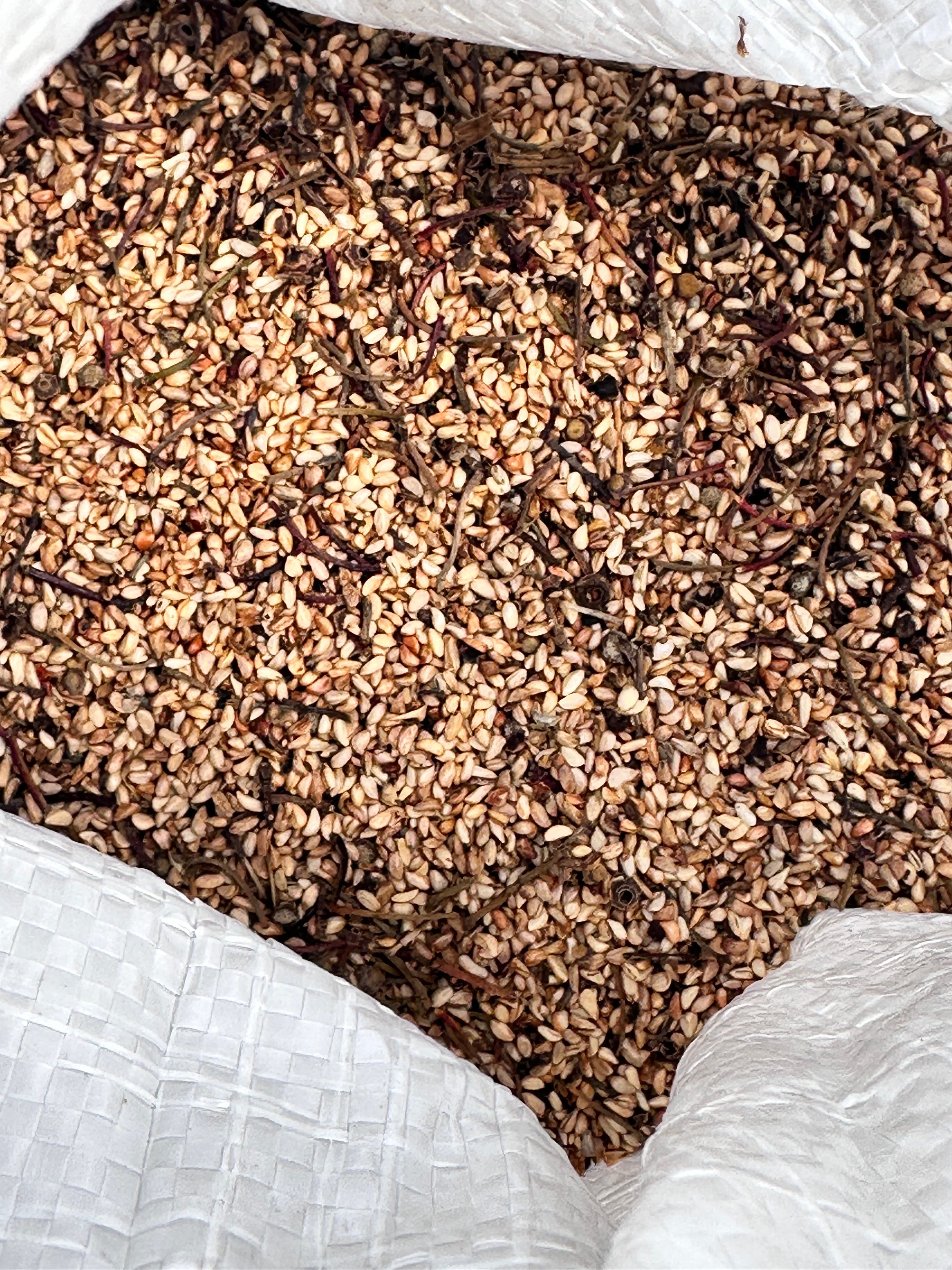
I loved throwing the fluffs of arnica into the air, watching them drift down to the ground.
Somewhere behind us are people who knew that gathering was only one part of the agreement, and their life depended on it. They carried roots and seeds. They burned meadows open. They watched the animals, the weather, the soil, the moon, the hunger of winter, the return of spring. They knew that abundance was not something to stumble into, and it was they who helped keep it alive.
The seeds are small. The work is old.
And the wild garden still needs us.
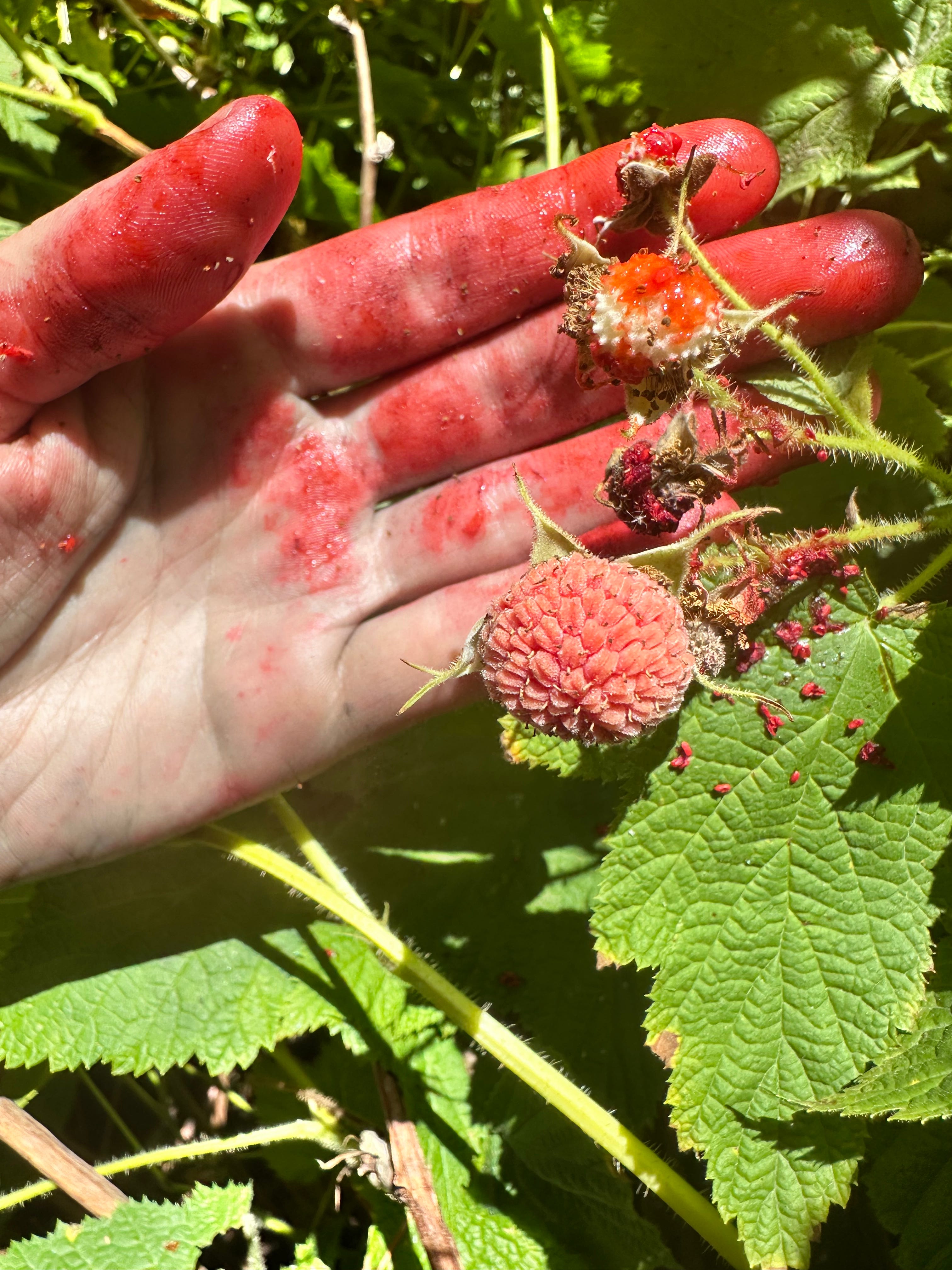
What seeds are you carrying? if you have a story of seed gathering, wild tending, ancestral plant knowledge, or a place that taught you how to see differently, I would love to hear it.
how beautiful
i didn’t know about the balsamroot before this article. your writing is so rich like the soil you work with. the metaphor of alice and learning how the “mirror-world” works (our own natural world) is brilliant. happy planting 🌱