

An upheaval of mountains run from Alaska to Mexico. The Blackfeet call them the Backbone of the World.

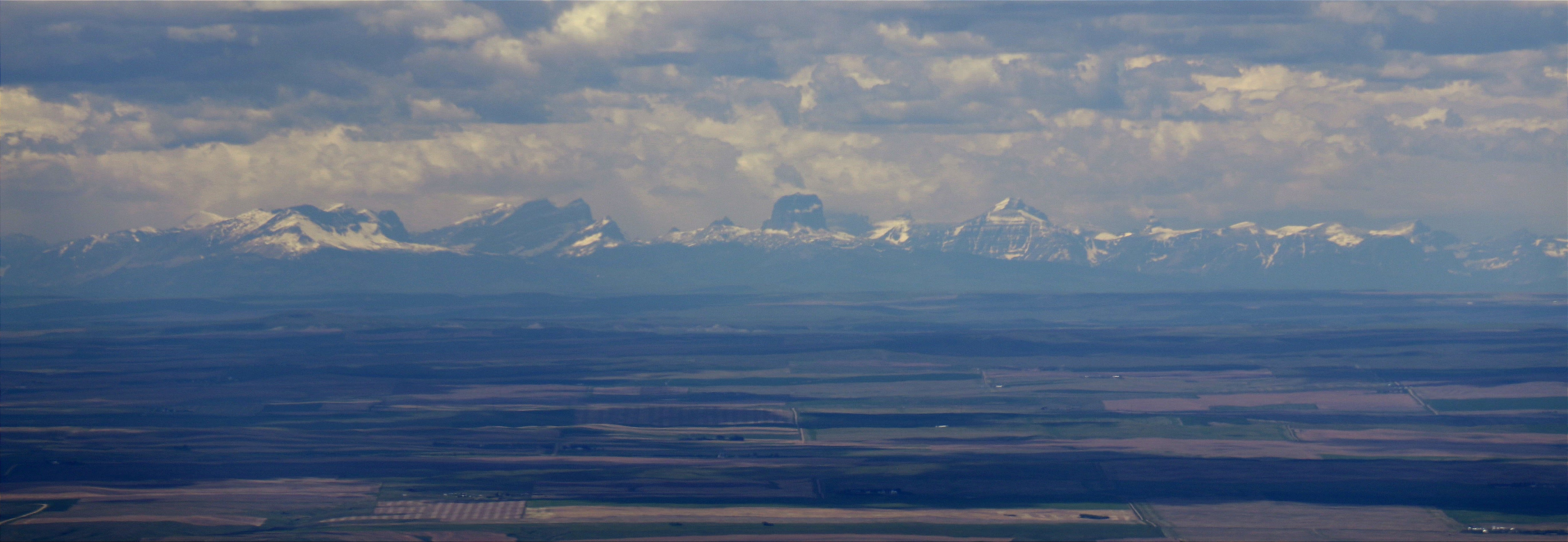
The spine of Turtle Island, these nodes of earth rise suddenly from the prairie, whittled by wind and gnawed on by glaciers.
They divide the continent. Snow melting on Triple Divide Mountain in Glacier National Park flows to the Pacific, the Atlantic and the Arctic Ocean.
Heading east the land spreads over her ribs like a turtle shell, stretching wide across a primordial ocean.
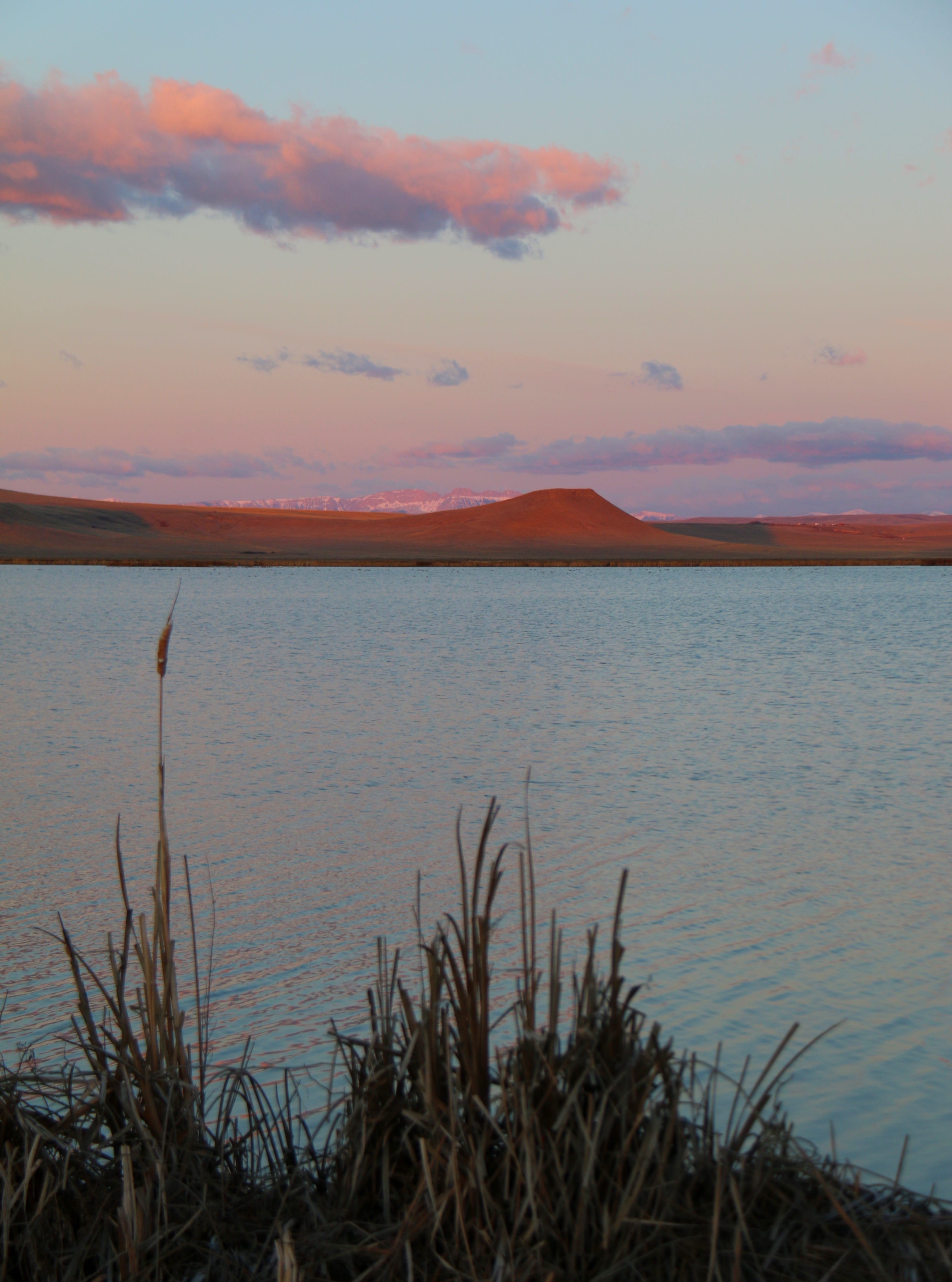
Buttes of earth roll like waves in the foothills of the Rockies. Their presence is soft clay, the grass like velvet on their crests. Cloud shadows and dappled light shift over their faces.
They feel like the earth is dreaming.
At their feet the Maiasaura, the “good mother lizard”, nested. At Egg Mountain entire Late-Cretaceous nurseries pressed into the mud.
❈
It is late March, just past the equinox, and the snow geese migration is peaking. Freezeout Lake, outside of Choteau, Montana, lies along their route to the Arctic tundra. They arrive here after a single, unbroken flight from Northern California.
They are wilderness birds, drawn to quiet places where the land still holds space for them.
The geese come in lean. The journey has taken what it needs and there are many more miles to go. In the surrounding fields, they glean what remains of last season’s barley harvest.
The east side of Montana is the nation’s Bread Basket. The grass grows taller with the thunder clouds. Long Grass Prairie of the Midwest gives way to the Mixed Grass of the Dakotas. Then to Short Grass Prairie under the wide Montana sky.
Last summer’s stalks haven’t forgotten the sun; they glow golden against the moody March sky, as if in defiance of winter.
Yet they shiver in the wind.
I break their brittle stalks between my fingers and peel their pith from their bark.
My companion and I arrived in a snow squall. Large, soft flakes melt as they touch the ground. The sticky clay on the east side, infamously known as “gumbo”, pulls at my truck tires, endeavoring to return the gasoline vehicle to meet its maker.
Still, we are grateful for the mildness. Out here, it could just as easily be below zero. When the wind comes, the muscles cling tightly to the bones, protective, lest it steal their marrow.
The geese, too, seem to fall from the sky like snowflakes. Their soft calls drift over the ponds of the Wildlife Refuge. We hear whispers of the past few days:
Friday morning, 65,000 birds lifted in unison.
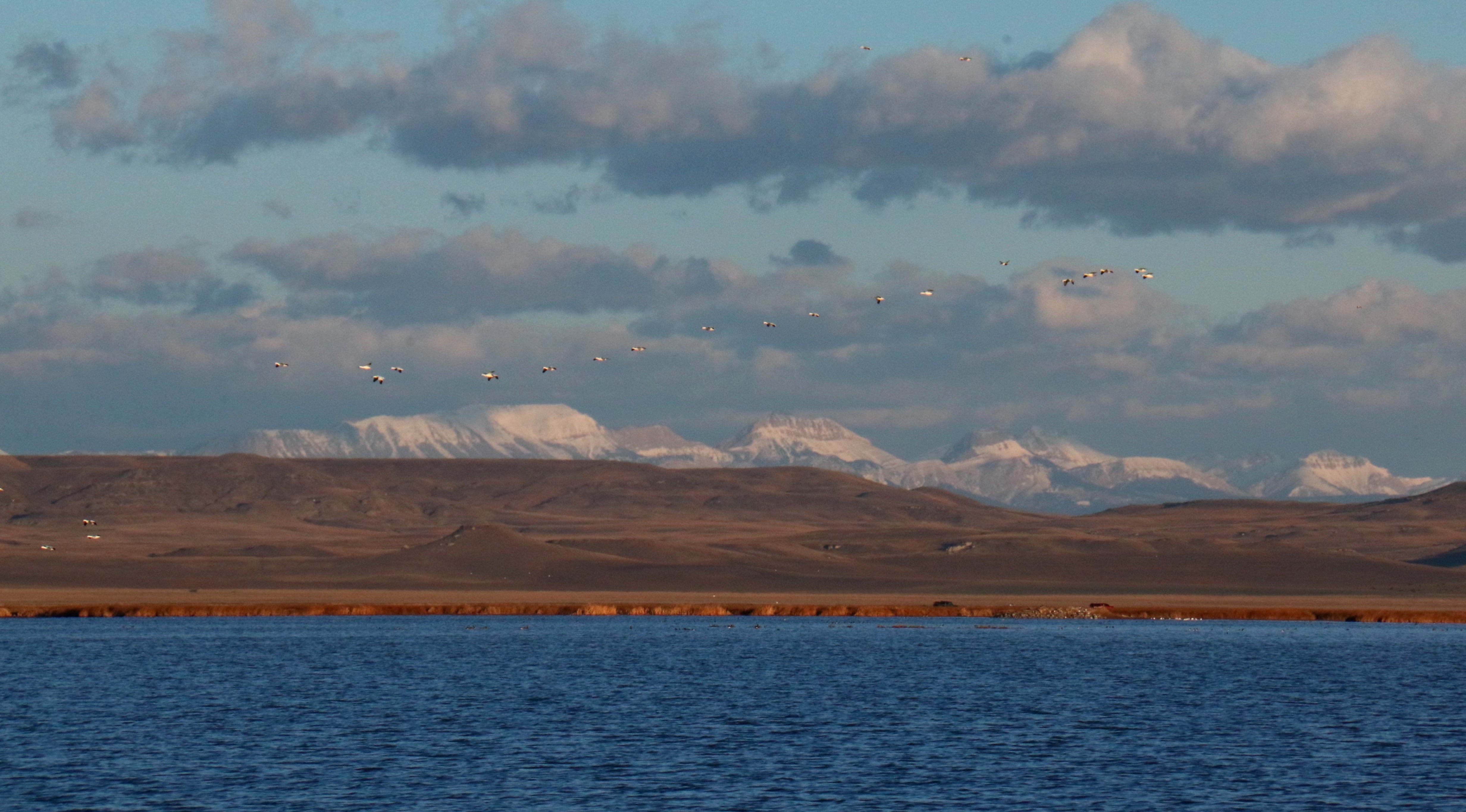
Anticipation gets the best of us. There don’t seem to be many geese today. Having never witnessed this before, we wonder if we missed it.
We circle Freeze Out Lake, searching for both a campsite and the birds. On the ridges above the lake, eagles ride the updraft. They pick at the bellies of behemoth carp strewn en masse along the shore. It is always alarming to see so many corpses. I sit with the perplexing feelings of balance and invasion. Did the state poison the carp? the question lingers. The birds don’t seem to mind.
Later, I learn that carp cannot withstand the cold. The lake is shallow, the east side frigid. The fish surface and collect, offering their bodies to a raptor population that has declined by more than 30% in the last thirty years.
In the community hall in Choteau, I trace the red and purple lines of migration data—Golden Eagle routes stitched across the continent—with awe-filled eyes.
After pitching camp, I stirred up a good share of gumbo on my mud flaps and brought it into town.
My friends and I escaped the wet cold to watch Rob Domenech’s presentation on raptor rehabilitation along the Rocky Mountain Front with the Raptor View Research Institute (RVRI).
Domenech’s work with Golden Eagles is not for the faint of heart. After condors, they are North America’s largest raptor. It is quite something to watch biologists grab the eagle by the feet to disable their talons.
RVRI has wing-tagged and monitored these birds since 1992. The data stretches across decades, across borders. An eagle named Diego traveled from Durango, Mexico to Alaska, over 3,500 miles. The routes follow the Front Range, threading the length of the continent.
The Old North Trail.
The Front holds what moving bodies need: water from snow melt, trees for shelter, a softer edge between the extremes in the mountains and exposure in the prairie. In the Pleistocene, herds of mammoth and ancient bison, Bison antiquus, tracked seasons along this corridor. Predators followed and scavengers followed them.
For millennia, people followed too. The Blackfeet have stories of traveling the Old North Trail to Mexico. And now I understand that the birds, the bison, the bears, anything that migrates, still do.
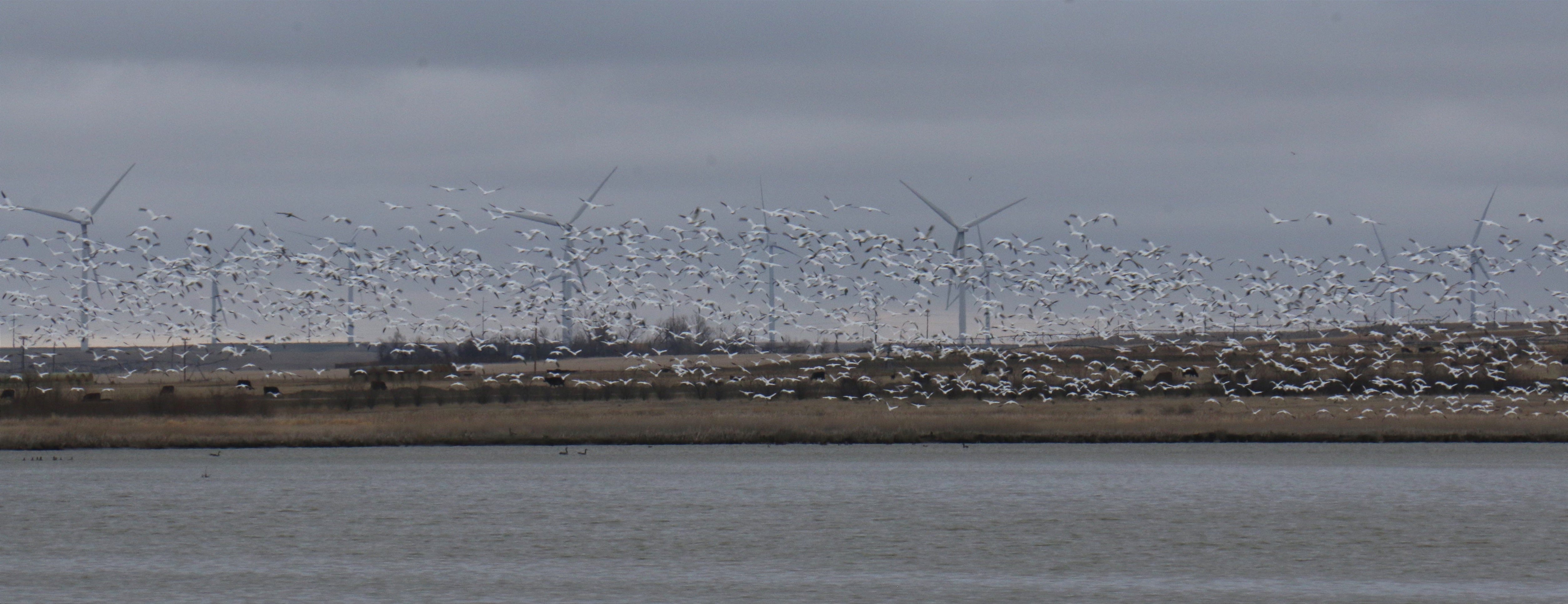
The hall clears out, volunteers start folding chairs. We return to Freeze Out. In a pond we witness our first flight of geese. Behind them the long blades of wind turbines slice the air.
❈
The next morning we arise before dawn. The sky is clear, frost sparkles like stars under my headlamp. The truck engine burbles and churns out heat. I pour hot water sloppily into an aero-press of coffee.
We drive east into the Saltillo blanket of sky. Thin threads of red, orange and yellow weave the turning of the earth into the cosmos. I gasp as hares dash before my rumbling tires. I’m wide awake now, no coffee needed.
A group of people gather on the eastern shore of the big lake. They assemble like the geese, and I gladly join them.
In the middle of the lake, a large flotilla of snow geese rests. They look like the last bit of snow and ice floating on the water.
Their calls are softer than the “HONKA HONKA HONKA” of a Canada goose—a higher, breathier bark. Their voices blend together like the rush of an ocean wave breaking over sand, a rolling trill that moves across the water. More geese float down from the sky to join them.
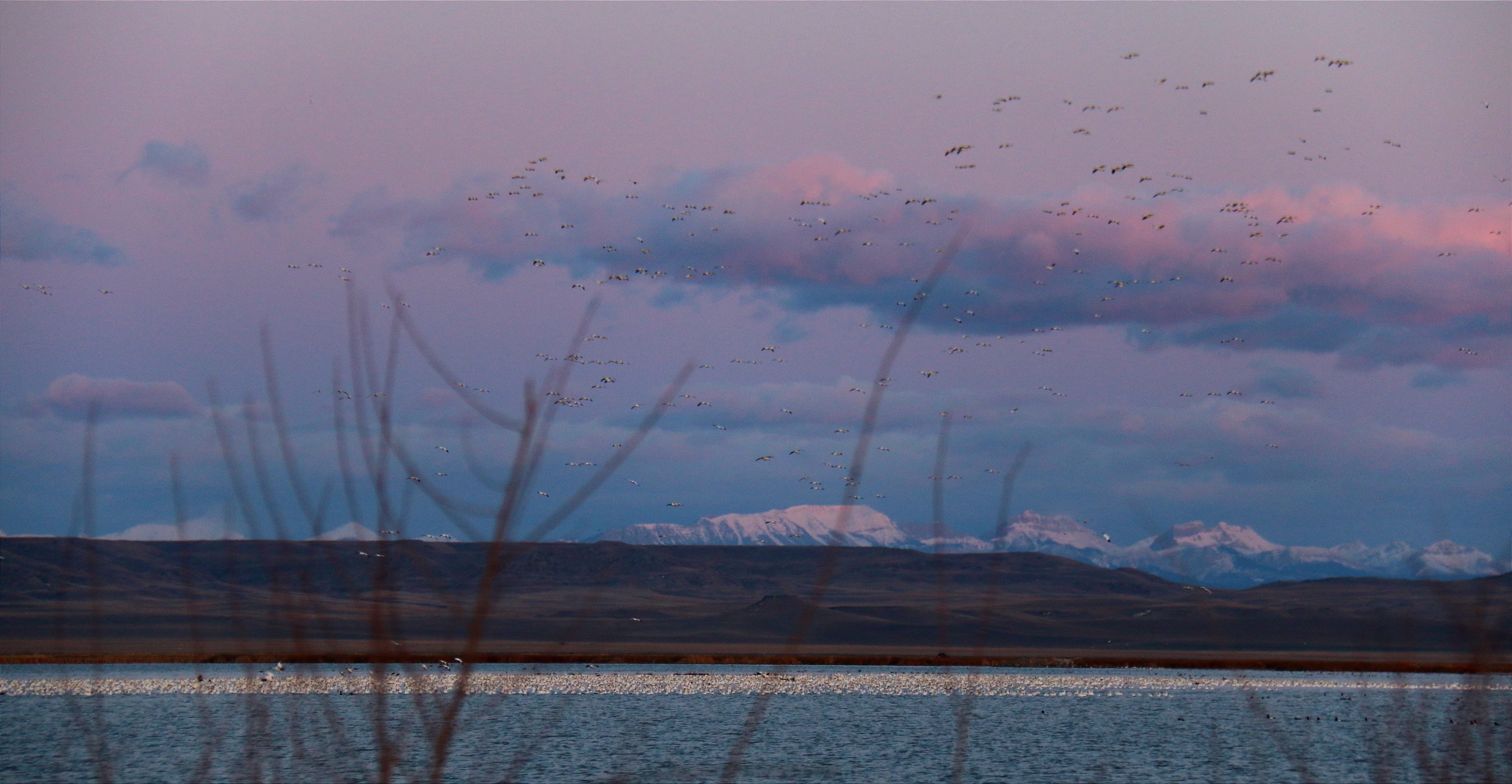
The front range starts to glow a soft, dusky pink. The sky is baby blue. The geese’s white bodies turn pink too.
The small congregation of people wait with bated breath, no one wants to move in case they miss it. I take sips of my coffee to stay warm.
Now the range is bathed in bright pink. The sunlight travels down the mountains into the buttes. Watching, I could sense the billions of sunrises that have stained this earth red.
The geese calls crescendo into a stirring. And then,
the sound of thousands of wings against water.
Like the shuffling feet as the church choir stands to sing, feathers beat the air to lift bodies into the wind.
I am overcome by the sound and I begin to weep.
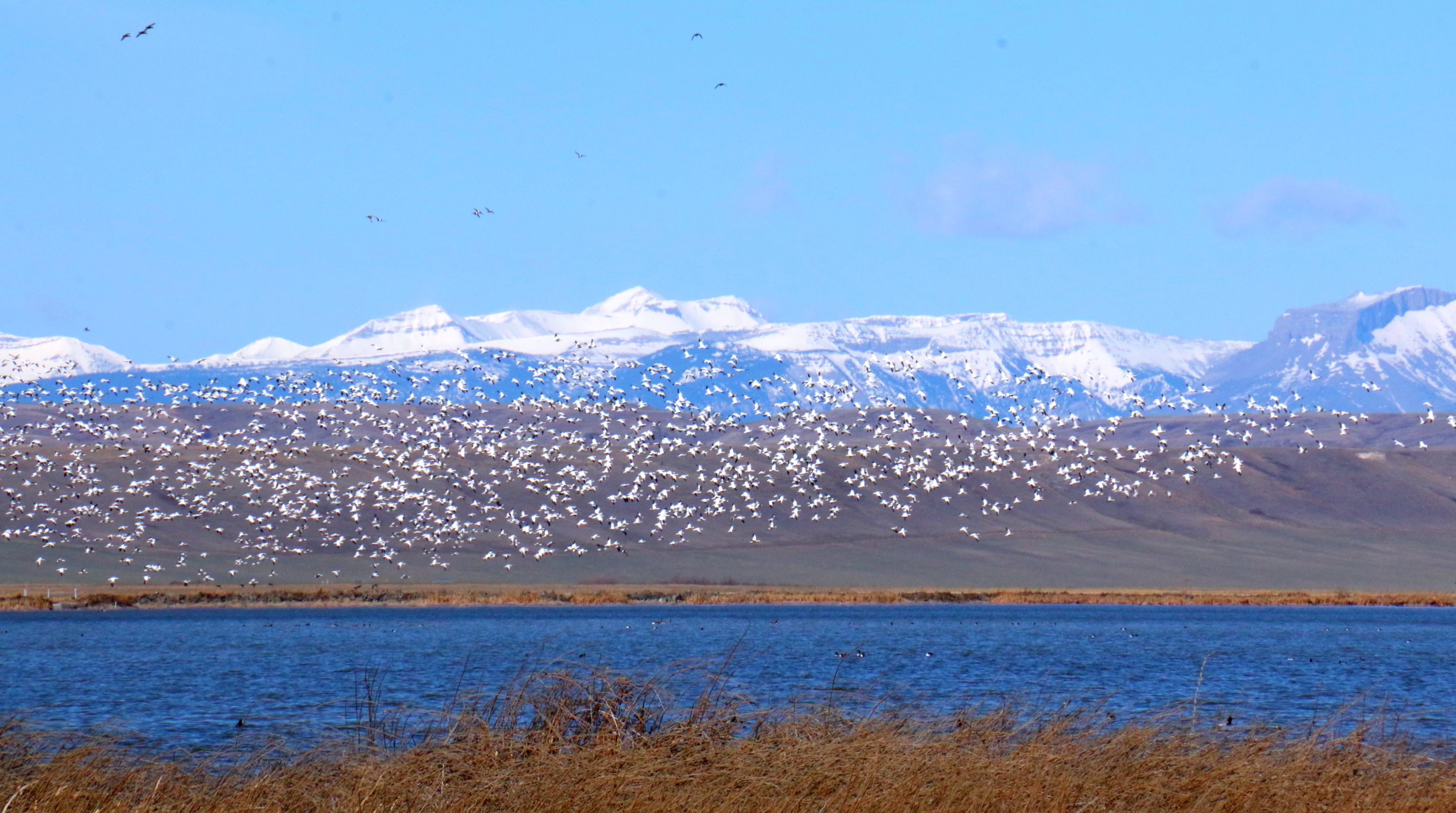
The geese pass directly overhead, their bodies now golden. Black wingtips flicker and fold through the shifting light, patterns flashing and dissolving, dazzling the eye.
My spirit rises with them, flying north over the Great Plains to Saskatchewan.
❈
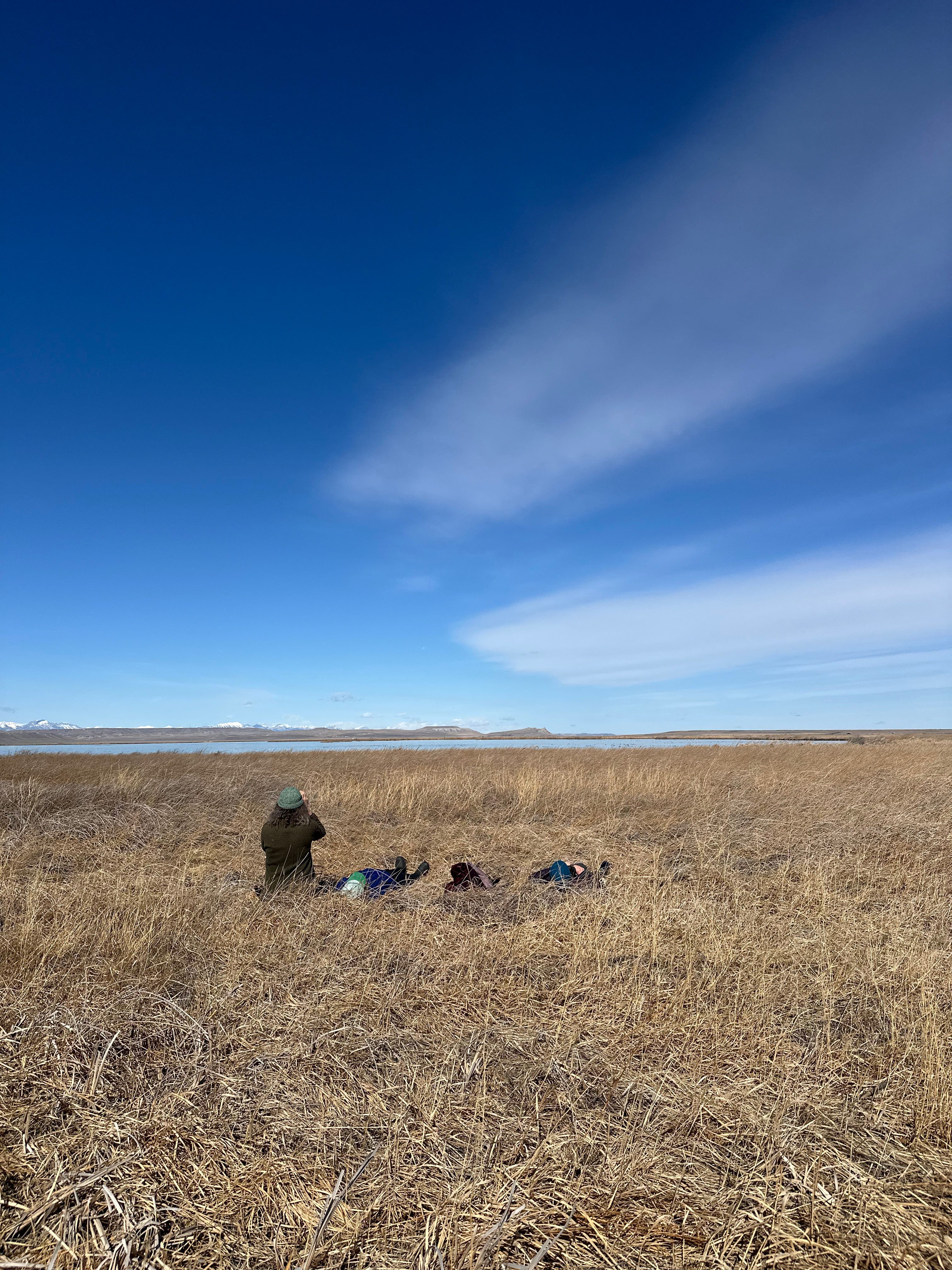
The late morning sun finally seeps through my layers of wool clothing. We eat breakfast, laugh and share stories. My friend reads Mary Oliver’s Wild Geese out loud. Although I’ve heard that poem so many times before, her words hold weight in the shape of this landscape.
We drowse together in a field next to the lake, observing Sandhill Cranes, Tundra Swans, Bufflehead ducks and Northern Shovelers. The geese fly many times, I experience their wing beats in my body with my eyes closed.
I wish I never had to leave that dreaming.
Slowly we rise, pack up camp, and drive back into the mountains.
Wild Geese
by Mary Oliver

You do not have to be good.
You do not have to walk on your knees
for a hundred miles through the desert repenting.

You only have to let the soft animal of your body
love what it loves.

Tell me about despair, yours, and I will tell you mine.
Meanwhile the world goes on.

Meanwhile the sun and the clear pebbles of the rain
are moving across the landscapes,
over the prairies and the deep trees,
the mountains and the rivers.

Meanwhile the wild geese, high in the clean blue air,
are heading home again.

Whoever you are, no matter how lonely,
the world offers itself to your imagination,
calls to you like the wild geese, harsh and exciting -
over and over announcing your place
in the family of things.
Boreal Folkways is a space for weaving relationships between people, land, and our innate creativity.
Through essays, field notes and practices, I explore traditional craft, ancestry, and ways of reconnecting with the natural world.

your life is so lively and so nature-embracing. i would love to have these adventures.
seeing the flight of the snow geese must have been amazing. do the wind mills affect them?
i like the reflection of migration. living creatures have always migrated and will continue to do so for all time.
“wild geese” by mary oliver is a perfect poem for this moment. how joyful that someone read it ✨
I live in the shadow of that range. Treasure Valley, Idaho. The Rockies visible on clear mornings from my driveway.
Never been to Freezeout. But I know that cold. That clay. That March light on the Front.
The weeping. You didn't explain it. Didn't apologize for it. Just said it happened and kept moving. That's the only honest way to write something like that. Beautiful.
The Old North Trail. Mammoth, bison, Blackfeet, snow geese, a woman with an aeropress in a cold truck. Same corridor. Same pull. Nothing's changed but the century.