
Welcome to “The Ecology of Perception”, a series on language, attention, and rewilding the mind.
In Part 1, I wrote about losing the words for the living world. In Part 2, I offered a few practices for reforesting the mind.
I present Part 3:
A Mink in the Engine Block
Glaciers are a slow, accumulated force, sculpting human lives since the last great Ice Age. When they melt, they expose the landscapes of our minds. In the floodplain of the Anthropocene, we begin the work of reforesting.
Birch comes first in the glaciated floodplain. Water-loving and quick to root, she is a pioneer species, the keeper of liminal thresholds. In the boreal north, birch teaches how reforestation of the mind begins: by opening perception in relationship to our living world.
But a forest cannot live forever in its pioneer stage.
Once ecological perception takes root, the inner ecosystem must diversify. It cannot remain all tenderness, new leaf and sapling.
We need brambles to hide in and resilience for the storms. We move through appetite, failure and improvisation. We need small bodies with outrageous nerve to test the boundaries and bring new possibilities.
A forest needs mischief, and we need play.
Raven, coyote, bear, weasel; play is ecological intelligence in motion.
❈
running, breathless
dancing, prancing, prowling, crawling
laughing, guffawing, giggling, singing
mimicking, loving, teasing
creek water seeping over your boots, sticks tangling in your hair
thinking you’re more capable than you really are,
falling
getting up
trying again
failing brilliantly.
Charged presence, a bright and animated energy.
This is play,
the part of rewilding we tend to only save for children.
Oh, rewilding.
At its worst, the algorithm sells our birthright back to us in stylized theatrics. Measured by the buckskin skirt, the handwoven bag, the sheepskin, the expensive retreat, the perfect photograph of a life supposedly returned to the wild.
Meanwhile, the nitty-gritty parts of life keep calling: into the forgotten brambles out along the edges, where the nervous system learns the world by touch and lays down new pathways through the thicket. Mischief, improvisation, failure with our sleeves rolled up. Resilience springing from the woven web of relationships.
We are all capable of the old animal genius that tests what the world will hold.
This is ecological intelligence in motion, slippery as a mink in an engine block.
❈
Weasels love my father.
An ermine followed him into his house, a badger took care of his gopher problem, he wrestled otters for a stringer of fish.
But minks, in particular, give him some grief.
Last year I arrived at our fishing camp to find my dad half folded under the hood of his car. A mink had stolen away into the matrix of the car engine with the pirated remains of the day’s catch, and there was no way of retrieving them from those weaselly hidey-holes.
We drove into town to get rid of the remaining attractant, the cab smelling like baked walleye intestines and low-tide rot.
I found it funny. My dad shook his head in disgust and some stress. On a different trip, he was the one out to drift on a large and fluctuating tributary to the Columbia River- with a mink who refused to leave the boat engine.
Quick, mischievous, fierce and a bit dangerous, impossible to pin down, weasel bounds between worlds: slipping through, stealing left-overs, startling certainty and testing every opening.

This is trickster territory.
Across stories and folkways, trickster often appears as the boundary-crosser. Coyote, Hare, Raven, Loki, Hermes, Nanabozho, Weasel; the figures are not interchangeable, nor do they belong to one tidy universal category.
Yet each carries a kind of sacred disruption, and the cultural codes embedded within: a foolishness with nerve, chaos with teeth, the intelligence that learns by trespass, appetite, error, and surprise.
What trickster does in story, play does in the body. Play keeps living systems nimble. A mink in the engine block is biodiversity inside the machine.
It is the method I use to remember my relationship with the wild.
❈
After decades cultivating teamwork and leadership for companies like Google, Nike, and Disney Imagineering, and working as a professor at Rhode Island School of Design, Cas Holman’s work circles a simple but radical idea: adults do not need to learn how to play so much as unlearn how not to play.
Adults do not need the right toy nearly as much as they need to unlearn the habits that make play feel frivolous, childish, or unproductive (Holman & Denworth, 2025).
There is a Sanskrit word that describes this well: līlā, often translated as divine play. In Krishna traditions, līlā understands that creation itself is a playful unfolding (Encyclopaedia Britannica, n.d.).
The world is not a problem to solve or a resource to manage, or (dare I say it) a wound that constantly needs healing1.
The more we focus on the problems we’re facing, the more stuck we get. The malaise or stagnation we feel in life is neurologically similar to forgetting a word, or looking for lost car keys: the mind narrows, paces in circles, and cannot force the answer directly. Then, hours later, after a cascade of small psychological and neurological shifts, the answer arrives (Pillay, 2017).
And the play Holman refers to is not childish. We are not meant to become children again, and children’s games are not always fit for adult bodies and minds. But adulthood is not the end of development, the mind keeps adapting, reorganizing, and making new pathways.
What changes is not our need for play, but the form it takes.
Adults often inherit narrow ideas of acceptable behaviors and therefore play, reducing it to recreation, entertainment, competition, or escape (Holman & Denworth, 2025).
Rarely do we ever engage in free play.
This kind of play strengthens social bonds, nourishes creativity, and helps us feel connected to meaning and purpose.
Engaging this way can also support cognitive flexibility. Neuroscientist Dr. Srini Pillay describes free play as a way of super-tasking. In free play we allow the mind to move between focused attention and unfocused association so more of the brain can participate and make unexpected connections (Pillay, 2017). Without the pressure of immediate performance, the mind solves, rehearses, recombines, and discovers ideas.
Monty Python’s John Cleese puts it another way:
“..you can teach Creativity. Or perhaps I should say…you can teach people how to create circumstances in which they will be more creative.”
Embodying weasel can help us understand those circumstances.
Across the animal world, play builds resilience, develops skill, and tests the boundaries of risk and reward. Ravens tumble in the wind and drop sticks just to catch them again. Fox kits pounce at invisible prey. Bears wrestle. Otters slide through mud and snow.
Survival is rehearsed through what appears to be useless joy.
A mink does not ask permission from the machine.
Where we have become too fixed, too defended, too sure, weasel crawls under the fence, enters through the seam in the wall, doubles back and tries the side door.
This is what play does too. We remember there are more ways through than the options presented by a narrowed mind. As Holman states:
“Accessing play requires an awareness of which rules of adulthood are important and which are not.”
Play steals from the over-secured life: from the closed schedule and the tidy self we lock up from the world.
Trickster tests every claim of mine with small sharp teeth. The fish guts were never really contained and neither is the self...(If you can, please forgive the metaphor).
As Dr. Pillay notes, one of the major obstructions to creativity is a fixed identity.
Trickster often arrives as the holy fool, the one who reminds us that ego can always be caught with its pants down.
And this is a brave act. To let our guard down requires an interplay of vulnerability, trust and risk, which to us signifies danger. We remember our painful experiences of mistakes and heartbreak, failure and judgement, and disapproval from others. To play freely is to consciously open ourselves to vulnerability and uncertainty.
To quote Lao Tzu, “When I let go of what I am; I become what I might be.”
“We have to admit what we want and ask for it, whether that’s to kindle a new friendship or to dance with a stranger, the rewards for that risk are wonder, connection, awe, learning, growth and yes, fun.” - Cas Holman
Our minds often prioritize safety in environments that pose very little risk. We overthink the dangers, priming our minds to expect failure before anything has even happened (Pillay, 2017).
We forget to ask if the rules we’re following are keeping us safe or just keeping us from playing (Holman & Denworth, 2025).
Are those rules worth questioning?
And maybe that is why the mink in the engine block felt so funny to me. The mink tipped our camp routine into the absurd. The assumption that human plans were the center of the day was tested by one small, stinking, whiskered intelligence.
All audacity per pound, that holy little vandal of rigidity.
❈
So how do we enter play?
Weasel belongs to thresholds. They are a creature of the edge-lit and gone-in-a-second. A lithe and electric body, shape-shifting and bounding through multiplicity and uncertainty.
Play begins when we stop asking, What is this for? and start asking, What happens if? This is the fluid and curious mind I described in the second essay of this series.
What happens if I follow the creek?
What happens if I make the thing ugly first? Or try a new material? Or draw blindfolded?
What happens if I sing while I work?
What happens if I let myself be seen trying?
What happens if I do not turn every longing into a project?
As Albert Einstein said, “If we knew what it was we were doing, it would not be called research, would it?” A hypothesis, by definition, is the possibility of an outcome.
Play begins in possibility and experiment. Children do this instinctively, discovering play through local feedback: try something, enjoy it, repeat it, change it, and make it into a pattern (Pillay, 2017).
Adopting a possibility mindset — the authentic optimism that getting unstuck is possible — helps the brain experience curiosity and low-stakes experimentation as intrinsically rewarding (Pillay, 2017).
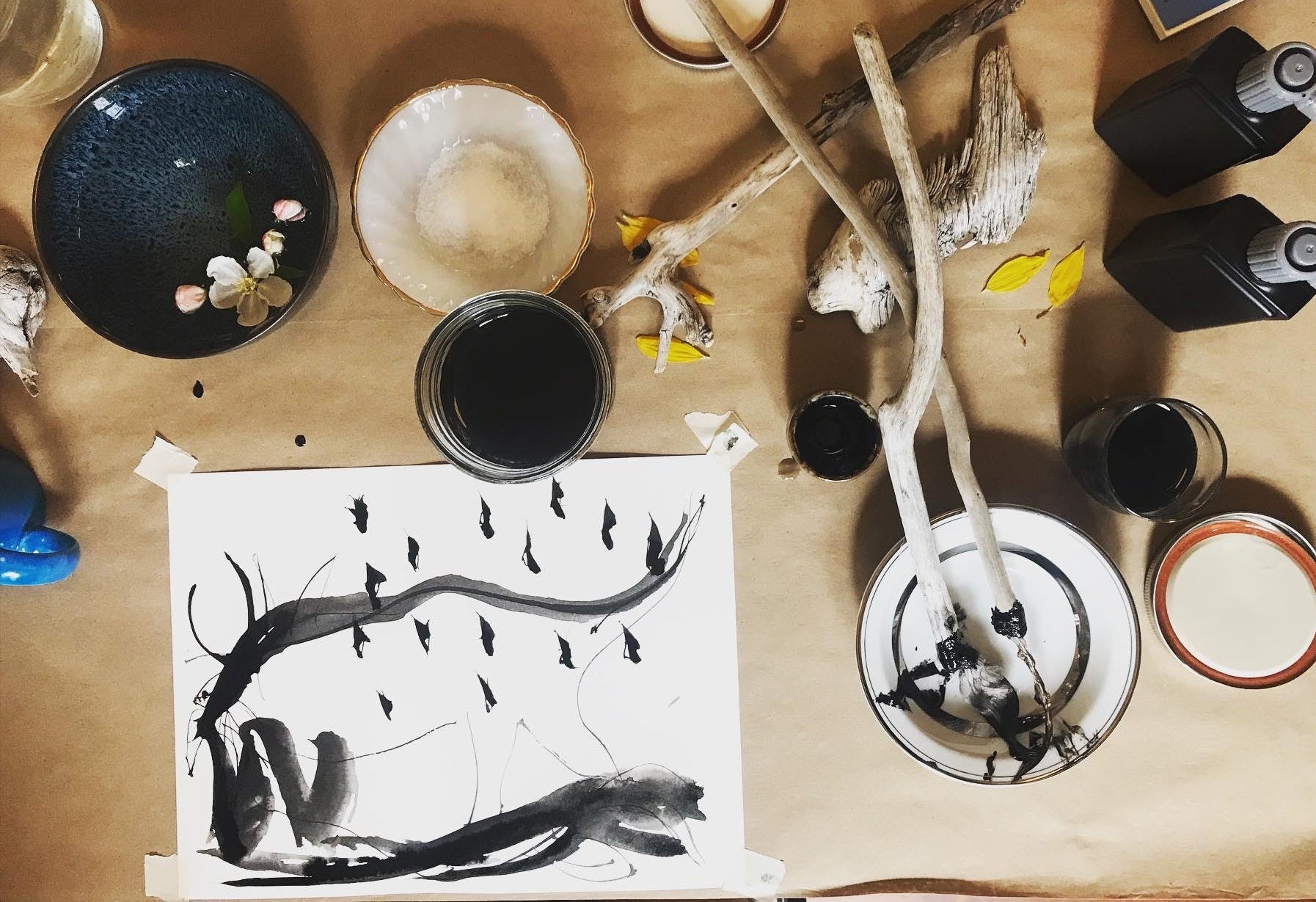
If this still feels abstract, here’s some wisdom my drawing and painting professor told me in college: we tend to make art in the same way we used to play as children.
As an art teacher now, I like to test this idea with my high school students. After watching them work in my classroom, I can often guess how they liked to play. A student who built an intricate apartment complex out of cardboard loved to play Minecraft. The sloppy wheel throwers in ceramics were happiest in the mud. The one who disappears into small details constructed tiny worlds and lost herself inside them.
We can enter play through the memory of play.
Did you build forts? Make potions? Sneak through the grass? Stage battles? Invent languages? Collect rocks? Dig holes? Climb trees? Build tiny houses for invisible beings? Did you play chase, kick-the-can, dress-up, dolls, basketball, wilderness survival, restaurant, school, spy?
The form matters less than the pattern.
I helped a friend think through the ways he used to play. He confessed that he does not always enjoy his daughter’s kind of play, and because he loves her so much, he feels pressure to optimize their time together.
He also thought he didn’t play, but it turns out putzing in the garage is an adult form of play. We can be so boring, can’t we?
Or maybe not, tinkering is where adult play often hides.
An avid hunter, full of fantastic stories about stalking elk and mule deer through coulees, he did not surprise me when he remembered loving physical sneaking and hiding games as a kid, like kick-the-can and capture the flag.
I suggested he begin there with his daughter by meeting her more authentically through sneaking, hiding, and tracking games. For her preferred play roles, mainly character exploration, all he needed was a gentle shift in perspective to make them feel more natural for him too. In this way, they can bond through mutual attention, movement, anticipation, tradition, and delight.
❈
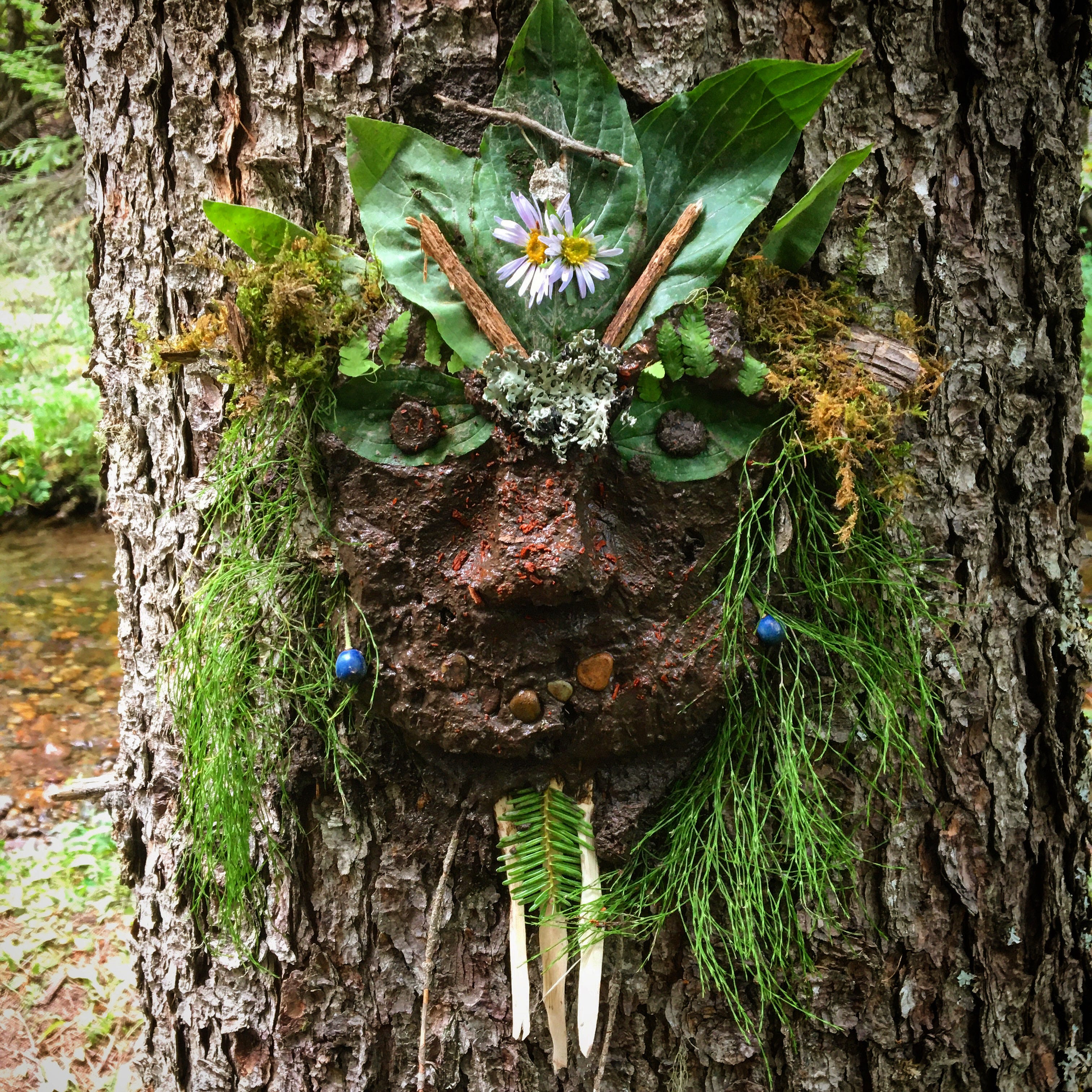
Play leads me back to relationship. I am in love with the way the wild follows me home.
Sap sticks to everything I own. In summer, resin coats my feet until they feel padded like an animal’s paw. Fir needles weave ragged patches through my clothes. Nests of birch bark curls and shredded cedar spill from my pockets. Sometimes, in the grocery store, I forget the soot on my face and the feather tucked behind my ear.
Waiting in the checkout line, I turn the little mystery rock living in my coat. I am distracted by bird calls, but I know when a hawk is hunting and can track the fox loping through the underbrush.
My imagination follows weasels around.
This is the part of rewilding no one can sell back to you: to risk foolishness for the sake of relationship.
A mind is not meant to work like a machine, and a life without little trespasses becomes over-managed.
Weasel keeps us from becoming tame.
Tell me: how did you play as a child, and how do you play now?
❈
Thank you for joining me for The Ecology of Perception.
We began with glacial, ecological loss and the words we are losing, moved toward the attention that returns us to relationship and reforests the mind, and end here with play: the wild, foolish, necessary intelligence that keeps a life from becoming tame.
May you notice what calls from the hedgerow and bramble,
may the wild follow you home.
— Lena, Boreal Folkways


Bibliography:
Holman, Cas, and Lydia Denworth. Playful: How Play Shifts Our Thinking, Inspires Connection, and Sparks Creativity. Avery, 2025.
“Lila.” Encyclopaedia Britannica, Encyclopaedia Britannica, www.britannica.com/topic/lila. Accessed 1 May 2026.
Dr. Pillay, Srini (2017). Tinker Dabble Doodle Try. Ballantine Books.
I do not mean that we turn away from suffering and escape into privilege. I mean that crisis cannot be the only doorway through which we meet the world. Play gives me a grounded practice for staying responsive inside complexity. This is why play feels more useful to me than slogans about joy. It is not a mood I have to sustain, but a practice that helps me stay in relationship.
Such an inspiring article, Lena. Thank you. It is so lovely to read your words about play and to be invited to think about play in my own life. I remember playing across spaces as a child: twisting through the new worlds of tree branches, digging through leaf mould or sand to expose other landscapes, and diving under water and through waves in cold seas, listening to the muted sounds there. But while I was immersed in these places I was always also in adjacent ones that they sparked in my imagination. Decades later, I can return to these places (the felt and the imagined) in my memories if I am not fully there in body (sometimes I am :)). I feel like these experiences have shaped me so that I still imagine and explore in the work I do as well as my more private creative endeavours and daydreams.
This is so beautifully written and powerfully true! When I remember playing as a child I think of making mud pies, splashing in streams, catching tadpoles and frog eggs, and getting pummeled by waves while boogie boarding in the ocean. I think the throughline in all of this is making contact, in a very physical sense, with the world. I can see that has endured in how I play as an adult. I still get covered in mud while making pottery, I love to garden without gloves, and I have recently rediscovered the magic of jumping into freezing cold creeks, even things like ecstatic dance have helped me "make contact" with my own body in a way I had forgotten how to do.