
“I’ve heard the bears aren’t asleep yet.” I stand at the window, watching an unseasonable deluge of rain pour into the swelling Swan River. The snow that sloughed off the roof has already pooled into puddles. The snow pack dwindles up the mountainside toward seven thousand feet.
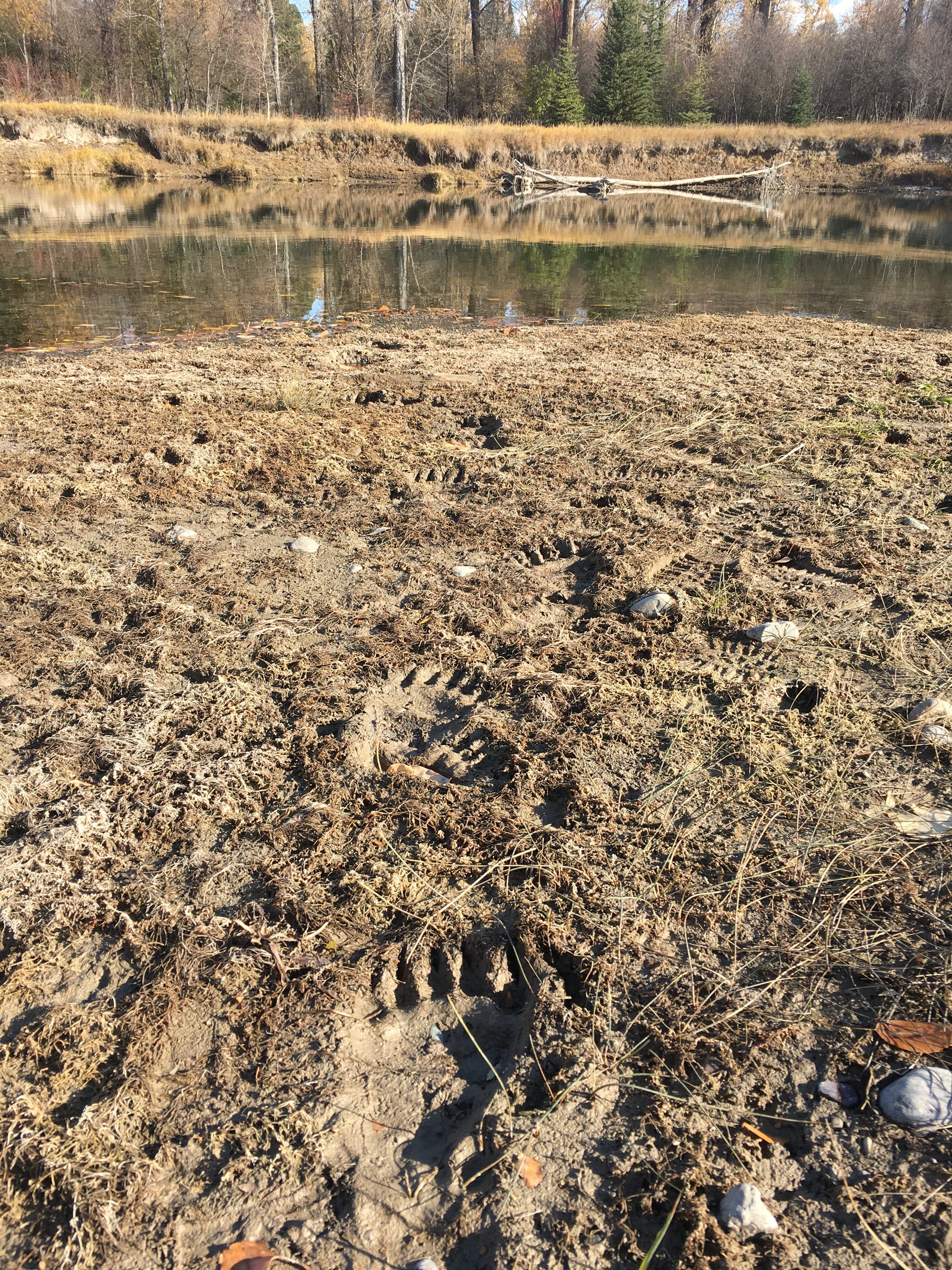
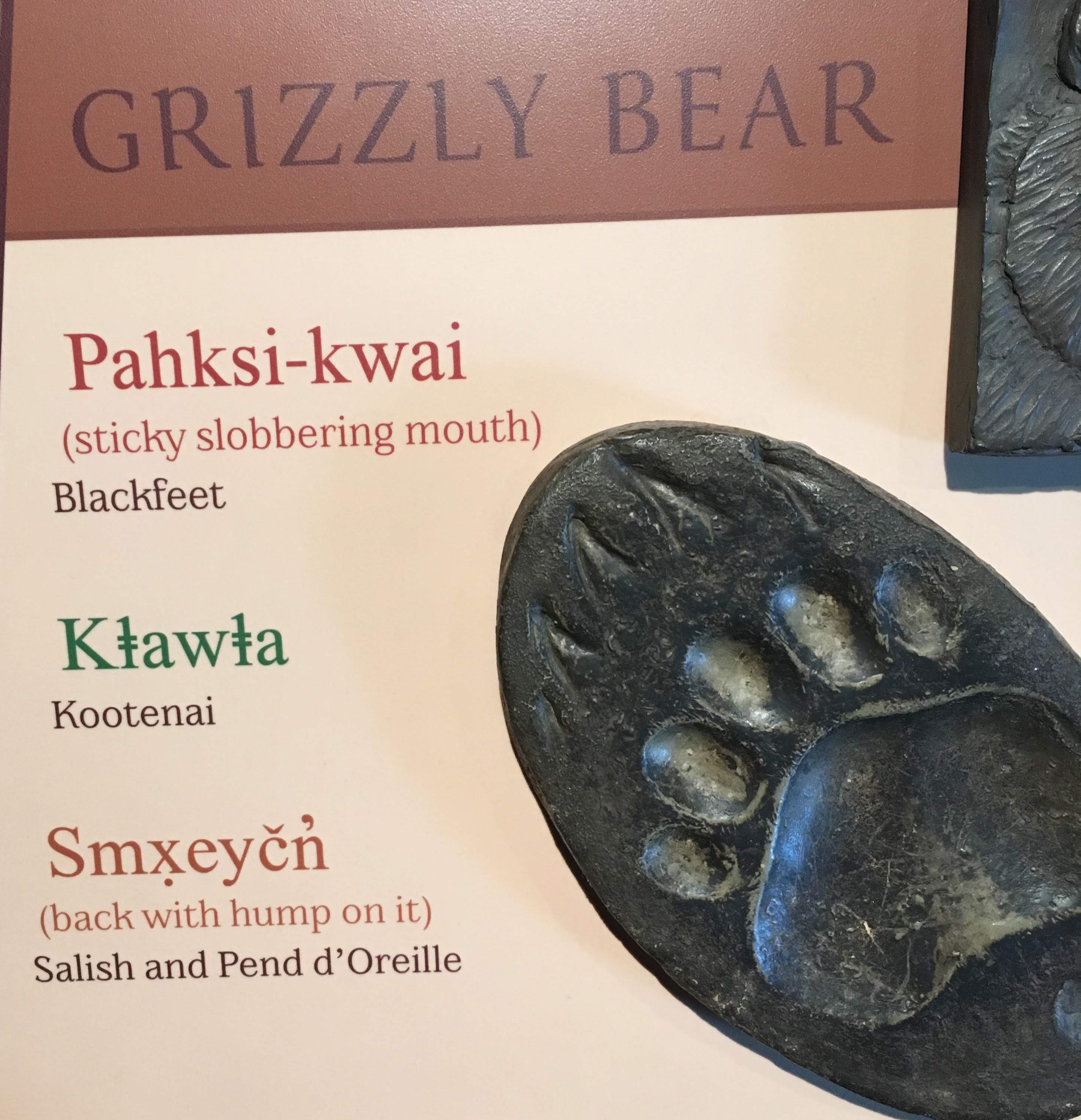
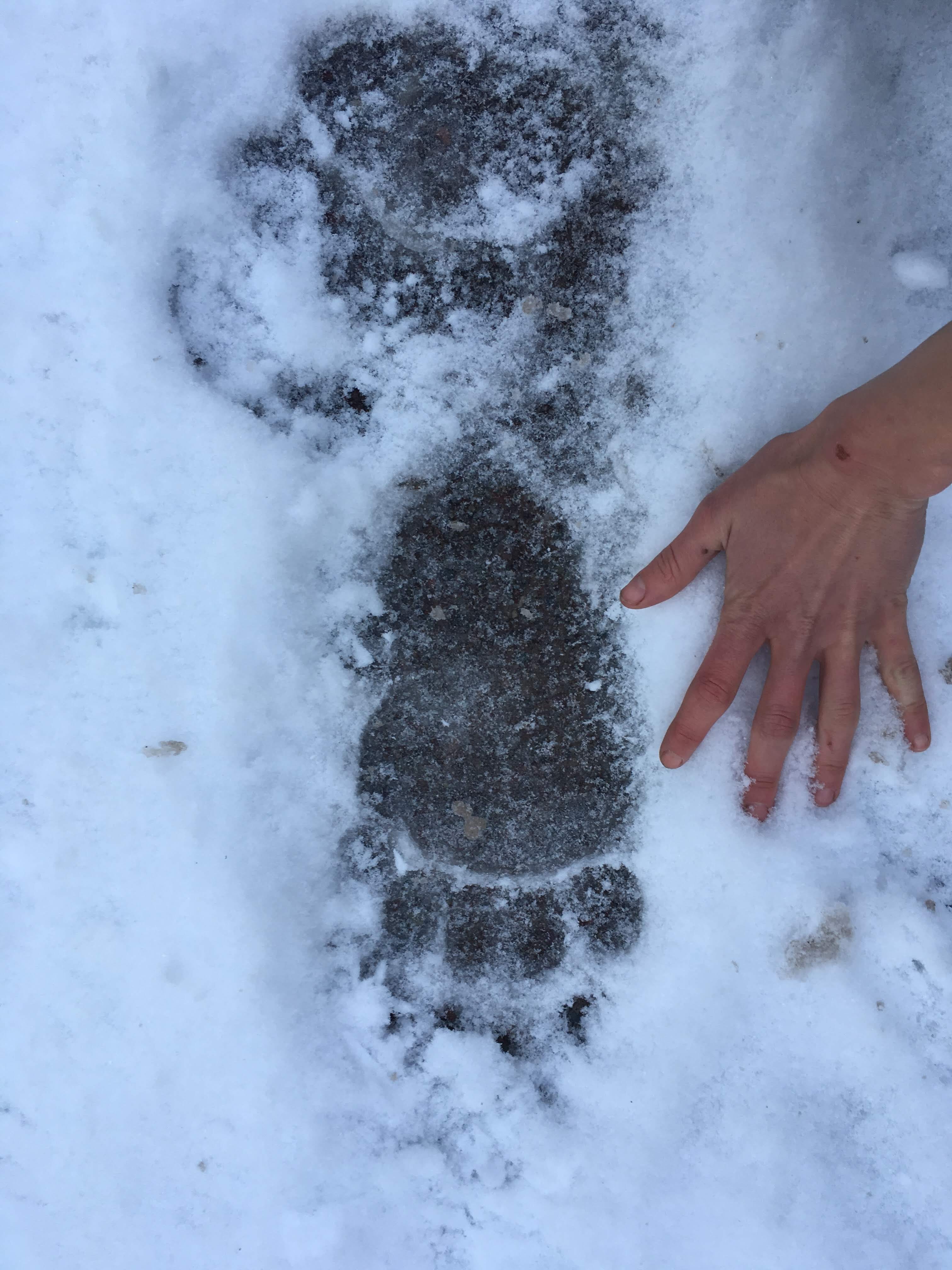
Where will they den? I wonder. Grizzlies usually dig into deep snow on north-facing slopes, using it like a blanket. They should retreat about now, the first week of December, after slurping up the gut piles left from rifle season.
Lately, I feel like a bear myself. I’m strung out from a long fall—starting school, moving into my rental, harvesting, hunting. I am satisfied. The freezer is full of elderberries, golden chanterelles, venison, and whitefish. My hyperphagia has culminated in feasts with friends.
I haven’t spent a full weekend at my rental since September. Torpor sets in with the dwindling light. My instinct to sleep pulls stronger than the need to do the dishes. I long for slowness, for stillness—but there is always more to do in the incessant hum of modern life to keep myself alive.
I feel like an ambulatory bear with no place to den.
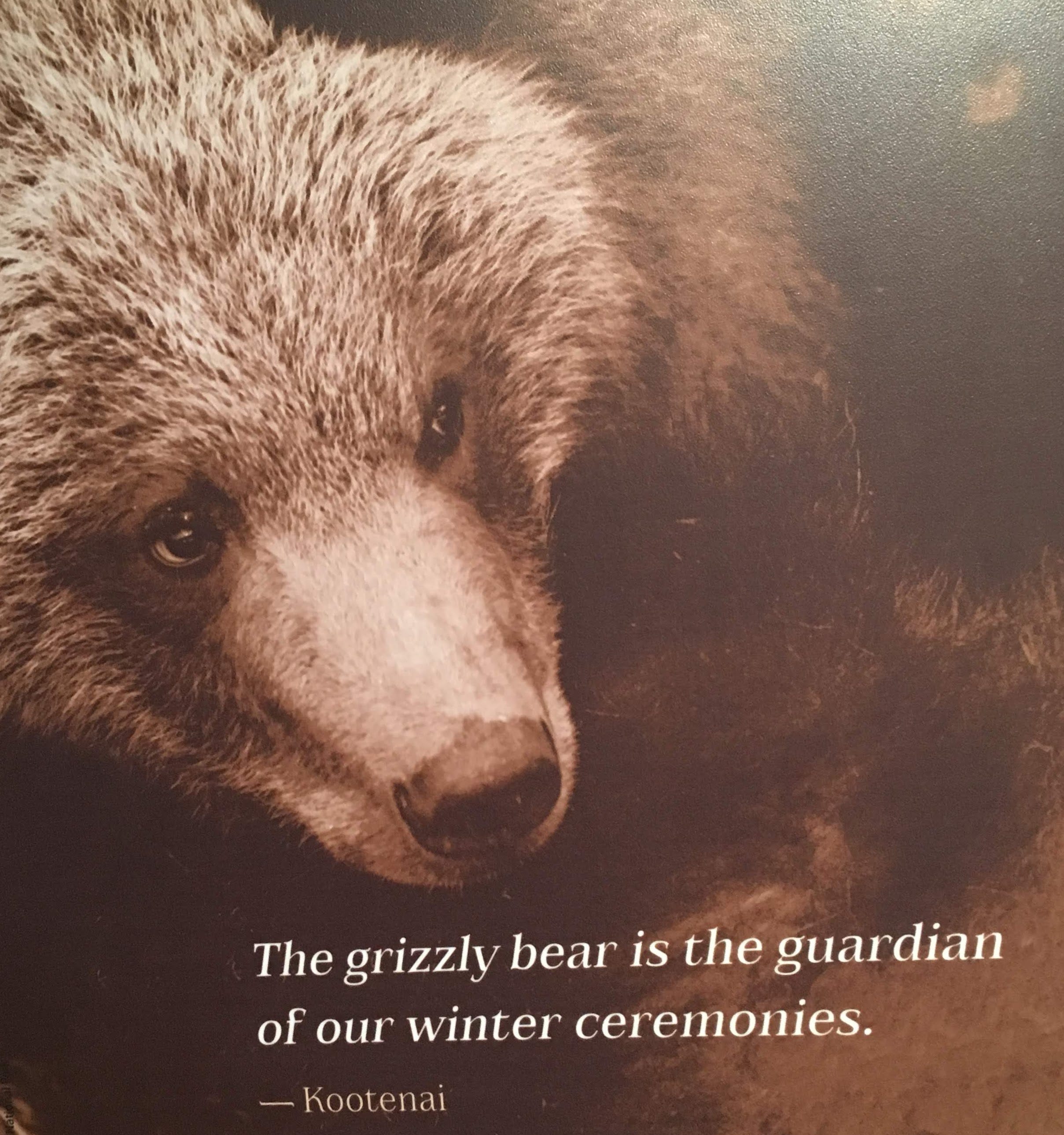
Humans and bears have been shaped by the same topography, watersheds, food sources, and life-ways for millennia. A recent study on the central coast of British Columbia found that genetically distinct groups of grizzly bears map almost exactly with Indigenous language territories. Where one group of people lived, spoke, and traded, the bears in the same area formed their own genetic group. (Berge & Class, 2025).
The study is groundbreaking. It supports an Indigenous understanding of our ecosystems as kin-centric. Jennifer Walkus, a Wuikinuxv Nation council member and one of the study’s co-authors, explains in National Geographic: “Our elders said that bears taught us a lot about how to live here—what we could eat, where we could stay. We just have a lot of the same needs.(Berge & Class, 2025)”
It’s no wonder, then, that across the northern hemisphere, there are stories of a human woman marrying a bear. The oral tradition stretches from Siberia to the Pacific Northwest and may be one of the oldest stories from the boreal north. In these tales, a woman enters the bear’s community, learning that bears are not simply animals but people with relationships, responsibilities, and teachings of their own. The story reminds us that you cannot live well on a land you have not learned from (Mann & Kailo, 2023).
This story ends tragically. It has haunted me from the first time I heard it, as a fourth-grade student in Bigfork Public Schools. My teacher had returned to Montana after he taught in rural Alaska to pay off student loans. That same year we made a quinzee in the school yard. Years later, I would teach Outdoor Education for him and ask him to tell the story again, hoping to hear it with adult ears.
As with all stories, the lessons must be lived.
While working with Ravenwood Outdoor Learning Center, I taught survival skills—shelter-building, friction fire, hunting, and tracking. I learned to harvest roots, bark, and staves, make herbal medicine, and turn clay into cooking pots. In that container I felt comfortable sharing this knowledge, but I find it difficult to share these skills to a broader audience. I have gained skills that I will not advertise, nor teach.
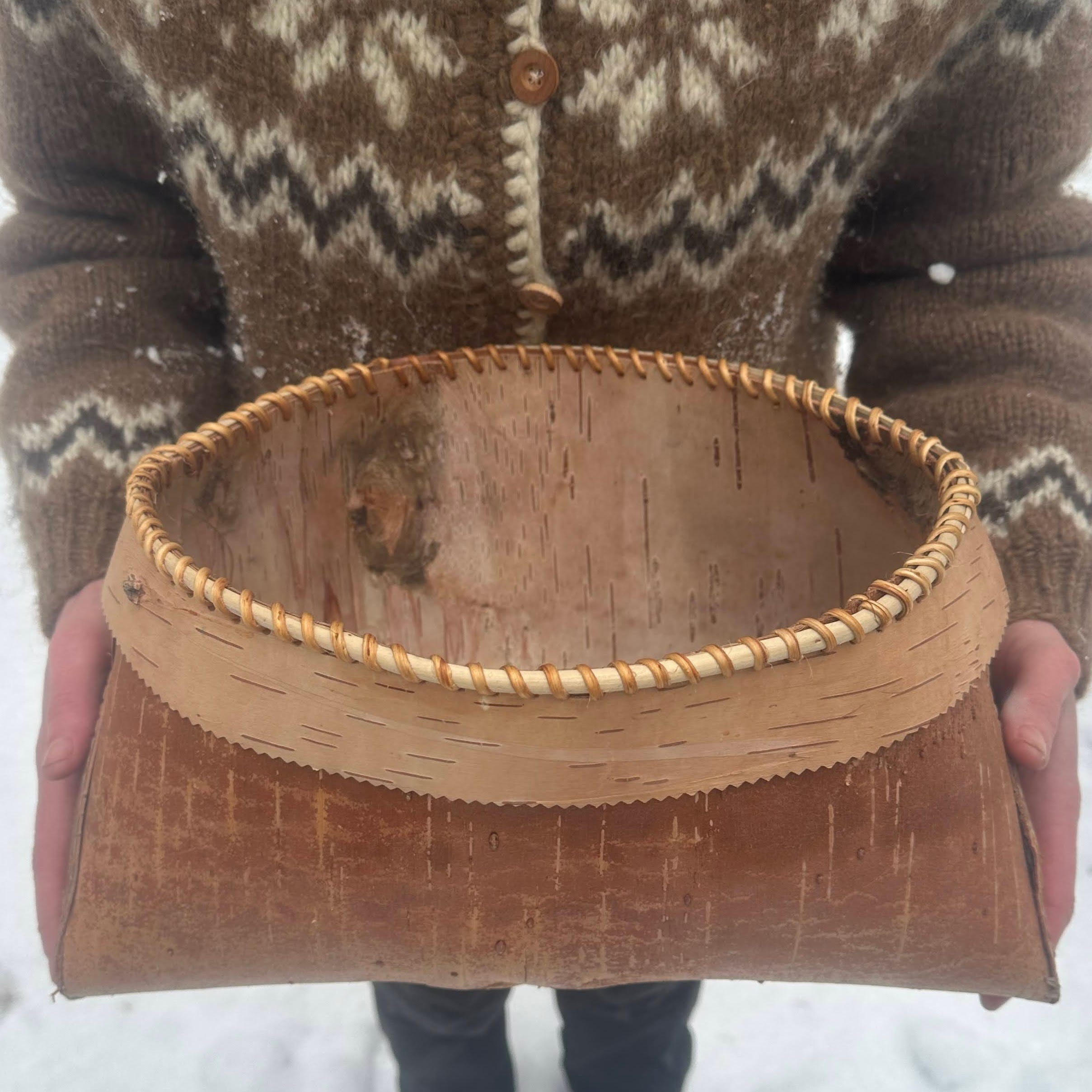
One of my teachers came from Alaska. He had stories of living in the bush with only his knife. He taught me how to open a birch tree carefully, when to wait and when to harvest. He taught me to dig roots, clean them, and fold bark into a basket, stitching the rim with the root we dug.
Good birch is increasingly harder to find in my bio-region. We are witnessing the recession of our glaciers and the slow decline of the forests that grew in their shadow. One glorious May day, at the edge of a forest burned the previous year, I plunged my knife into a mother tree’s bark. Red sap welled out like blood and tears. In that moment, I felt her presence, her life, and the weight of taking. I happened to be mushroom hunting with one of the Flathead National Forest’s most experienced tree biologists, who assured me the tree wouldn’t survive their injuries from the fire…yet I still wonder if the tree would have survived if I had spared her my knife.
“What do you think of this?” My friend sent me an article with a photo of a beautiful young woman with a willow basket full of acorns. The subtitle read- “Middle class foragers are desecrating the countryside by copying influencers who romanticise berry picking- and are even poisoning themselves in the process. (Sachdeva, 2025)”
I immediately thought of Bear Root- Ligusticum porteri - a lovage with similar qualities to lomatium like our Big Medicine, also known as Osha. Osha’s roots are pungent and resilient, warming the lungs and opening the sinuses. Bears dig it up after hibernation, chewing the roots or rubbing the mash into their fur—behaviors thought to cleanse and protect them. In many Native traditions, observing bears taught people how to use the plant medicinally (Sewell, 2024).
Osha cannot be cultivated domestically. It is slow-growing and sensitive to overharvesting. The root’s popularity surged with the herbalism trend and is now a threatened species. Centuries ago, Romans did the same with similar Mediterranean roots, ignoring the Greeks’ careful traditions. They dug, dried, and exported without attention to timing or abundance. The plant eventually became extinct, remembered only on a Roman coin (Mark, 2023).
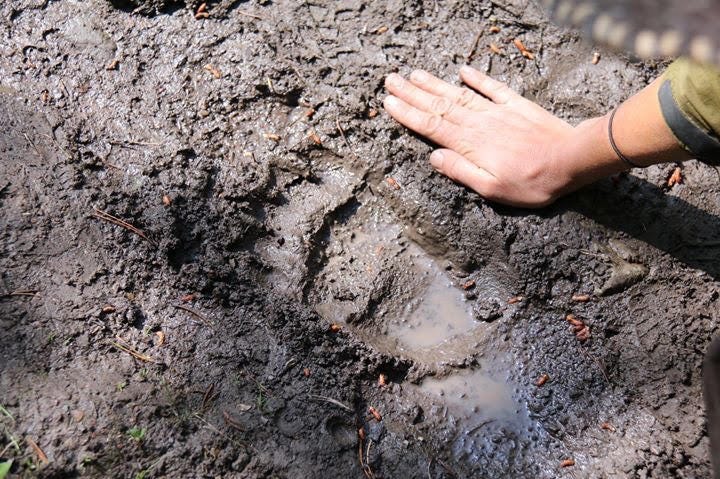
In The Woman Who Married a Bear, the young woman lived for many seasons among the bears, learning their ways and raising a child in their community. Her brothers, worried for her after she did not return from berry picking beneath the midnight sun, eventually tracked her to the bear village. To their horror they saw her living with the bear and his family.
In fear and anger, they ransacked the village, killing the bear husband and other members of his community, and dragged their sister and her child back to the human world. What was meant as rescue became devastation.
I think of being raised Indigenous, and how these stories must have been told to my foremothers as they grew into womanhood—lessons woven into daily life, rhythm, and ceremony. They were not warnings on a page or rules to memorize; they were lived teachings, stories that shaped their understanding of the land, of kinship, and of responsibility. Going back to these stories, listening to them, learning their rhythms, I feel like a toddler again: curious, eager, and unsteady in my understanding.
As a modern white girl, so far removed from these ways of knowing, I am a toddler. I stumble through the woods with ego: self-centered, hungry for experience but unaware of consequence. How much have I taken from the land without giving back, performing rituals for an algorithm, curating a version of myself that seems exotic, adventurous, wise? I see it constantly on Instagram: berry-picking influencers, aestheticized foraging, wildcrafting reduced to content, disconnected from the relationships, responsibilities, and reciprocity that sustain life.
Mitakuye oyasin—“all my relations.” There’s a handful of times a white dude, fresh from Standing Rock, has thrown this phrase at me like a talisman, as if it alone could grant him wisdom. This is not how Oceti Sakowin understand the phrase. All my relations is not a gesture for performance. The phrase underpins their social structure, identity, and spiritual practices, teaching that being a good relative to all beings is essential. It is a commitment, a responsibility to honor and maintain the relationships that sustain life—between people, animals, plants, and land. It is active, lived, and demanding. Words alone do not suffice; presence, care, and action are required.
For the Blackfeet, the teachings and knowledge were there- the ceremonies, the stories and the values- but the bison had been hunted to extinction. Without the physical presence of the animals, the lessons could not fully take root. To bring the bison home required unraveling the fences that held the cattle industry on the reservation together. Bison directly challenged ways of relating to the land under modern colonialism—a system the community depended on to survive. Over the course of decades, tribal members gathered people to commune with the bison in hopes to foster connection. They maintained an essentially wild herd using cattle-ranching techniques, navigated land ownership, leases, and federal oversight, and slowly, deliberately, released the bison into their natal habitat. Bring Them Home documents this process on film and is streaming on PBS.
So how do we, like bears without a den, find our own way home? What stories will guide us—the pink circles of our Instagram feeds, or the ancient myths and teachings buried beneath the rubble of modern culture?
I believe returning to mytho-poesis is where we begin.
Mytho-poesis is the practice of making and inhabiting myths—not as dogma, but as living guides. It asks us to engage with stories actively, to let them shape how we move, act, and relate to the world. Through mytho-poesis, we reclaim imagination, ethics, and agency: learning from the lessons encoded in traditional tales, like The Woman Who Married a Bear, while cultivating our own stories rooted in place and relationship. In wildcrafting, this means attending to the land, the plants, and the animals with care, creating a dialogue between ourselves and the more-than-human world. Myth becomes a teacher, and story-making a practice of ethical presence, guiding us from ego-driven taking toward reciprocity and kinship.
Make your own stories with the land. When I taught nature connection practices, I rarely gave someone the name of a plant outright, because we often stop at the name. Once we know a “name,” we can show it off—a done deal, botanical trivia won. But to name something in your own way, based on your own experience, is entirely different.
We’ve recently lost a canon of local herbalism. Tom Tracy of Swan River Herbs passed away in the first week of December, leaving behind The Forest Pharmacy, a treasure trove of knowledge. What I most appreciated about Tom was his connection to the energies of plants. He opened a world to me where I could intuitively tune in to a plant’s presence and embody their energy. Tracy was a Vietnam Veteran, and healed his PTSD in this way.
Learning to read the stories on the land is also essential for wild crafting. I’ve been harvesting the same golden chanterelle patch for most of my life, for about 25 years. Over that time, I’ve watched logging fragment the forest, sequential lobster mushrooms parasitize the chanterelles, and land be privatized. I am extremely protective of this patch. When I visit, I carry all this knowledge with me, along with awareness of the deer that feed on the mushrooms. I pick a few to share, toss bits of mushroom gills to the edge of the patch, leave the mushrooms on the edge alone and let the next flush be.
In many ways, mytho-poesis asks us to become like the bear again. Like the bear-woman, although we may be more like the bear who can’t quite find her den. The one who circles the hillside again and again, sniffing for a place that feels like home, pawing through roots and leaf litter, trying to remember what her ancestors once knew by instinct.
That’s where many of us are now—wandering, relearning, returning to skills and stories that once lived in our bones. We fumble. We make mistakes. We feel like toddlers in the forest, unsure of our footing, naming things wrong or not at all.
Being a toddler in the woods isn’t wrong.The land exists as a teacher, a relative, a mirror. We are learning, growing, stumbling, and discovering how to relate responsibly to the world around us, moving from a culture of consumption to a culture of kinship. Eventually we will grow into maturity- learning boundaries and carrying more knowledge and responsibility. We learn to move slowly, to pay attention, to sustain the cycles of life. We braid together story, presence, and care until our actions—harvesting, walking, observing—become prayers of reciprocity. Like the bear, we too are a keystone species.
Wildcrafting, like mytho-poesis, asks us to inhabit a story. We become, in our own imperfect ways, stewards of life, participants in a network of kinship older than us, wider than us, and far more enduring than our short human lives. Step lightly. Listen deeply. Make your own stories with the land, and let the land make its stories with you. Gather not to take, but to belong. Let your knife, your footprints, your hands and your stories leave traces that honor what has been given and invite what will come. Let your gathering be a prayer, your presence a witness, and your life a myth worth inhabiting.
Berge, C., & Class, J. (2025, August 19). How Indigenous knowledge is helping to protect Canada’s grizzlies. Travel. https://www.nationalgeographic.com/travel/article/indigenous-conservation-could-mean-richer-wildlife-tourism-in-canadaf
Mann, B. A., & Kailo, K. (2023). The woman who married the bear. https://doi.org/10.1093/oso/9780197655429.001.0001
Mark, J. J. (2023, July 10). Silphium. World History Encyclopedia. https://www.worldhistory.org/Silphium/
Sachdeva, M. (Ed.). (2025, October 22). Middle class foragers are desecrating the countryside by copying influencers who romanticise berry and mushroom picking - and are even poisoning themselves in the process. Daily Mail. Retrieved December 12, 2025, from https://www.dailymail.co.uk/lifestyle/article-15208363/Middle-class-foragers-desecrating-countryside-copying-influencers-glamourise-berry-mushroom-picking-poisoning-process.html
Sewell, R. (2024, September 27). Bear medicine. NiCHE. https://niche-canada.org/2024/08/09/bear-medicine/
For further bear lore, look into the northern circumpolar bear cult. It's the best.
Beautiful. I have always felt connected to the garden full of native plants the woman who lived in this house before me planted. I am saving this piece to reread again and again as I go out to this small plot of land I love, tend to the snowdrops and bluets, and sit beneath my black walnut tree and tell her everything.
Thank you!