

As I publish this, wildfires continue to move through forests and communities, taking lives, homes, animals, livelihoods, and beloved places with them. I am watching with grief.
I know what it is like to lose a home to fire, to have a life divided into before and after. Much more than a structure can disappear in minutes. My heart is with everyone who is evacuating, waiting for news, returning to ashes, or mourning someone who did not make it home.
The smoke crosses borders and so does the grief. It feels as though there is nowhere where someone has not been touched by fire, flood, heat, or another form of upheaval.
May we continue to show up for one another.
-Lena
❈
“All lakes fill in”
My mother and I are standing in a field of tiny pothole lakes in the Mission Valley.
“Even Lake Superior?” I ask, astonished. Would Mother Superior turn to a field of grass?
My memories drift to the glacial puddles of my childhood, meltwater from giant chunks of ice.
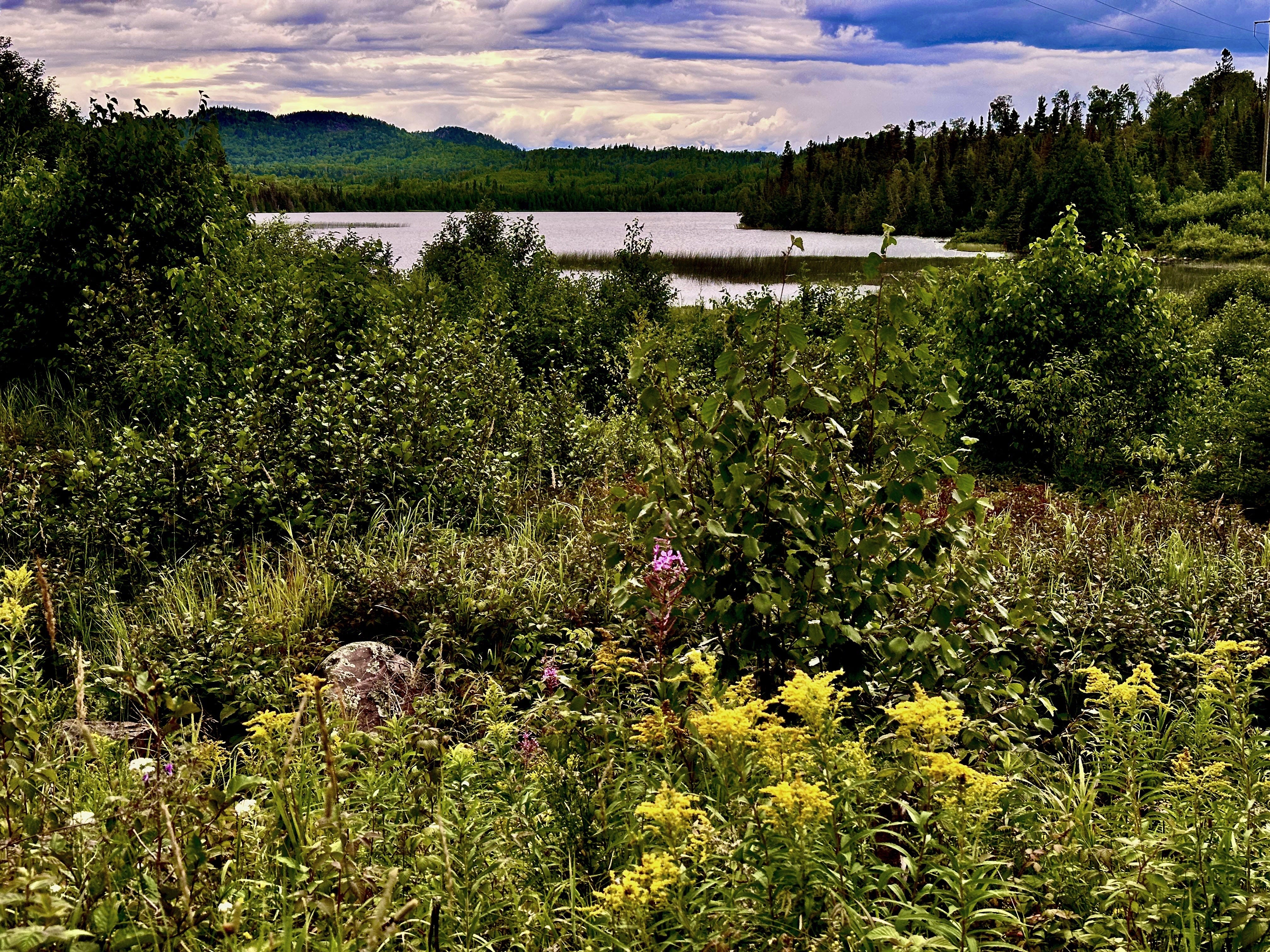
The grasses stand taller than my head. Their sharp leaves testing the leather of my skin. I bend their woody stalks as I move blindly through the meadow, arms stretched in front of me, searching the dense and intricate pattern of sunlight and shadow. Their soft white seed heads swish over me like a blessing in the blue sky. Hundreds of dragonflies bob and weave between them.
Every year the lake levels dropped. The verdant green of the rich silt bleached on the exposed lake shore. Brittle snail shells crunch beneath my toes. The neighbors comment on it when we pass by on the road.
Every year the lake levels drop a little more.
❈
My mother and I are standing in a tall grass field in late July.
Wildfire smoke drifts in to the valley, arriving before the news. The sun is obscured by a cloud of burning forests and pesticides and people’s worldly possessions, a strange and claustrophobic reprieve from the oppressive heat that wilts the spirit.
Smoke has a way of collapsing space and time. The headlines blur together—fires, drought, heat records, thousands of people evacuated, hundreds of homes burning in a fire, and another, and another. It becomes difficult to tell whether we’re reading the news or Earth’s oldest stories.
I think about the last time the world changed so profoundly that it reshaped not only landscapes, but the inheritance of life itself. A time when climates shifted so severely that species adapted…or disappeared.
We are here today because somehow, enough of them survived.
The Pleistocene.
It was the last time the world I recognize almost disappeared.
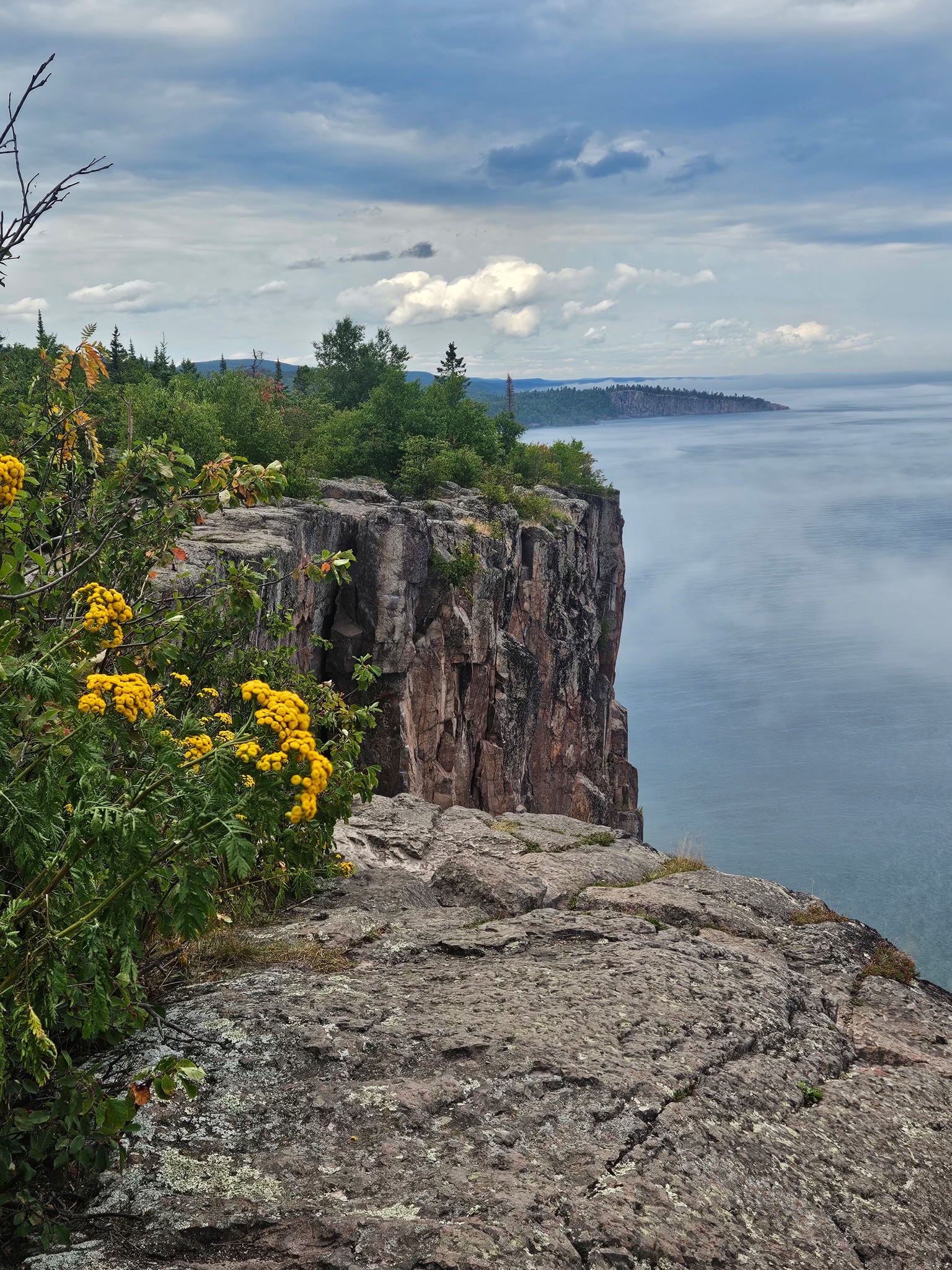
In the Boreal we are closer to that memory. The Ice Age whispers through the black spruce and paper birch, in the trickling streams of beaver ponds and through the old stories. Brown bears, wolves, moose, elk and beavers roamed these forests as continental ice sheets devoured mountains and retreated in floods.
There are many species that didn’t make it through that time of ice and darkness. Woolly mammoths, cave bears and saber-toothed cats, to name a few.
In geological terms — as in the lifespan of a lake — they did not live that long ago.
I think of extinction: of species, of family lines, of languages.
I’m thirty-five and childless for a handful of reasons, and I don’t know whether I’ll ever become a mother. Sometimes I grieve the possibility that my family’s line may end with me.
My mother and I pack up and leave the Mission Valley. We’re heading out on a road trip to Lake Superior, with a box of my grandmother’s ashes in the backseat. We stop at my great-grandmother’s grave in Ottertail, Minnesota to return her to her beloved.
As I leave the cemetery I can’t help but wonder who will bury me.
Sometimes, half joking and half sincere, I tell myself that perhaps my childless life gives a grizzly cub a little more room in the world.
In a rock shop in my hometown of Bigfork, a cave bear towers over visitors. The upper arm bones were nearly the size of my femurs, built for tremendous strength. The skull is broader than a grizzly’s, the forehead steep and domed, as though evolution had built a battering ram out of bone. The bear’s heavy maw opens wide. Sharp canines the width of my thumbs protrude from a jaw that could have crunched my arm like a carrot.
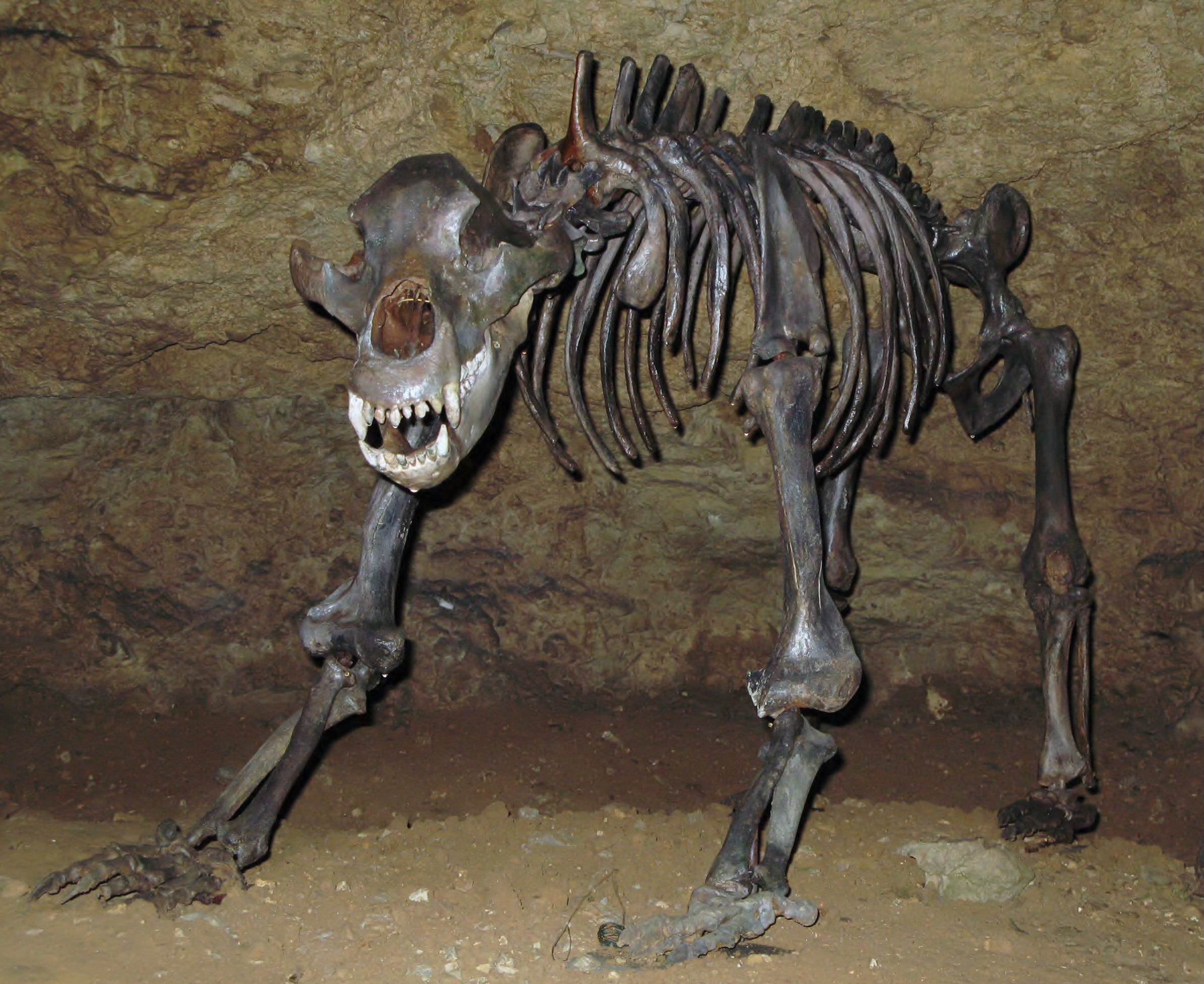
Some male cave bears weighed over 1,000 pounds.
Despite their massive size, cave bears appear to have been less flexible eaters than their brown-bear cousins. Looking at those teeth, we would like to imagine they ate people.
This Pleistocene bear was surprisingly herbivorous. Many populations relied heavily on grasses, herbs, roots, berries, nuts, and other plant foods. As the climate cooled and dried out, the forests of Europe retreated. Tundra and steppe followed in succession and the diverse plant communities the cave bear depended on became less productive.
The brown bear and the cave bear shared the Pleistocene, but the brown bear survived. The world they inherited never stopped changing.
In the lower 48, the grizzly barely survived the last two centuries.
This year bears are moving into neighborhoods searching for food. The huckleberry harvest this summer is as poor as our snowpack last winter. At Grey Wolf Lake, high in the subalpine, we find bear digs and overturned rocks where grizzlies searched for glacier lily bulbs. Once a prairie bear, its long claws were shaped for digging roots.
They roam the ghost of a forest. A graveyard of whitebark pine.
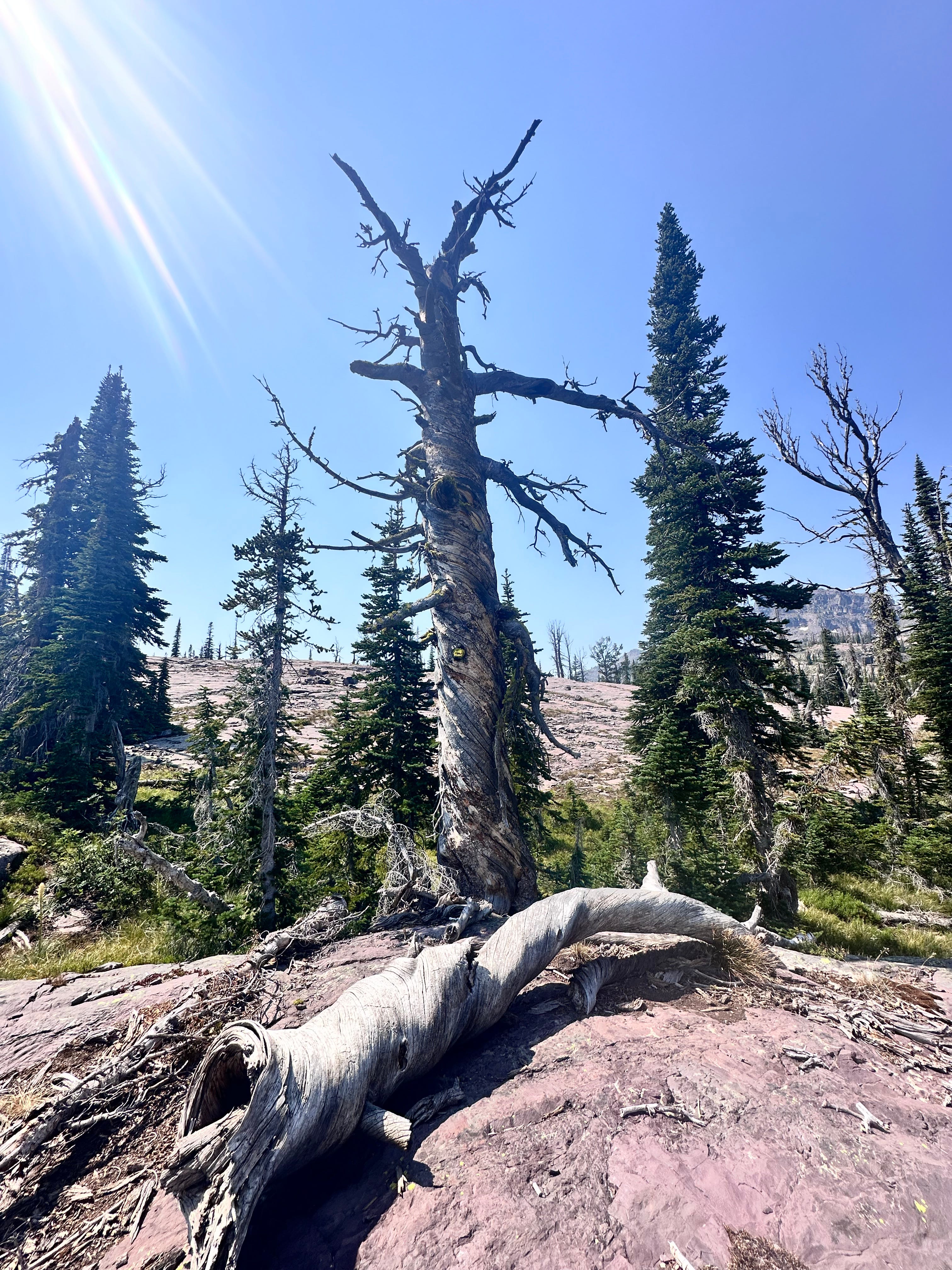
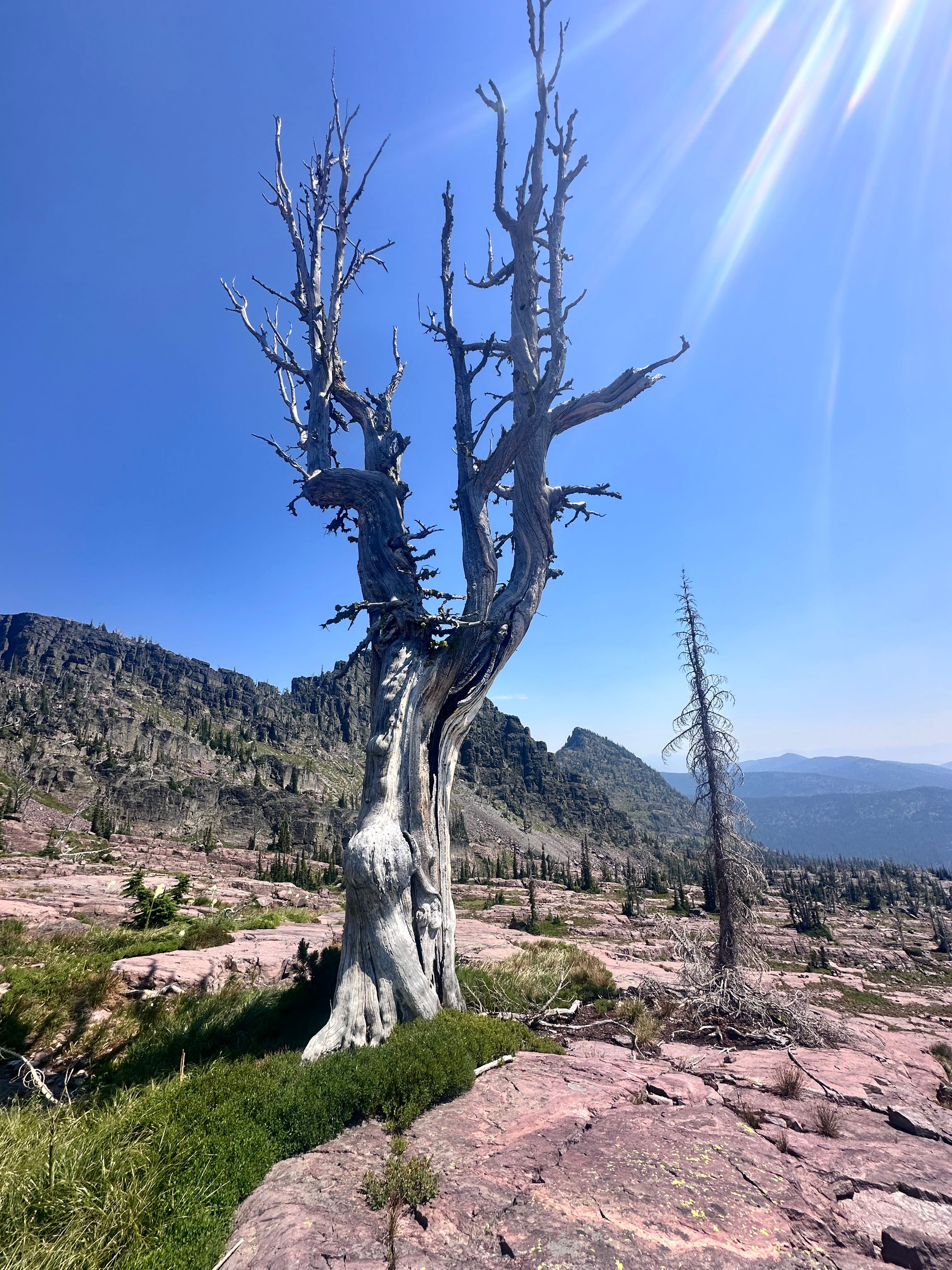
High on the ridges, whitebark pine anchors an entire high-elevation community. Its fat-rich seeds feed grizzlies, Clark’s nutcrackers, golden mantled ground squirrels, and countless others. But an introduced fungal disease, white pine blister rust, spreads through the high country. Mountain pine beetles, warming conditions, and altered fire regimes compound the decline.
The great cooling challenged our species too. Human populations became smaller, more fragmented, more isolated. In Europe, humans sometimes occupied the same shelters that cave bears depended on for winter refuge, adding another pressure as their populations declined. Cave bears reproduced slowly, depended on increasingly scarce plant communities, and struggled to adapt as their world changed.
Their world extinguished faster than they could follow it. Ours changed with it.
The cave bear lay buried in the landscape; but bears remained in human ritual and story. Although archaeologists still debate what certain Paleolithic arrangements of bear bones meant, the animal’s hold on the human imagination endured millennia.
Like me, bears do learn from their mothers. Recent research has even suggested that cave bears may have used learned foraging strategies. The difference is not that animals possess no culture or teaching; it is the extraordinary scale and accumulation of human cultural transmission.
“All lakes fill in.”
My mother is a geologist. She taught me to read the stories written in stones the way I read tracks in the mud. She grew up on the Keweenaw Peninsula and along the shores of Lake Superior, where glaciers deepened and sculpted an ancient rift basin, leaving one of the largest freshwater lakes on Earth. Like the boreal forest, her home still bears the fingerprints of the Ice Age.
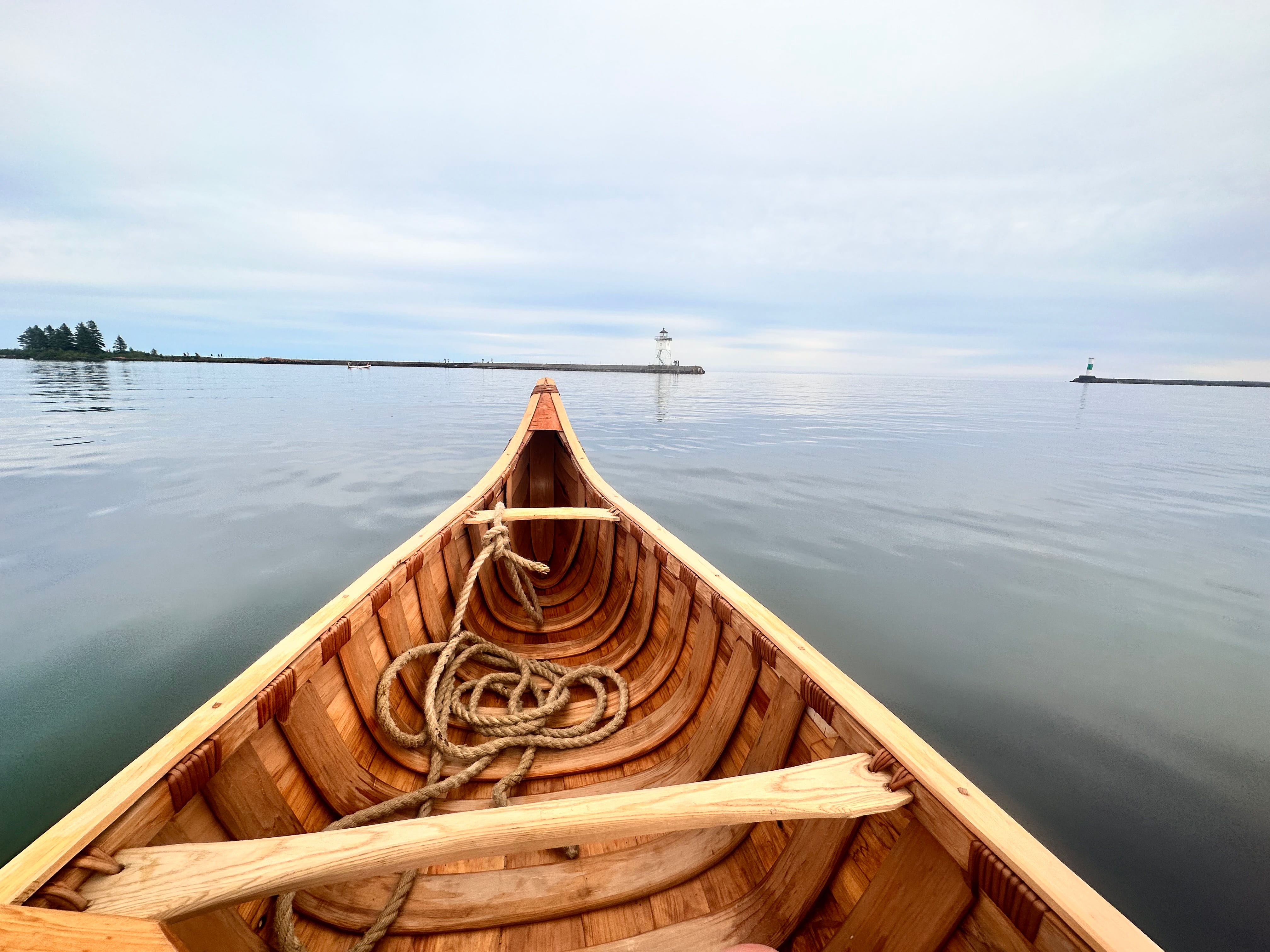
We started our trip heading for Yellowstone National Park, before turning east to cross the prairie. As we drive down the highway, I see billboards calling for grizzlies to be delisted from the Endangered Species Act: A CONSERVATION WIN.
I am amused and perplexed by the ambiguity of win. A slogan is a small story.
We did not outlast the cave bear because we were larger, stronger, or somehow higher on evolution’s ladder.
One of our advantages was collective.
Anthropologist Joseph Henrich proposes that much of humanity’s unusual success comes not from individual intelligence alone, but from cumulative culture: our ability to preserve discoveries beyond the lifetime of the person who made them, refine those discoveries, and pass them forward. Each generation could begin with knowledge it had not earned alone.
Culture became another inheritance, one that could move more quickly than genes and hold more than any single person could discover.
In caves and hide dwellings, we shared our stories around fire.
Every basket, every song, every trail, every place name, every story about bears or berries or burning forests is another generation saying: Pay attention. Someone learned this before you.
We chipped spearpoints, arrowheads and knives, hunted and tanned hides, wove traps and baskets, our robes and sails for ships, and eventually coaxed the wild einkorn to hold its seed for the sickle.

Years ago, I attended an Ojibwe sweat.
Water hisses over hot basalt, rising with the cedar into the humid dark of the bent-willow lodge. Our pourer tells the creation story and the teachings of the four directions as they were taught to him.
In a teaching he carries, humans are the littlest brother, the youngest brother.
Culture does not guarantee wisdom; it preserves whatever we repeat.
A conservation win is also a story, and so is the belief that humans are masters of the land.
Our folkways are ecological memory.
The question is not whether stories will carry us forward; they will.
The question is which stories we will carry.
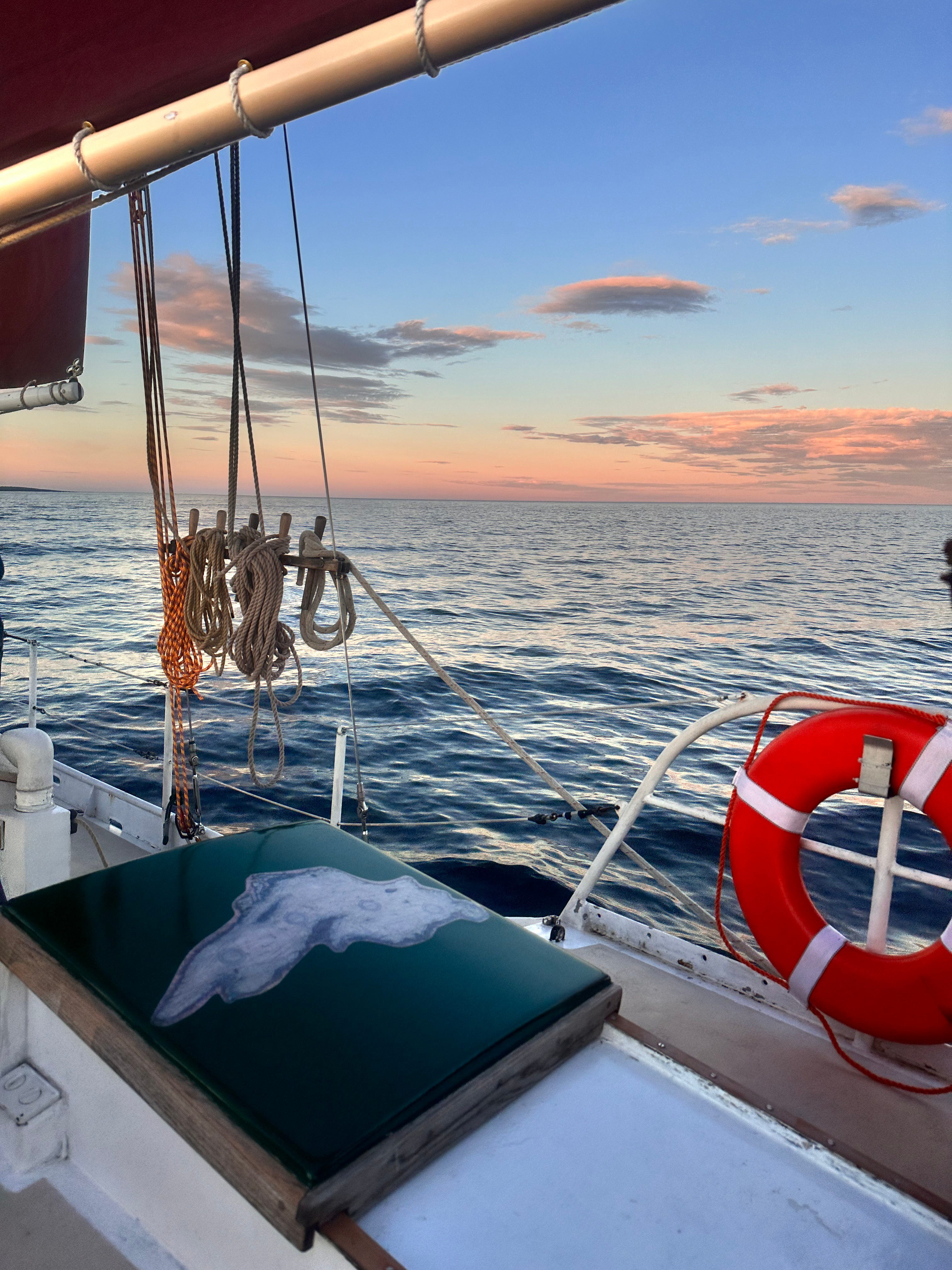
Boreal Folkways is a reader-supported exploration of traditional skills, ecological memory, and what it means to live in relationship with a changing northern world.
The Woman Who Married a Bear: Mytho-poesis and Wildcrafting Ethics

“I’ve heard the bears aren’t asleep yet.” I stand at the window, watching an unseasonable deluge of rain pour into the swelling Swan River. The snow that sloughed off the roof has already pooled into puddles. The snow pack dwindles up the mountainside toward seven thousand feet.
Bibliography
Associated Press. “Fires near Spokane, Washington, Have Burned 600 Structures and Forced 60,000 Evacuations.” August 2, 2026.
Mann, Barbara Alice, and Kaarina Kailo. The Woman Who Married the Bear: The Spirituality of the Ancient Foremothers. Oxford University Press, 2023.
National Park Service. “Lake Superior Geology.” Updated March 6, 2024.
Natural Resources Conservation Service. “Snowpack Deficits Continue to Grow across Montana as Unseasonably Warm Temperatures Persist.” March 6, 2026.
O’Brien, Edward F. “Bear Conflicts Ramp Up as Montana’s Huckleberry Crop Dwindles.” Montana Public Radio, August 6, 2026.
Pérez-Ramos, Alejandro, Z. Jack Tseng, Aurora Grandal-d’Anglade, Gernot Rabeder, Francisco J. Pastor, and Borja Figueirido. “Biomechanical Simulations Reveal a Trade-off between Adaptation to Glacial Climate and Dietary Niche Versatility in European Cave Bears.” Science Advances 6, no. 14 (2020): eaay9462. doi:10.1126/sciadv.aay9462.
U.S. Fish and Wildlife Service. “Grizzly Bear Lower 48 Rulemaking.” Updated July 2026.
U.S. Fish and Wildlife Service. “Whitebark Pine (Pinus albicaulis).” Accessed August 8, 2026.
This essay is beautifully written Lena. Both captivating and pulsing with a heart so deeply in tune with the natural forces around us. I thoroughly enjoyed reading this over my morning sips of coffee and as my mind reached the closing statements, “Culture does not guarantee wisdom; it preserves whatever we repeat.” stopped me in my tracks. This alone has been deeply on my mind lately. There is a difficulty in shaking the sadness and lack of warmth associated to a culture that lacks human thought and touch. Even so, I have hope because there are people like you who exist in this world.
Lena, thank you for this well researched and concerning article. Your closing comments also make me consider that knowledge doesn't guarantee wisdom either. Over my lifetime human knowledge seems to have expanded dramatically, but wisdom has shrunk to a similar extent.
The warnings have been on the table ever since Rachel Carson's 'Silent Spring'. They get louder day by day as you document here. So few people are listening.