
The Ecology of Perception
Part 2
The Watchful Tree
Glaciers are a slow, accumulated force,
sculpting human lives since the last great Ice Age.
When they melt, they expose the landscapes of our minds.
In the floodplain of the Anthropocene, we begin the work of reforesting.
❈
I press my body into the birch tree and collapse.
Her sturdiness reassures me.
Bark so taut it seems like she could burst; so are my nerves.
But she is made of wood.
I can barely feel my bones.
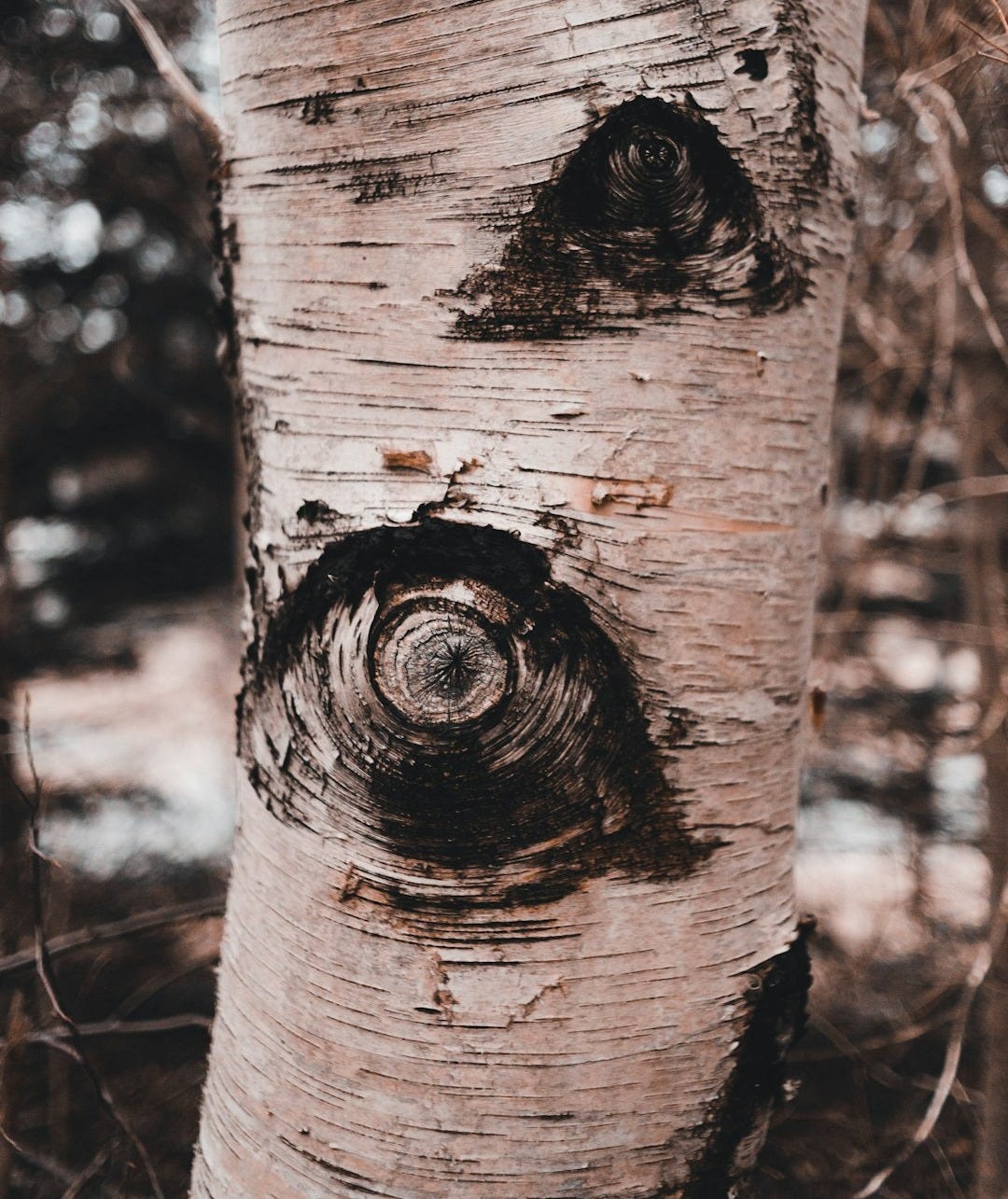
Her wrinkled eyes gaze into mine. Scarred tissue spirals around an old node at the pupil of her eye.
A blind seer.
The tree breathes me in.
She takes my exhale in her body and reaches for the star at the center of our spiraling galaxy, drawing light down into bark, branch and canker.
Intro starlight incarnate.
Into something I can hold.
❈
I’ve come to pay this grandmother a visit.
This tree, mother of my mother’s mother, is the keeper of my bloodline.
Since the glaciers scraped the earth down to her mineral bones, we have sat at her roots and begged:
make soil, make fire, make home, make shoes, make baskets, make medicine.
Hold us, mother.
Without her, the north would ask more of us than we could carry.
❈
I am drawn in by her presence.
She stands starkly white, like the full moon poured into her slender body.
Her lunar shimmer casts a halo into the dark mystery of fir trees. Dappled sunlight dances through her delicate serrated leaves. Rainbows gleam in the sheen of her oils.
I fox step in a wide arc to meet her. My feet press into the spongy duff newly released by winter’s ice.
Slow, slow, I tell myself. Take it in.
I resist an impulse in my body that task-masters me from sun-up to sundown, 6 days a week.
I don’t have time for this.
No, breathe.
This is becoming a daily ritual.
It’s 2013, four years after my spinal fusion surgery. Pain still rips through me. I lift my left leg into my car because it hangs there like a limp noodle. I muscle through it. At night, my body turns to fire.
I don’t remember my 18th birthday. Oxycodone washed it out, weeks spent staring at the ceiling in a chair.
After that, everything unraveled. My parents divorced. I escaped to Missoula, Montana, high on whatever drug I could get my hands on.
As I cling to the tree, I come back to my feet at her roots.
I wandered far from this, trading walks in the woods for alleyways, pills, booze and abuse. After a miscarriage, I woke from my fever dream.
My hunger for connection moved through me like the tree’s roots underground, searching.
I longed to feel something beneath the surface.
I started going on plant walks with a local herbalist and learning herbal medicine, beyond random searches on Erowid. In my research I had just learned of the Doctrine of Signatures1.
Curious, I found a birch tree in the woods behind my house.
I soften into the tree’s support. Her bark smells spicy sweet, like a tannic cinnamon, like the smell of frosting on a ginger cookie.
I breathe deep. My body fills with the sensation of water, as if I’m loosening, becoming more porous. I imagine this is what frog skin feels like. So sensitive, I begin drinking the forest air through my skin.
Her powdery, papery bark coats me where I’m touching her, drying me, tightening the skin of my fingertips. A squeaky chalk.
Back at home I start turning pages, searching for birch in my books.
What did I feel? Could it be?
I learned that birch is a diuretic: moving water through the body, supporting the kidneys, tightening and toning tissues, reducing inflammation with a cooling effect, astringent.
This was only the beginning of my understanding,
something akin to what Goethe called the intimation of things.
A shimmering glimpse behind the veil of ordinary experience, the feeling of the world welcoming me in,
when the birch tree’s gaze met my own.
❈
We are paying attention more than ever, and noticing less.
There is an assumption in modern life that attention, on its own, is enough. But true perception grows in relationships, the way a forest grows.
As Josua Schrei suggests, many Western mindfulness practices are removed from their cultural ecology (Schrei, 2024). Like monocultures exhausted of soil, the practices remain, but the conditions that allowed them to take root are now dust in the wind.
The way we attend builds soil for what grows in us.
The kind we’re taught - the tight, effortful, goal-driven focus- can actually exhaust the brain over time (Pillay, 2017). We call the exhaustion burnout, as wildfires rage across the planet.
Neuroscientist Srini Pillay gives us signs of a jammed-up brain:
You don’t have as much energy as you used to
You can’t follow through
You’re not reaching your goals, even when you set them
Repeated mistakes
Feeling easily overwhelmed
Settling for less
Finding yourself far from hopes, dreams and goals
Most of us would not choose this. After we retreat, searching for rest, we often return to the same environment that degraded our nervous system.
I feel this tension daily in my high school classroom.
Many of us were taught how to know, but not how to perceive.
“Good listening” often means compliance: focus on a single voice, ignore the rest. In a credit recovery school like mine, this is a mix of overstimulation and understimulation all at once, and the kids’ attention gravitates to the dopamine stimulation on their phone.
Over time we learn what to notice and what to filter out, until it begins to feel like who we are. As an art teacher, I am hopeful to nurture creativity. Yet I encounter students who are terrified to make a mark on a page, or judgmental of every mark they make.
This isn’t just personal, either.
Vine Deloria Jr. observes that Western knowledge systems tend toward empirical observation, while Indigenous ways of knowing ground in direct experience, in place, and in relationships.
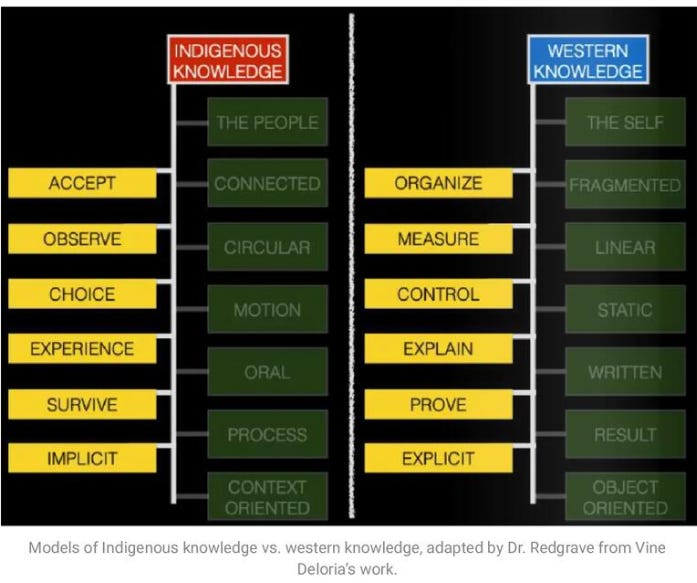
Part 1 of this series connects relational linguistics to Indigenous Traditional Ecological Knowledge.
What is considered real and what is dismissed as irrelevant are decided long before we consciously choose them.
In cognitive science, this filtering is called sensory gating: the process by which the brain determines what enters our awareness, and what we ignore (Buhner, 2014).
Gating allows us to move through the world without collapsing inward by our senses. It develops through care-giving relationships, our environments, learned patterns of attention, and what we inherit genetically. Some people, including those on the autism spectrum, experience sensory gating differently.
Under constant stimulation- novelty, emotional charge, social noise- the brain learns to prioritize urgency. We slide into what Pillay calls a “cognitive bottleneck”.
These constraints can take different forms:
Attentional bottlenecks—visual and auditory over-stimulation.
Memory bottlenecks—limits working memory, making it harder to access what we know.
Problem-state bottlenecks—reduced capacity to hold the information needed to solve something in front of us.
Emotional bottlenecks—when stress, fear, or negative patterns block learning and movement forward.
Over time, a conflict emerges between the patterns we’re trained into and the more subtle signals of the body. In many Western contexts, those signals are dismissed by a worldview that no longer recognizes their value.
And yet
What we call “the five senses” is only a fraction of our perceptual capacity.
❈
Five years from that first encounter and my life revolves around birch.
She taught me how to begin again.
At forest school children tear into birch logs, their tiny hands like bear paws. They peel bark into bracelets, armor, fairy houses, anything their imagination offers.
In the frenzy, salamanders slip from the rotting wood.
We ban burning bark in the main fire. The kids gleefully heap piles of bark on the flame to watch the billowing black smoke, too thick for our lungs. Yet every morning, we teachers strip fine curls and lay them carefully on the hearth.
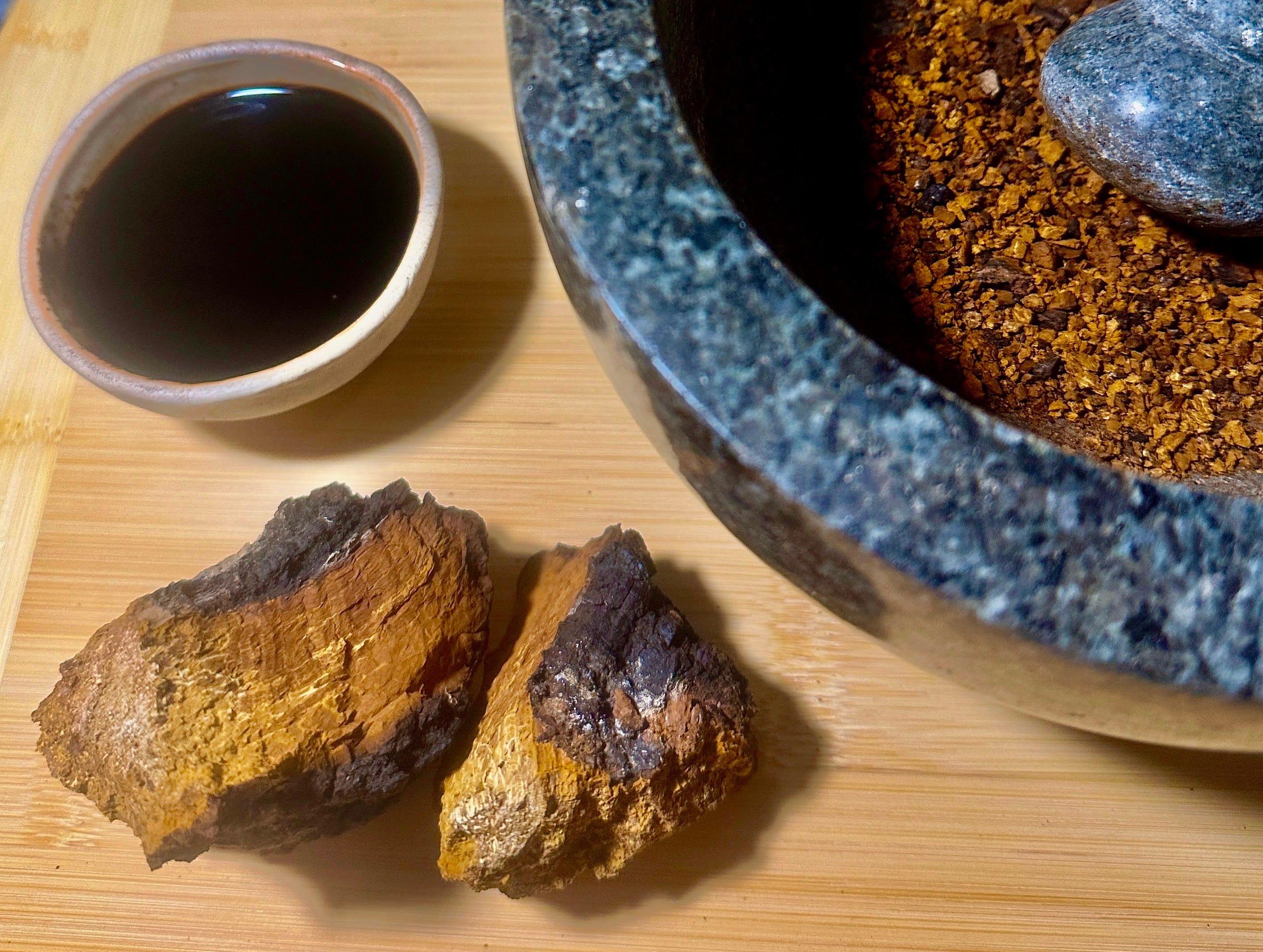
I drink a chaga tonic in my coffee. In springtime, a tea of twigs and leaves. I stir honey with a birch spoon.
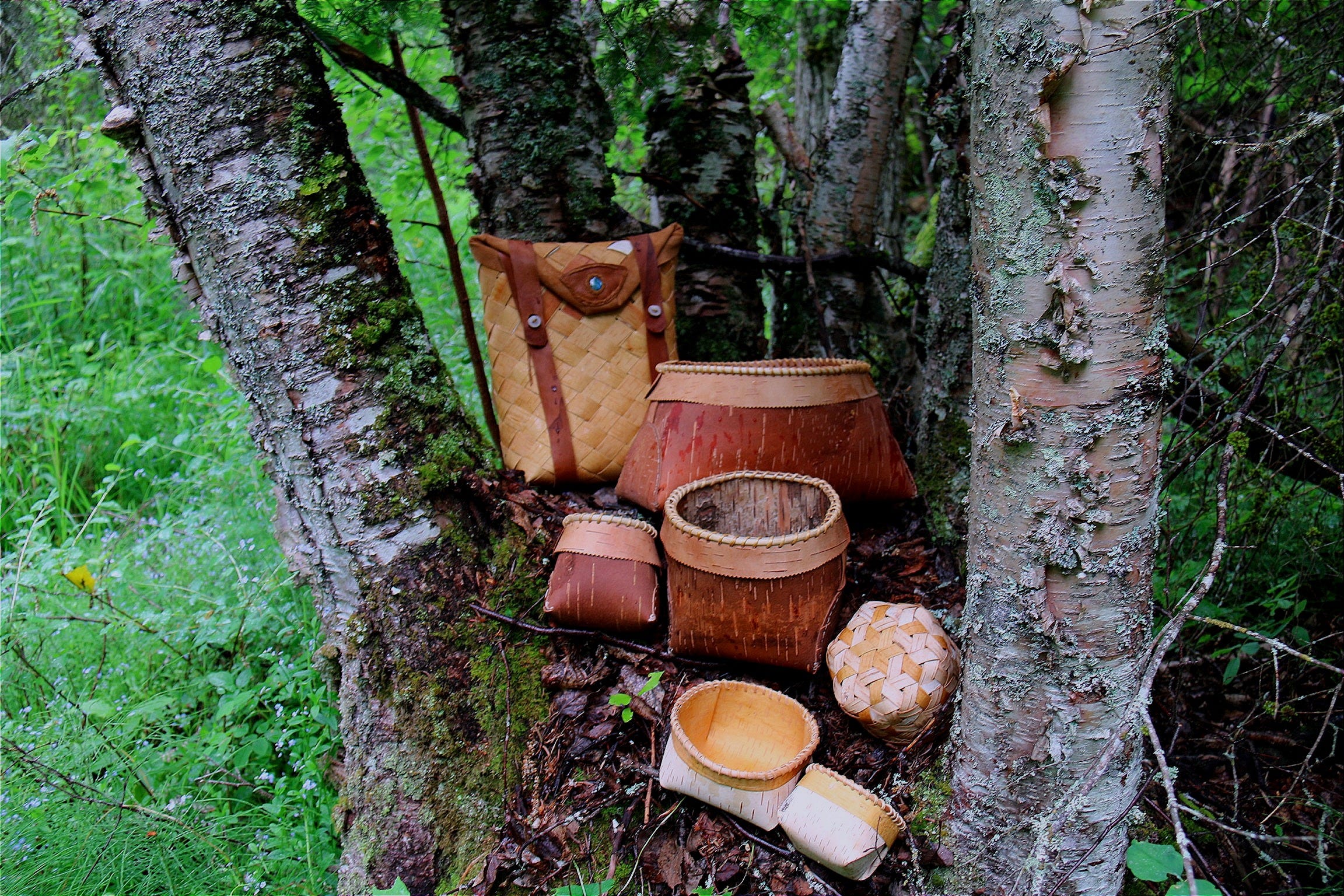
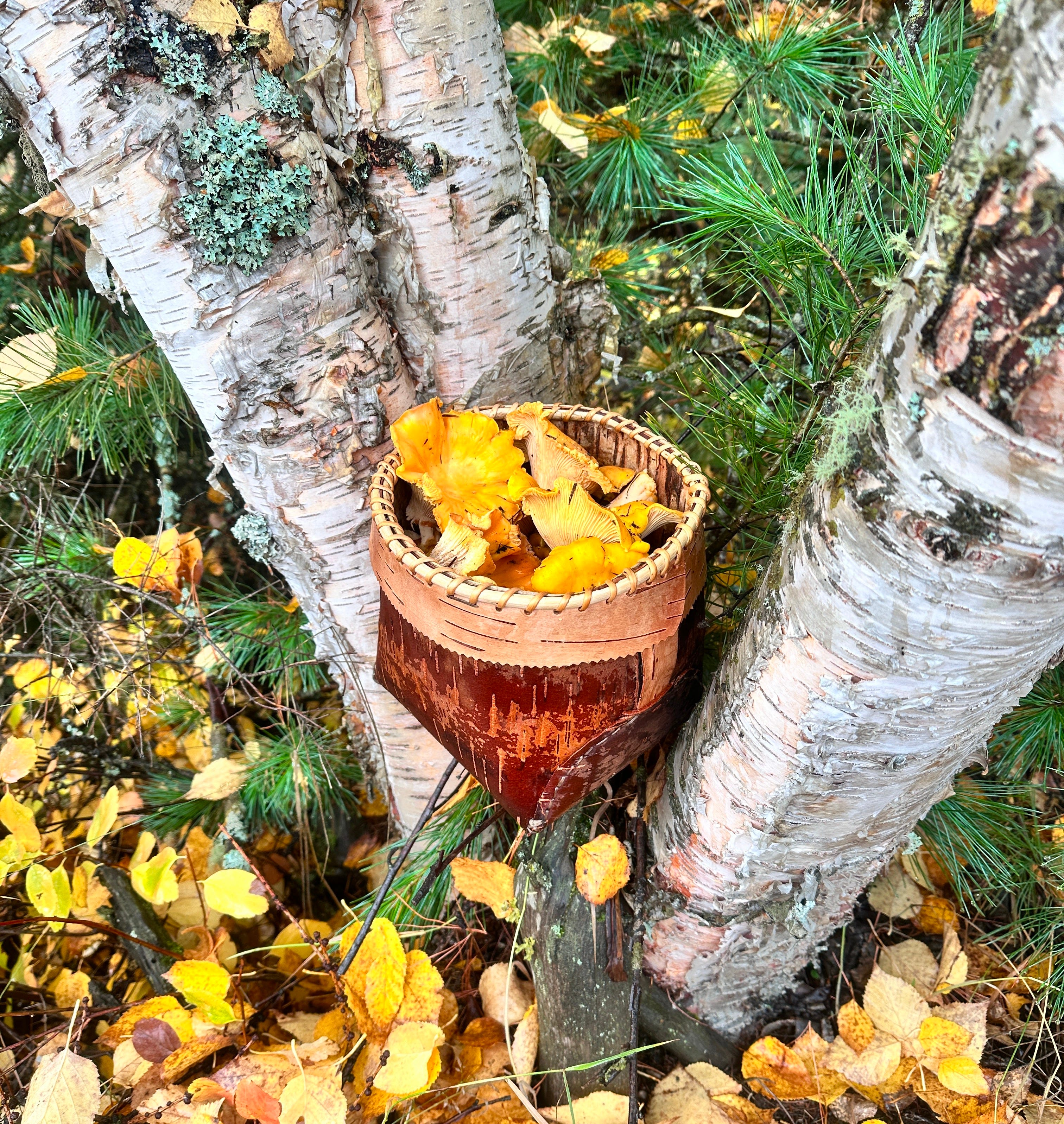
In summer, I gather berries in baskets woven from the bark.
But mostly I sit with her, every day, in a practice called sit spot.
Birch,
Beithe,
Berkanno.
She is the first tree. The mother of the boreal forest, the largest biome on earth.
Birch is a pioneer species. After glaciers retreat, she anchors soil to bare stone. Fast-growing and water-loving, she lays her body down as spongy, carbon-rich humus.
In the north, she provides the materials of daily life. Birch bark becomes the shingles of a home, baskets, cups and utensils, food storage, waterproofing, shoes. The bark will light a fire even when soaking wet. Food stored in birch bark containers resists rot. Her sap offers sugar in the lean thaw of early spring.
Chaga carries fire, traditionally used to catch sparks and hold embers over a distance. If only the man in Jack London’s To Build a Fire2 had a tinder fungus. The canker is renowned for fighting cancer and stimulating the immune system.
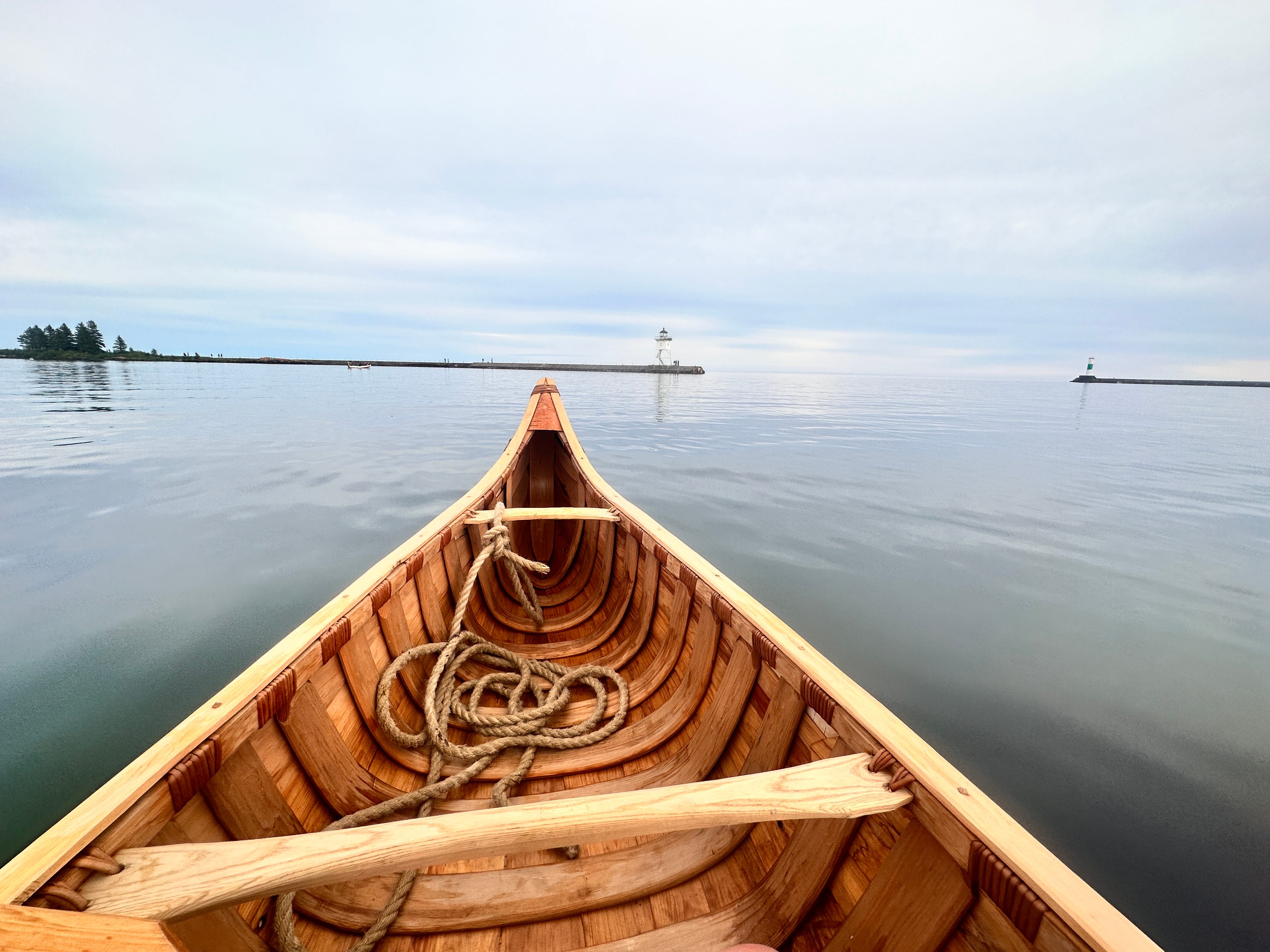
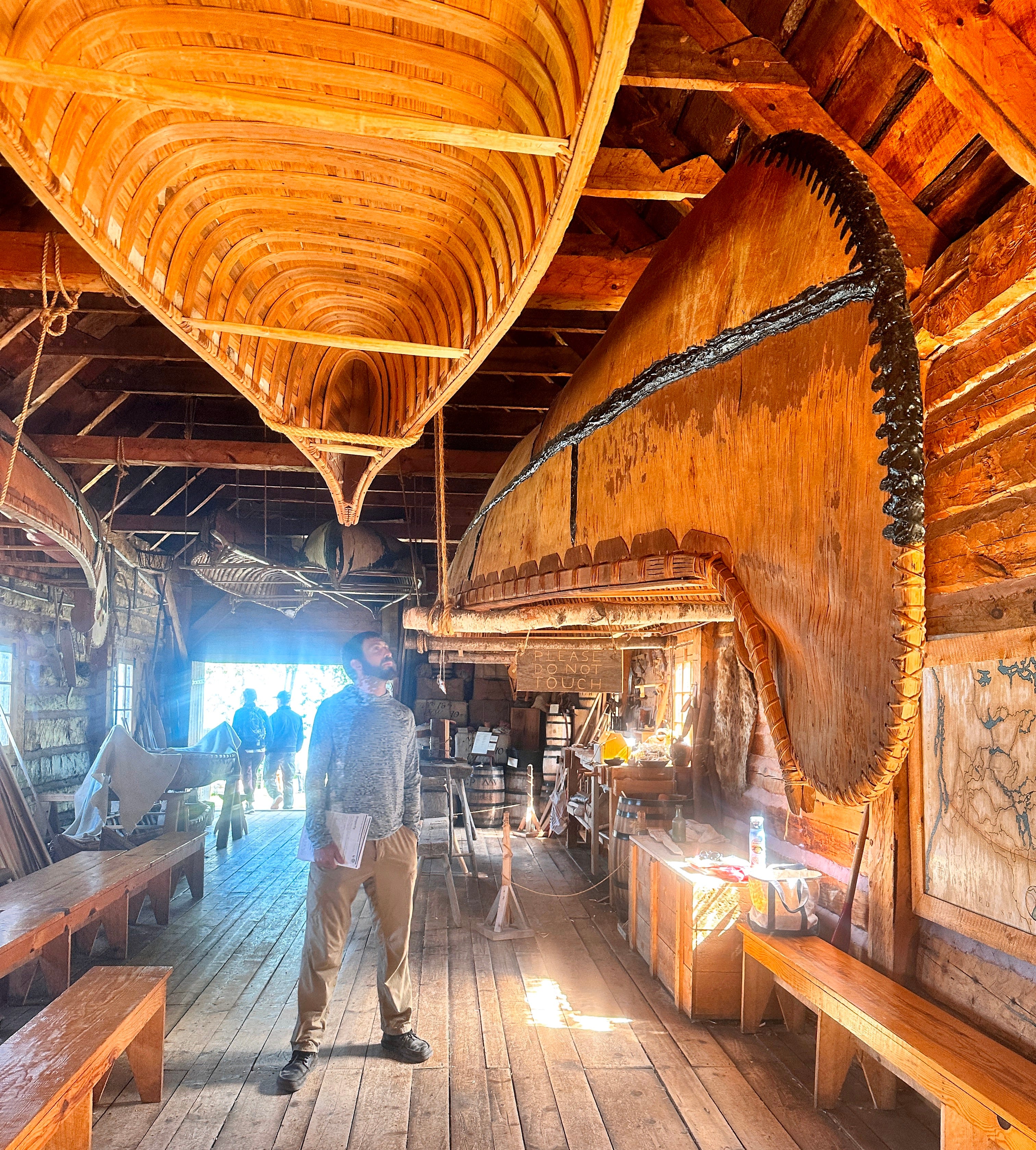
Across the northern half of the American continent birch canoes carried people by water, a vessel for movement, trade, and culture.
Without this tree, I believe my people would not be here. Our relationship with her is symbolic of a glacial, ancient perception.
❈
We live in complex relationship with the places that hold us.
What they ask of us, what they offer, and how we cultivate resilience influences both our survival and the world around us.
It tickles me to watch children interact instinctively with the birch tree.
The exuberance of a child, that bountiful joy as they encounter the world, those incessant questions, that insatiable curiosity: this is where art and science begin.
Some of our greatest minds in history tend their relationship to a childlike mind.
Helen Keller describes Luther Burbank, a self-taught horticulturist, plant breeder, and one of the most influential figures in shaping modern cultivated plants:
“He has the rarest of gifts, the receptive spirit of a child. Only a wise child can understand the language of the flowers and trees.”
Albert Einstein is often described as having a childlike imagination. He wrote,
“The important thing is not to stop questioning… it is a miracle that curiosity survives formal education.”
Curiosity is the first step into cultivating ecological perception.
This is the posture we assume when we want to open our sensory gating, allowing ambiguity and surprise to lead us.
In this state, we open our minds to the Default Mode Network (DMN), the “Do Mostly Nothing” network. In my students, phones preoccupy most of their do-nothing time. Unfortunately, this generally stimulates the Task-Positive Network -the antithesis of the DMN.
Reduced connectivity in the DMN is linked to dementia, alzheimers, multiple sclerosis and vegetative states (Pillay, 2017).
When the mind wanders in an intentional way -imagining and making meaning- our mental flexibility improves. We connect deeply with ourselves and others and move more fluidly between past, present, and possibility (Pillay, 2017).
In an open state of wonder and curiosity, we begin to move our minds like a trickling stream of melt water, fluid and responsive.
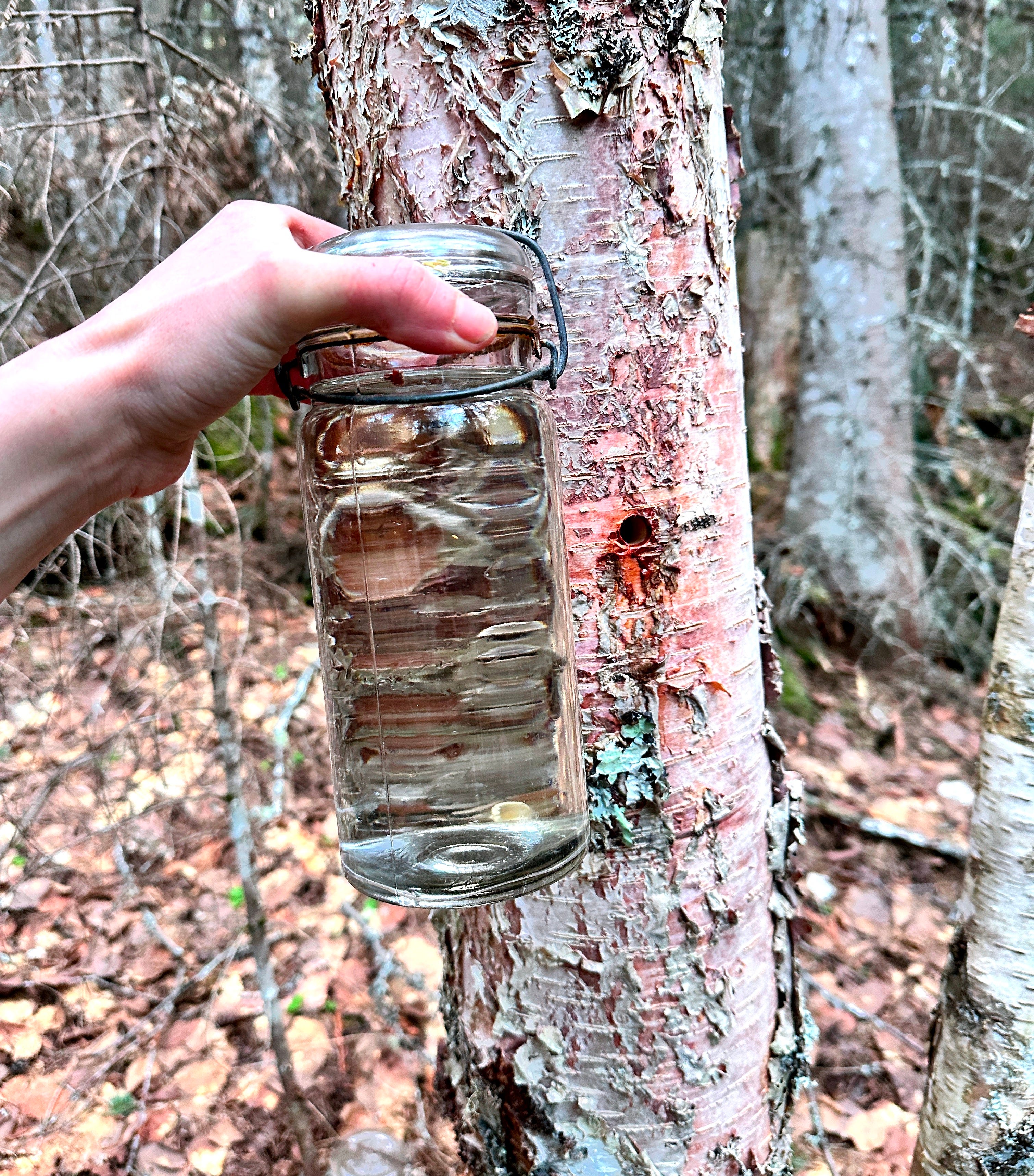
This is a way of softening the gaze. As Goethe writes, “Every new object, newly seen, opens up a new organ of perception in us.”
Novelty is what tells the brain this matters. In teaching, we call these “discrepant events”: moments that pull students out of their attentional lull and engage their long-term memory (Pillay, 2017).
Here is a simple way to begin:
Find a plant. Settle in and take a moment to arrive.
Begin asking questions, one after another, pausing just long enough to let each one settle. Please don’t feel the need to answer any of them, although this is not strict. Try your best to focus on sensations.
Start simple, and let the questions lead. When I teach, the questions purposefully and gradually build in complexity (Young, 2010).
What you are able to see arises from the way you ask, and you may be surprised by what reveals itself.
In my practice, I record those questions to later create a mind map. I group them, draw connections, and note what I don’t yet understand. New questions emerge, and I carry them back into the field.
Looking for connections sparks creativity and we access analogical reasoning, a more fluid intelligence (Pillay, 2017).
“I want to beg you, as much as I can…to be patient toward all that is unsolved in your heart and try to love the questions themselves like locked rooms and like books that are written in a very foreign tongue…live the questions now.”
-Ranier Maria Rilke, Letters to a Young Poet.
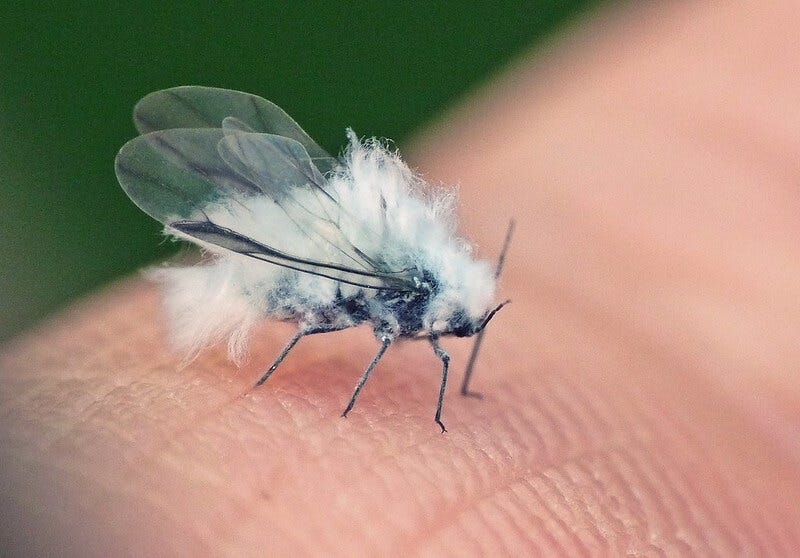
After noticing, don’t dismiss what you’ve perceived as noise.
Tune the fine instrument of your body,
loosen your sensory gating. This could feel like a sort of synesthesia; a visual, auditory or physical gestalt, the world arriving more wholly.
In To Speak for the Trees, Diana Beresford-Kroeger describes a meditation where one stands in a field like a tree and feels the dance of the sun’s energy on their skin. The Celts called this feeling the “Song of the Universe.”
Western culture generally views intuition as something that comes to us from within, although we have a capacity for many kinds of intuition.
In some indigenous cultures, like the Kalahari Bushmen, intuition is relational.
They must read the feeling of a landscape, sense the presence or movement of animals while tracking them, and interpret subtle changes in the environment. Anthropologists describe this as embodied cognition or participatory awareness.
Trust yourself.
When you spend time with this kind of sensing, your unique forms of perception flourish. The brain categorizes perception from memories, so what may feel unfamiliar will become recognizable (Buhner, 2014). The more you experience, the more your inner forest begins to grow.
“If every detail can by careful handling, through association, sound, tone, language, lead us inward, then we live in a sacred universe.”
- Robert Bly
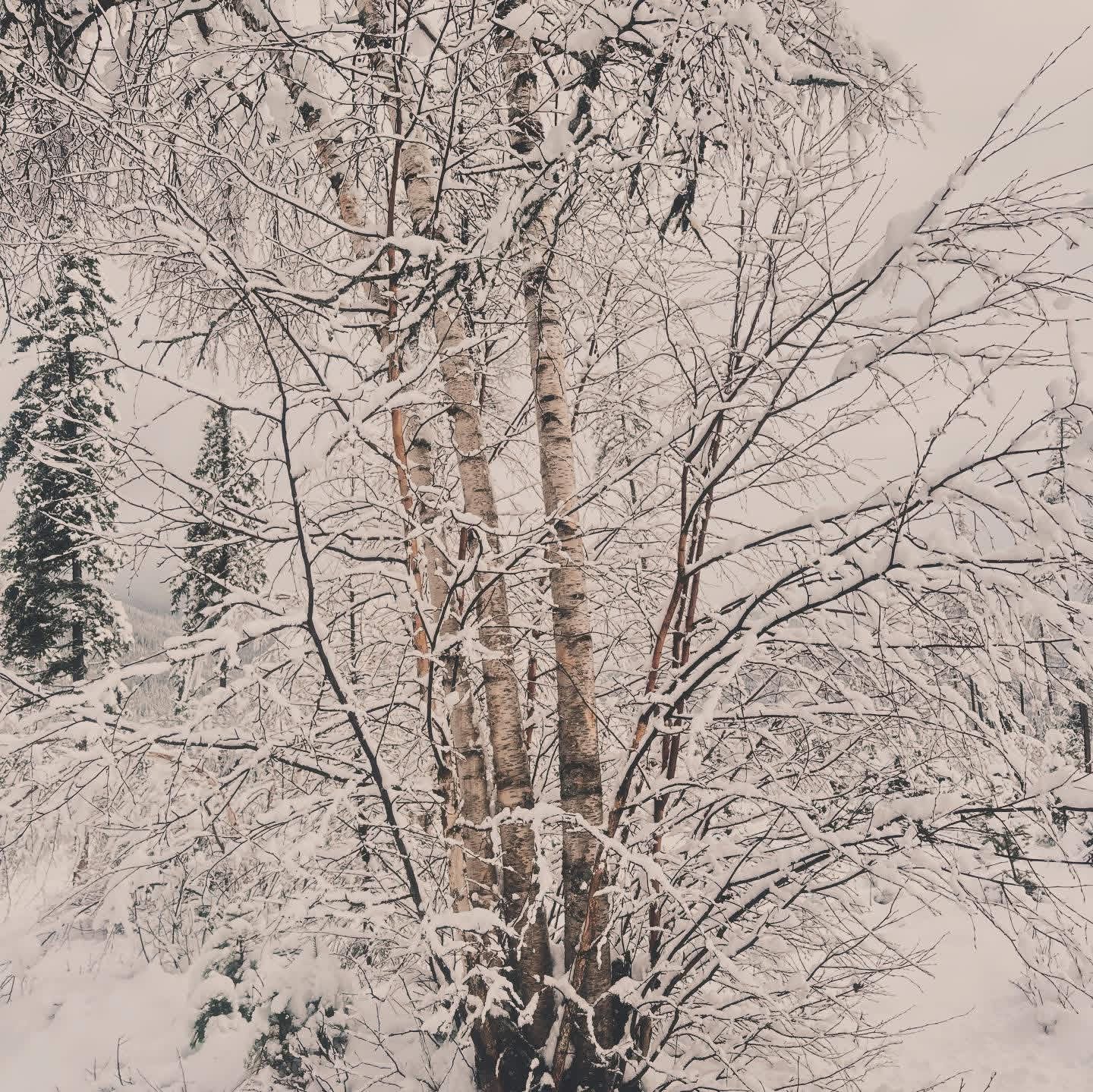
“The owl’s dark eyelids cover a luminosity our reason cannot grasp.”
-Robert Bly
To be called beloved by the world.
As you’re reading this, you’re engaging in a sort of dreaming. My words on their own mean nothing, but as they move through your awareness they are imagined, felt and embodied.
In a similar way, when we engage in our participatory awareness with the living world, when we read the earth’s poetry, the earth dreams in us.
This is the birthplace of myth in humanity.
It is told that the “Song of the Universe” dictated the creation of the Celtic Ogham alphabet, the first alphabet of Ireland (Beresford-Kroeger, 2020).
Across several Siberian traditions, particularly among Evenki and Buryat peoples, the birch tree is an axis mundi, a bridge between worlds.
In some ceremonies a shaman climbs a birch tree, ascending through layered realms of existence: from the roots of the underworld and the ancestors, through the human realm of the trunk, and into the sky world of spirits and expanded perception (Znamenski, 2003).
This act of climbing embodies a journey of transformation, knowledge-seeking, and rebirth.
The birch’s ecological role as a pioneer species cultivates renewal and passage between states of being, when the earth is released by ice and begins to grow again.
I found my way from my darkest moments, my own Younger Dryas3, by the lunar light of the birch tree.
By instinct or call, through feeling and through memory, her roots entangled with mine. I came home to myself and my ancestry. In the Boreal North, birch invites us to reconsider our own place within a layered, living cosmos.
This is the work of reforesting the mind, allowing meaning to grow the way a forest grows.
Bare ground slowly fills in.
What falls becomes soil,
as mycelium thread their web underground.
Roots reach down,
until presence moves like light through leaves.
Season by season,
our understanding takes hold at the heart,
and we meet the birch tree’s gaze with our own.
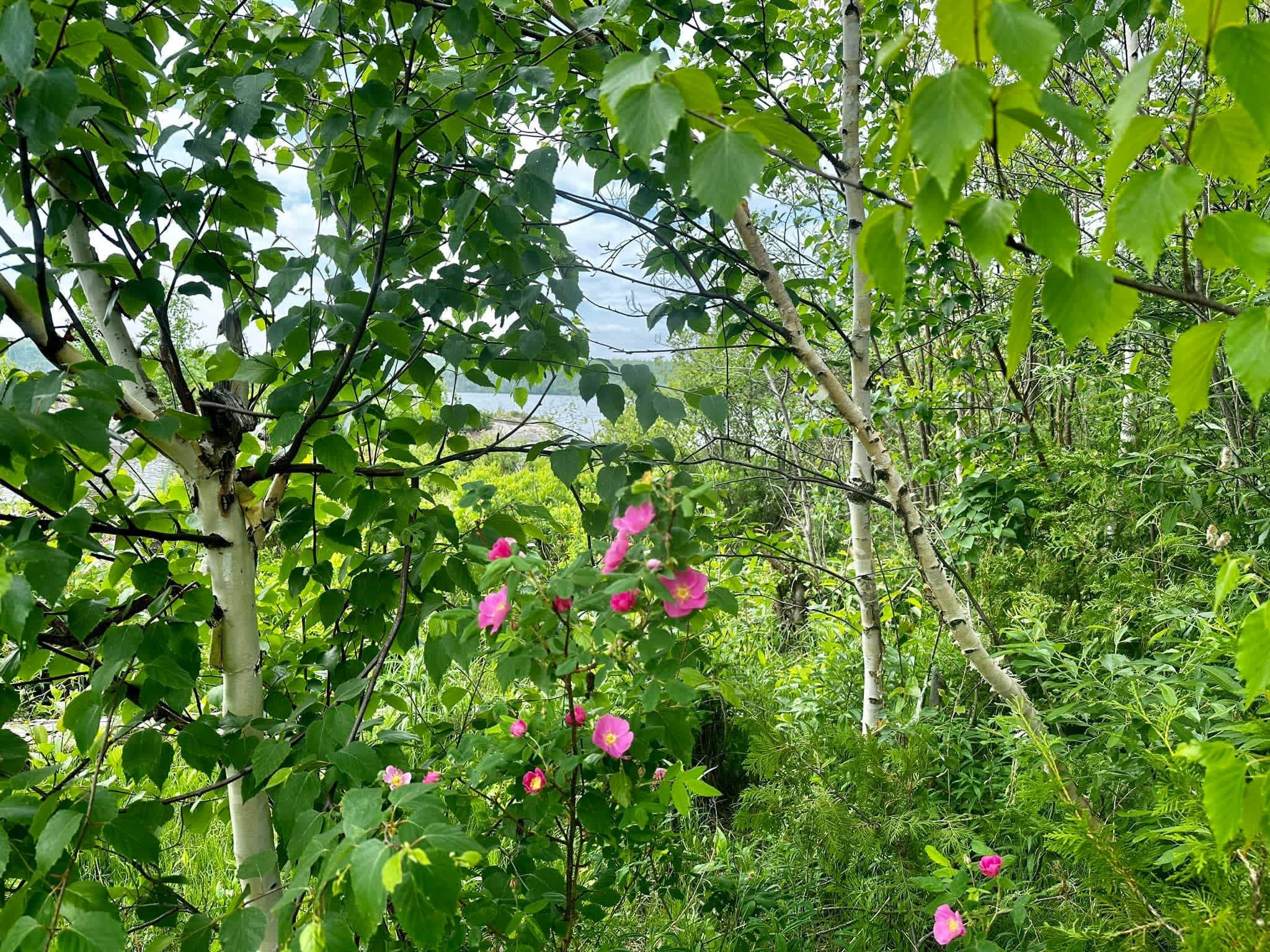
Thank you for reading. Each like, comment, or share cultivates this community and helps us grow.
Part 1:

Bibliography
Beresford-Kroeger, Diana (2020). To speak for the trees : my life’s journey from ancient Celtic wisdom to a healing vision of the forest. Vintage Canada.
Buhner, Stephen Harrod (2014). Plant Intelligence and the Imaginal Realm: Beyond the Doors of Perception into the Dreaming of Earth. Bear & Company.
Dr. Pillay, Srini (2017). Tinker Dabble Doodle Try. Ballantine Books.
Schrei, Joshua. “Why Mindfulness Isn’t Enough.” The Emerald Podcast, Sept. 30th, 2024.
Young, J., Haas, E., & McGown, E. (2010). Coyote's guide to connecting with nature: For kids of all ages and their mentors (2nd ed.). Shelton, WA: OWLink Media.
Znamenski, Andrei. (2003). Shamanism in Siberia. 10.1007/978-94-017-0277-5.
The Doctrine of Signatures, developed in European herbal traditions of the 16th and 17th centuries, is a traditional way of reading the natural world. A plant’s form, color, or pattern is understood to reveal something of its character or use.
SPOILER ALERT
he died of hypothermia because he couldn’t light a match (also why you should bring 3 types of fire starters with you)
The Younger Dryas (~12,900–11,700 years ago) was a rapid return to cold conditions that disrupted ecosystems and placed significant stress on human and animal populations.
this was beautiful to read.
i didn’t know much about the birch tree, neither its properties or its role as a pioneer species after the ice age ended.
your creations with the birch tree are especially lovely, i loved the baskets. i hope i can learn how to do this sometime.
i have greatly enjoyed this series because of all i’ve learn, sense gating, ecological perception…i want to notice more things. reading you makes me feel hopeful that i can.
thank you Lena, it was a beautiful, expansive, and soothing read. appreciate you for sharing your story with birch with us.
also reminds me of what Mary Oliver says “attention is the beginning of devotion”. when we pay attention to things, they become alive, and so do we. we could form a relationship that makes both of our existence richer than before. simple but powerful practice worth every moderner learning to cultivate again for a good life.